

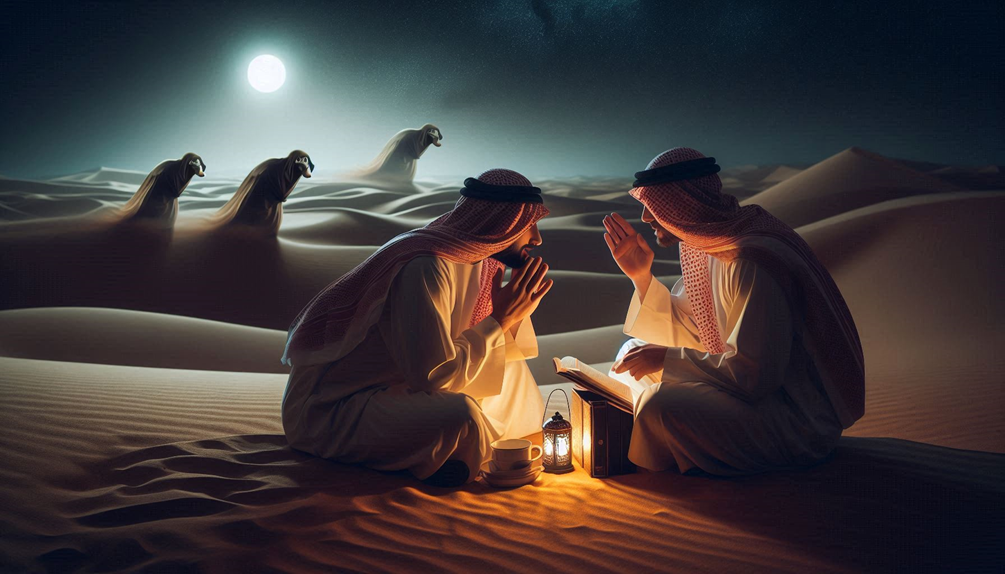
Alhamdulillah, we are going to start another new episode of the biography of Omar Khattab (may Allah be pleased with him). The topic of our episode today is Omar Ibn Al-Khattab (may Allah be pleased with him), how he, as the Caliph and the Commander of the Faithful, solved various problems in various social fields? And how to meet the needs of various needy people, etc. After the Prophet Muhammad (peace be upon him), Abu Bakr Siddiq. He was the guardian of this Ummah. In the previous series, we mentioned the biography of Abu Bakr Siddiq at one stage when the polytheists of Mecca raised Abu Bakr Siddiq to a higher level. Abu Bakr Siddiq set off for the seashore for the purpose of migration. The two men, the Prophet Muhammad (peace be upon him) and Abu Bakr Siddiq, were following the ideals of the two. He was also a shelter for the helpless, a helper of the needy, and a bearer of the burden of the weak. In today’s episode, we will try to mention the events in which Omar Ibn Al-Khattab played his role in the social field. How did Omar Ibn Al-Khattab try to fulfill the needs of the Muslim society? How did he see their good and bad? He valued the righteous people, evaluated them, and never forgot their contribution to Islam. At the end of the third stage of the discussion, we will mention that if any influential person or leader or chieftain crossed the limits or went too far in any work, he would correct them. In the first stage, we are going. Omar used to take care of Muslim women. The elderly or those women who are fighting on the Islamic frontier. Omar Ibn Al-Khattab used to strive to achieve their rights. We know a famous saying of Omar Ibn Al-Khattab, “By Allah, if I live, if I attain life, then next year I will make such arrangements that even the widows who are on the border of Iraq on the Islamic frontier are They too would not need anyone for their needs. Even the women on the Islamic frontier would think about them. Omar left his house late one night in the dark night. Where was the Caliph Amirul going at that time of night? Obaidullah saw Omar Ibn Al-Khattab enter a house. And he left that house and went to another. In this way, he went to one house after another. In this way, when the night ended and it was morning, he went to the first house and there he saw an old woman. You cannot eat and drink, you cannot fulfill your own needs. Obaidullah said to the woman, why did that person come to you? What does he need? Then the woman said, he promised me that he would give me some property. He came with them and that person came and made me suffer. He cleaned the dirt and garbage in my house. Obaidullah was surprised and said to the woman, mother, do you know who that person was, Omar Ibn Al-Khattab? He was doing your work. This was Omar Ibn Al-Khattab. He used to secretly go from house to house in the dark of night and fulfill the needs of helpless old women. He used to clean the dirt and garbage in their houses. He used to give them money and property when they needed it. Obaidullah was surprised when he saw this incident. Second incident: Omar Ibn Al-Khattab, one day he was walking on the road of Medina. There a woman came and stood in front of him, blocked his path. She stopped him on the way and started giving him various advices. Omar Ibn Al-Khattab, do you remember those days when you were small and you were called Umayr? It means small immortal. In Arabic, when the letter Ya is added to a name, it means something small. The woman says, I still remember those days. You were small next to my eyes. You were called Umayr. You used to have a stick in your hand and you used to run around with the children, play games, and scare them with it. The woman made Omar stand and started reminding him of his childhood in different ways. One day the days changed, one day you became the Caliph. So you fear Allah, fear Allah for your subordinates. And always remember the Day of Judgment. She kept giving him long advice. She stood and listened attentively to the woman’s words without creating any kind of disturbance. On the other hand, a man who was with Omar ibn al-Khattab stopped the woman and said, “You are talking to the Amirul like this.” Omar ibn al-Khattab stopped the man and said, “Be quiet, rather let him continue his speech. I will continue listening to him until the time for prayer comes. After the prayer, I will come back and say, “I will listen to him.” Why should I not listen to a woman whose words Allah Almighty Himself heard from the seven heavens. He heard this woman’s complaint from the seven heavens. You knew that the woman was not an ordinary woman. She was Khawla (may Allah be pleased with her). She complained to the Messenger of Allah (peace and blessings of Allah be upon him) about a matter in the name of her husband. And Aisha Siddique (may Allah be pleased with her) says that I was in the next room. Even from there I could not hear them clearly. I was listening to them in a whisper. Allah Almighty heard the woman’s complaint from the seven heavens and on the basis of that complaint He revealed this verse: Allah Almighty has heard the woman who complained to you, O Prophet, about her husband. Allah Almighty has heard that woman. She was Khawla. She was standing on the road of Medina, giving advice, giving advice, giving advice for a long time. And Omar Ibn Al-Khattab was listening to her attentively. Any citizen could come and advise our Khattab. He would accept advice. He would not turn away from people’s advice because of any sense of greatness or pride due to this identity.
The next incident is going on. Another day, a helpless woman, whose husband had died in the war and her father, brother were also very helpless and in need, was crossing the road inside Medina. At that time, a man came to her. My husband has died and she has left behind small children. I have left no land. I have left no livestock. I have left no support for us. And the woman said that my father is a leader of the Ghifar tribe. He was a witness with the Messenger of Allah (peace be upon him) at Hudaibiya. He was one of the 1400 companions. The woman’s father was a leader. After he knew her identity, Omar ibn al-Khattab said to her, “Welcome.” You are invited. The young woman came along and saw Omar Ibn Al-Khattab preparing a strong camel. He loaded the camel with a huge bag. Inside which he put money, food, clothes and other things. When he brought everything and loaded it on the camel’s back, he handed it over and said, “This camel and everything on the camel’s back are yours. Take all this.” While leaving, he also told the woman that he would definitely make some other arrangement for you in time. A man stood there. He said, “Omar, you may have given that woman too much.” Omar Ibn Al-Khattab cursed that man and said, “May your mother lose you.” I clearly remember his father and brother besieging the fort and fighting until the Muslims captured it. We are now enjoying the results of their work, the results of their sacrifice. They were martyred. We are now enjoying the results of their hard work. Of course, the person is told that the property of the Baytul Mal has come through the establishment of all the companions who fought for the religion. Are you telling me that what I gave this girl has exceeded the amount? Umar ibn al-Khattab was a person who devoted his life to Islam. So he would never forget the contribution. He would take care of the families of the martyrs. He would be grateful to them. Because all those people have dedicated their entire lives to Allah Subhanahu wa Taala. To establish the religion of Allah. Whatever a person travels in the way of Allah, he will get a reward equal to that of the person who travels in the way of Allah. Whoever takes good care of the families of those who travel in the way of Allah and spends on them, he will also get a reward equal to that of the person who travels in the way of Allah. So whoever provides financial support to a Mujahid in the way of Allah, he will get the reward of a war. He also fought and whoever took care of the family of a Mujahid, fulfilling their needs, he also received the same reward. Umar ibn al-Khattab, may Allah be pleased with him, received the same reward as a Mujahid fighting in the way of Allah through his work while staying in Medina. Because he was the one who was taking care of the families of the martyred Mujahids. That was what he had to do. The Mujahid would go out for Jihad in the way of Allah, he would not hold back any kind of tension and would gain mental peace. He knew that if he faced any danger, if he died, his family would not sit on the road, but the other Muslims who were there would come forward and help them in that danger. Like in the present era or the next era, we see them fighting in the way of Allah, doing Jihad, They are completely shunned and boycotted by the people of the Muslim community. Let them stay away from fulfilling their needs, but rather keep a distance from them and keep themselves safe.
Next incident: Omar Ibn Al-Khattab was passing by one day. Then he saw a man talking to a woman. The man was standing on the street talking to a strange woman, Omar Ibn Al-Khattab saw this scene and hit the man with the stick he had in his hand. The man said, “O Amirul Momineen, this woman is not any other woman. She is my wife. Then why are you standing on the street with your wife and why are you giving the Muslims the opportunity to criticize you, to backbite you. We came to this city and were consulting where we should live now?” Omar Ibn Al-Khattab now said for his own sake, “This is my stick. Hit me with it the way you hit me.” The man said, “For the sake of Allah, I have given it up. I have forgiven you.” My Ibn al-Khattab said to him, may Allah reward you. He was very careful that Muslims do not have any kind of free mixing or unnecessary talk between men and women. Or do not mix. He would ensure those things. He would do various family matters and what we now call counseling. If there was any problem between husband and wife, he would solve your life. He would reconcile them, he would settle it. One such incident was once a man came and said that he wanted to divorce his wife. He wanted to divorce her. That man said that I do not love her. Amr Ibn al-Khattab then said to him, is every family built only on love? Then where did loyalty and respect go? Where did loyalty and mutual respect go? He advised me, Khattab, that man and said, “Listen, people, when we get married, we make a promise to our wives. When a woman gives birth, she has a hard time in the morning. She spends sleepless nights in various needs and hardships while breastfeeding and raising her child. She sacrifices her own beauty and youth to play the role of a mother. When that woman becomes old, how should that husband treat her? At least if that woman did not take care of her child or family but only took care of her beauty in her youth. I would tell her again how bad she was as a mother. Where did your honesty and loyalty go? Fear Allah in your behavior towards yourself. Khattab advised that person and explained to him that love and affection alone are not the only purpose of marriage. A family is formed between a man and a woman with a noble purpose in mind. If you do not have love, a family will have to be broken. There can be no reason. Allah Almighty bestows love and kindness on the husband and wife from His own side and bestows mercy. If there is no love, Allah Almighty says in the verse of Surah Rum: Another of His signs is that We created for you mates from among yourselves. We created your wives that you may find tranquility in them. We have put between you affection and mercy. Love and creation, indeed, in this are signs for those who reflect. So if after marriage, even if the love between a husband and wife decreases, there should still be another thing between them, which is mutual honesty.
Hinda, she was known as an intelligent and beautiful woman among the Quraysh and later she was divorced. Then Abu Sufyan married her. I had a long relationship with Abu Sufyan. Finally Abu Sufyan divorced her. In that situation, Hinda borrowed some money. She was alone, so she agreed to do business in the financial industry to meet her needs. She started a successful business there with the money. She took care of meeting the needs of women. In her youth, even in her old age, she provided financial resources to Hinda from the Baitul Mal. To invest in business and these things were common among Muslims at that time and during the Caliphate, she was very diligent in meeting their needs regarding the rights of women. Some incidents may seem to us like Khattab was very strict with women because of his strictness. But those incidents are not actually true. Rather, Omar ibn Khattab did not discriminate against everyone in giving them their rights. But in other matters, i.e. when a woman was in need, she would behave nicely, take care of her. We mentioned that statement at the beginning of the discussion. My Khattab swore by Allah that if Allah gives me life, I will not leave even a widow in Iraq. They will not have to reach out to any person for help. That is, he will arrange for them in some way. We will try to discuss in the next part. Omar Ibn Al-Khattab has how he valued righteous people? In that context, righteous people would evaluate those who have contributed to Islam, honor them, give them space with caution. Once he was trying to know about a person. He was taking the opinions of other people in that context. He asked that person that he was a very good person. On what basis do you call him good? Are you his neighbor? The person said no. Have you ever lived together? The person said no. I asked him, have you transacted money with me, done business with me or traveled? The man did not answer every question. He asked about some of the characteristics that people knew and how to recognize people, such as traveling together or staying together, being a neighbor or having financial transactions with him. Another person can know about a person’s inner state through these things. When the man was praising that person, he guessed and said. You only saw him praying in the mosque. He explained that you cannot fully understand someone by just seeing him praying in the mosque. If you are not his neighbor or staying with him for a long time, then you would not know him or if you did business with him, you would know about him. A person can be very good from the outside. He may say many nice things. You can also know about the dark sides of a person’s inner state. Nowadays, it has become much easier to think about traveling for various reasons. But at that time, traveling was a very difficult thing, a difficult test. The inner states of a person during a trip. Amar asked that person about traveling because traveling is a thing when a person has to travel in difficult conditions. Take him out of the routine he is in. The time of sleep changes. The time of rest changes. He cannot rest in the regular bed. How much conflict he has, how much he has a mentality of sacrifice. When that person did not have any such experience in him, I cannot accept your opinion. So Omar Ibn Al-Khattab was a person who was able to observe people and had insight. That I do not worry about a believer or a person whose faith is clear Or a disbeliever whose disbelief is clear. Rather, I am worried about the hypocrites, who look like believers, their behavior is like Muslims. But their hearts are like those of a disbeliever. Do not assume the complete truth about someone who prays in the mosque when you see him worshipping. Do not be foolish. Because the condition in his heart may be different. But there is a disease in his heart that only Allah sees, but you do not see. What was the role of the scholars of the Children of Israel at the time of Jesus (peace be upon him)? All these people rejected the call of Jesus (peace be upon him). The scholars of the Children of Israel, the mufti scholars of the Children of Israel, the worshipers of Jesus (peace be upon him), the social and political leaders, and the religious leaders. On the other hand, those who followed Jesus (peace be upon him) were ordinary people. Today, what discussion did they choose as followers of Islam? So was the companion of Jesus (peace be upon him). He tells us not to be confused by the external state of people, their speech, their appearance, but try to know the things inside them.
In the next incident, we are going. He went to meet an army that had returned from fighting in Yemen. Their destination was Iraq and Sham. On the way, they were passing through Medina. Amr ibn al-Khattab said, “Is there anyone among you who is Wais ibn Amir?” He pointed to a man from the people. Umar ibn al-Khattab went to him and asked, “Are you Wais ibn Amir?” He asked, “Are you from that tribe?” The man said, “Yes.” Umar said, “Did you have leprosy?” Then Allah cured you. Except for a place the size of a coin? I asked, “Is your mother alive?” The man said, “Yes.” Since I am asking various questions, Maryam al-Khattab had already heard about this person. She knew about him and was sure that he was a person with all these characteristics. I heard you say, “Who will come to you?” His lineage is Murad and he has given health except for a place the size of a penny. And he was very easy-going towards his mother. The Messenger of Allah (peace and blessings of Allah be upon him) told Omar that if you ever meet him, tell him to ask Allah for forgiveness for you. And that person was not a companion. He was a poet who never met the Messenger of Allah (peace and blessings of Allah be upon him) during his lifetime. Although he was alive during the time of the Messenger of Allah (peace and blessings of Allah be upon him). But since he never met him directly, he was not a companion. He was serving his mother. Serving his mother. He had lost the opportunity to be a companion. The reason for this was that he was serving his mother, serving his mother, serving his mother. One thing to note here is that at that time the order of war or the order of jihad was in the case of offensive war, that is, Muslims were going to foreign areas and waging war against the Romans or Persians in their areas. Waging jihad. Which is Fard Kifayah. When the enemy enters Muslim lands and attacks Muslims or removes the Islamic rule of Muslims and imposes a secret rule on them. We can see this in the Muslim world today. In all these cases, war is a defensive war. If a suitable number of people perform it, it is performed on behalf of the rest. In that case, there is an opportunity to stay behind to serve the mother without doing jihad. When defensive jihad is obligatory for everyone, there is no such opportunity. Dishonest scholars who present people with a mixture of truth and falsehood. Mislead. In the context, serving parents must be remembered as a high level of worship when it becomes an obligatory law. The provisions of war If you serve without going to war, it will not be a reward. Rather, it will be a sin. You should ask him to pray for you. The true Muslim was a beloved servant. He was a friend of Allah. He prayed for him and asked for forgiveness. Where do you want to go? Wise said I want to go to Kufa. Then I will write you a letter to the governor of Kufa and I will give him the responsibility. He will take care of your affairs. He will fulfill your needs on behalf of the state. That is what is taken care of. Please don’t do this. You don’t do this. I am a commoner. I want to live as a stranger. I don’t want to be famous, I don’t want to enjoy special benefits. I want to live. So Wise ibn was such a servant of mine, he was a secret to the people. He would not reveal it. He wanted to live among the common people in a state of strangers. Who are strangers to the people. But Allah Subhanahu Wa Ta’ala has a much higher status. He went to Kufa.
We have come to the last part of today’s discussion. Here we will try to see if any of them did something wrong or went too far, Umar ibn al-Khattab understood to correct them. Once, people were waiting. Abu Sufyan Suhaili was my influence and Rumi was also there. And later they came to Islam. They became Muslims. They were standing outside waiting for permission. The first to give permission was Shuaib and Rumi. They were standing outside waiting. Bilal and the assistant finished their needs and came out. Then they were allowed to enter. The slaves who were once slaves. The weak class, they were allowed to enter before. Abu Sufyan was making some complaints about this issue. That I have not seen them being allowed before us. He is saying to Abu Sufyan, I think you are very angry. Actually, you should not be angry with anyone else, the Messenger of Allah (peace be upon him) invited you and invited them to Islam. They were the first to accept Islam and you were very late in accepting Islam. What will you do on the Day of Judgment? You will be invited to enter Paradise before you. And you will have to wait. So Amr was telling Abu Sufyan, standing outside the Caliph’s room and then entering is not a big deal. When we are the ones who will be admitted to Paradise first. If you are angry, you should be angry with yourself. Because you were very late in accepting Islam. So there is a thing that those who accepted Islam first are higher in status than those who came later.
