
Close Menu
  • Home
  • Islamic History
    • Life of Prophet Muhammad
    • Abu Bakr al-Siddiq
    • Umar ibn al-Khattab
  • Companions
  • Series
    • 40,000 Years of Knowledge
    • The Secrets of the Universe
    • Amazon Series
  • About
  • Contact
  • Series Reading Guide
What's Hot

Ibrahim and Nimrod in Islam: What the Quran Says—and What History Cannot Confirm

2 October 2026

Prophet Ibrahim and Ancient Mesopotamia: Quran, Sumer and the Limits of History

30 September 2026

Thamud and Prophet Salih: The Quranic Account and the Archaeology of al-Hijr

28 September 2026
YouTube
YouTube Facebook
Religion Essence Hub
  • Home
  • Islamic History
    • Life of Prophet Muhammad
    • Abu Bakr al-Siddiq
    • Umar ibn al-Khattab
  • Companions
  • Series
    • 40,000 Years of Knowledge
    • The Secrets of the Universe
    • Amazon Series
  • About
  • Contact
  • Series Reading Guide
Religion Essence Hub
Home » Part 51 – The campaign of the 6th Hijri
Life of Prophet Muhammad (PBUH)

Part 51 – The campaign of the 6th Hijri

Religion Essence Hub Editorial TeamBy Religion Essence Hub Editorial Team19 February 2025Updated:27 August 2026No Comments4 Mins Read9 Views
Facebook Twitter Pinterest Telegram LinkedIn Tumblr Copy Link Email
Follow Us
Google News Flipboard
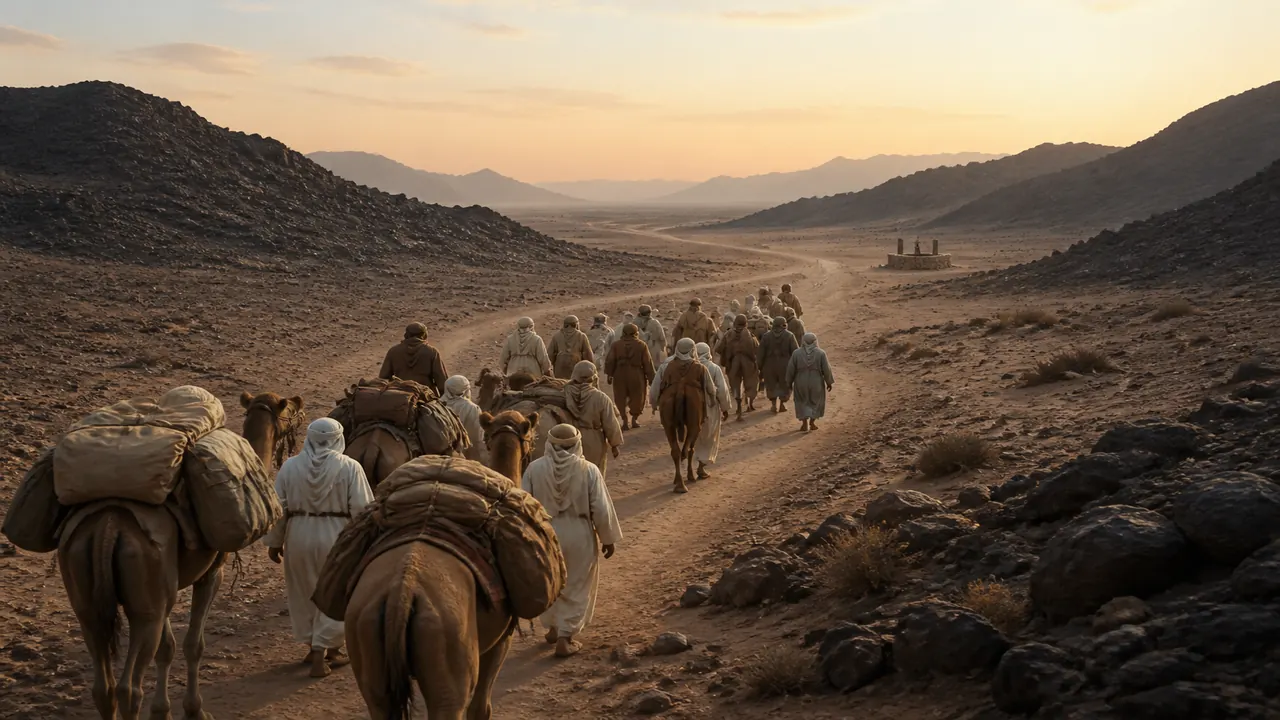
A peaceful caravan travelling toward Hudaybiyyah in the sixth Hijri year
Share
Facebook Twitter LinkedIn Pinterest Email Copy Link

Editorial note: Early biographical works do not always assign minor expeditions to the same month or year. This article therefore separates events supported by authenticated hadith from later chronological arrangements and avoids combining every expedition under a falsely precise date.

The strategic setting after the Trench

After the failure of the confederate siege of Medina, Quraysh had not disappeared as a political and military opponent. Medina also faced threats from raiding groups, uncertain alliances and routes connecting the city with Najd, Khaybar and Mecca. Security therefore involved patrols, reconnaissance, negotiated releases and limited expeditions as well as major battles.

It is misleading to describe every neighbouring tribe as an enemy that had to “accept Muslim authority.” Relations differed by group and circumstance. Some parties had treaty obligations, some remained neutral, and others were accused of participating in raids or supporting armed opponents.

Thumama ibn Uthal

Sahih al-Bukhari reports that horsemen sent toward Najd captured Thumama ibn Uthal, a leader from Banu Hanifa, and brought him to Medina. He was tied to a pillar in the mosque. The Prophet Muhammad (peace and blessings be upon him) questioned him over successive days and then ordered his release without demanding a conversion.

After leaving, washing and returning voluntarily, Thumama declared Islam. The fuller authenticated report records his changed attitude toward the Prophet, Mecca and his own priorities. His conversion followed observation and merciful release, not a forced declaration while he remained a prisoner.

Reports also connect Thumama with pressure on grain shipments to Mecca and state that the Prophet asked him to allow supplies. The moral point should not be turned into collective boasting: political pressure was limited by concern for civilians and by the Prophet’s instruction.

The raid at Dhu Qarad

An authenticated account from Salama ibn al-Akwa describes raiders from Ghatafan seizing the Prophet’s grazing camels near Dhu Qarad. Salama raised the alarm, pursued the raiders on foot and used archery to delay them until help from Medina arrived.

This was a rapid response to a livestock raid, not a planned conquest of an uninvolved population. The distinction matters because the legal and historical character of an expedition depends on its cause, target and conduct.

The expedition of Abu Rafi

Sahih al-Bukhari preserves reports that a group led by Abdullah ibn Atik was sent against Abu Rafi, who was described as harming the Prophet and assisting his enemies. The narration concerns a targeted wartime operation at his fortified residence.

Modern readers should not detach this report from its conflict setting or use it as permission for private violence. Decisions of war and public security belong to lawful authority and cannot be copied by individuals from an isolated historical account. Later historians also differ over the precise position of this episode in the chronology.

The Army of al-Khabt

Jabir ibn Abdullah narrated that three hundred men under Abu Ubaida ibn al-Jarrah travelled toward the coast to observe a Quraysh caravan. Their provisions became so scarce that rations fell to one date per person and they ate leaves known as khabt.

The sea then cast up a huge creature called al-Anbar, from which the group ate for many days. When they returned, the Prophet confirmed that it was lawful provision. The report is strongly authenticated, although historians have differed over its exact date. It should therefore not be assigned to 6 AH without qualification.

What these reports show

  • Security was varied: patrol, pursuit, detention, release and negotiation were different tools.
  • Mercy could transform an opponent: Thumama’s release preceded his voluntary conversion.
  • Claims require precise names: Thumama, Salama ibn al-Akwa, Abu Ubaida and Abdullah ibn Atik should not be replaced by corrupted spellings.
  • Chronology has limits: an authentic event can still have a disputed date.
  • Historical warfare is not a private instruction: reports must be read within lawful authority and their original conflict setting.

Key sources

  • Sahih al-Bukhari 469 — Thumama ibn Uthal brought to the mosque.
  • Sahih al-Bukhari 4194 — Salama ibn al-Akwa and the raid at Dhu Qarad.
  • Sahih Muslim 1806 — parallel detailed account of Dhu Qarad.
  • Sahih al-Bukhari 4039 — the expedition involving Abu Rafi.
  • Sahih al-Bukhari 4361 and 4362 — the Army of al-Khabt.

Continue the series

Read Part 50, then continue to Part 52 – Bayat al-Ridwan. The complete sequence is available in the Series Reading Guide.

Continue the series

← PreviousAll partsNext →

Blog
Follow on Google News Follow on Flipboard
Share. Facebook Twitter Pinterest LinkedIn Telegram Email Copy Link
Religion Essence Hub logo
Religion Essence Hub Editorial Team
  • Website

The Religion Essence Hub Editorial Team researches, reviews and updates articles about religion, history, beliefs and culture.

Related Posts

Part 11 – Ridicule, Accusations and Demands for Signs

27 August 2026

Part 10 – Quraysh’s Objections and Attempts at Compromise

27 August 2026

Part 9 – The Warning at Mount Safa and Abu Lahab’s Response

27 August 2026

Comments are closed.

Top Posts

Part 2 – Shepherding as a Metaphor for Prophethood

19 August 202446 Views

Part 4 – Hanifs: Monotheism in Pre-Islamic Arabia

19 August 202436 Views

Part 6 – The First Revelation in the Cave of Hira

4 September 202429 Views

Part 3 – Prophet Muhammad’s Marriage to Khadijah: Partnership, Sources and Context

19 August 202424 Views
Don't Miss
40,000 Years of Knowledge

Ibrahim and Nimrod in Islam: What the Quran Says—and What History Cannot Confirm

2 October 20268 Mins Read1 Views

The Quranic debate between Ibrahim and an unnamed ruler, the later identification with Nimrod, and why claims connecting him to Sargon of Akkad remain unproven.

Prophet Ibrahim and Ancient Mesopotamia: Quran, Sumer and the Limits of History

30 September 2026

Thamud and Prophet Salih: The Quranic Account and the Archaeology of al-Hijr

28 September 2026

Aad, Iram and Prophet Hud: What the Quran and Archaeology Show

25 September 2026
About Religion Essence Hub

Religion Essence Hub publishes accessible articles about religion, history, beliefs, scripture and culture. We explain complex topics clearly and responsibly. Email: contact@religionessencehub.com

Facebook YouTube
Our Picks

Ibrahim and Nimrod in Islam: What the Quran Says—and What History Cannot Confirm

2 October 2026

Prophet Ibrahim and Ancient Mesopotamia: Quran, Sumer and the Limits of History

30 September 2026

Thamud and Prophet Salih: The Quranic Account and the Archaeology of al-Hijr

28 September 2026
Most Popular

Prophet Ibrahim and Ancient Mesopotamia: Quran, Sumer and the Limits of History

30 September 20261 Views

Ibrahim and Nimrod in Islam: What the Quran Says—and What History Cannot Confirm

2 October 20261 Views

Part 38 – Madinah’s Jewish Communities and Early Political Tensions

19 February 20252 Views
  • Home
  • Privacy Policy
  • About Us
  • Corrections Policy
  • Disclaimer
  • Editorial Policy
  • Editorial Team
  • Get In Touch
  • Terms of Use
  • Cookie Policy (UK)
© 2026 Religion Essence Hub. All rights reserved.

Type above and press Enter to search. Press Esc to cancel.

Manage Consent
To provide the best experiences, we use technologies like cookies to store and/or access device information. Consenting to these technologies will allow us to process data such as browsing behavior or unique IDs on this site. Not consenting or withdrawing consent, may adversely affect certain features and functions.
Functional Always active
The technical storage or access is strictly necessary for the legitimate purpose of enabling the use of a specific service explicitly requested by the subscriber or user, or for the sole purpose of carrying out the transmission of a communication over an electronic communications network.
Preferences
The technical storage or access is necessary for the legitimate purpose of storing preferences that are not requested by the subscriber or user.
Statistics
The technical storage or access that is used exclusively for statistical purposes. The technical storage or access that is used exclusively for anonymous statistical purposes. Without a subpoena, voluntary compliance on the part of your Internet Service Provider, or additional records from a third party, information stored or retrieved for this purpose alone cannot usually be used to identify you.
Marketing
The technical storage or access is required to create user profiles to send advertising, or to track the user on a website or across several websites for similar marketing purposes.
  • Manage options
  • Manage services
  • Manage {vendor_count} vendors
  • Read more about these purposes
View preferences
  • {title}
  • {title}
  • {title}