
Close Menu
  • Home
  • Islamic History
    • Life of Prophet Muhammad
    • Abu Bakr al-Siddiq
    • Umar ibn al-Khattab
  • Companions
  • Series
    • 40,000 Years of Knowledge
    • The Secrets of the Universe
    • Amazon Series
  • About
  • Contact
  • Series Reading Guide
What's Hot

Ibrahim and Nimrod in Islam: What the Quran Says—and What History Cannot Confirm

2 October 2026

Prophet Ibrahim and Ancient Mesopotamia: Quran, Sumer and the Limits of History

30 September 2026

Thamud and Prophet Salih: The Quranic Account and the Archaeology of al-Hijr

28 September 2026
YouTube
YouTube Facebook
Religion Essence Hub
  • Home
  • Islamic History
    • Life of Prophet Muhammad
    • Abu Bakr al-Siddiq
    • Umar ibn al-Khattab
  • Companions
  • Series
    • 40,000 Years of Knowledge
    • The Secrets of the Universe
    • Amazon Series
  • About
  • Contact
  • Series Reading Guide
Religion Essence Hub
Home » Part 70 – The Final Years of Prophet Muhammad’s Life
Life of Prophet Muhammad (PBUH)

Part 70 – The Final Years of Prophet Muhammad’s Life

Religion Essence Hub Editorial TeamBy Religion Essence Hub Editorial Team19 February 2025Updated:9 September 2026No Comments4 Mins Read17 Views
Facebook Twitter Pinterest Telegram LinkedIn Tumblr Copy Link Email
Follow Us
Google News Flipboard
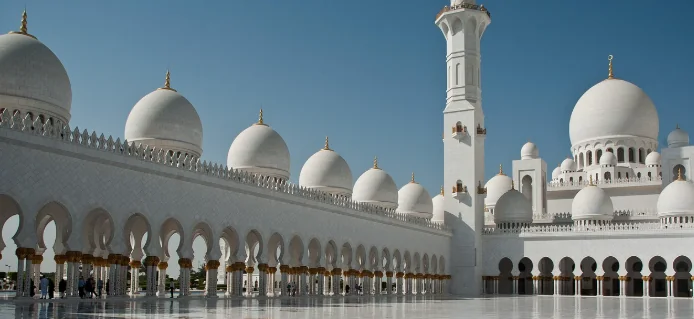
Historical illustration for The Final Years of Prophet Muhammad’s Life
Share
Facebook Twitter LinkedIn Pinterest Email Copy Link

Editorial note: This account prioritizes the Quran and authenticated hadith. Popular farewell narratives sometimes combine reports of different strength, so statements below are tied to identifiable sources and uncertain details are not presented as fact.

The closing period of the prophetic mission

The final period of Prophet Muhammad’s life brought together public completion and personal fragility. Islam had spread across much of Arabia, delegations were arriving in Medina and the Prophet led the pilgrimage that became known as the Farewell Hajj. At the same time, Quranic revelation prepared believers to understand that the Messenger’s life, like every human life, would end.

A responsible account does not need dramatic embellishment. The Quran and authenticated hadith already preserve the main themes: completion of religious duty, protection of human dignity, continued worship during illness and the community’s shock at the Prophet’s death.

The Farewell Pilgrimage

In 10 AH the Prophet performed Hajj with a large body of Muslims. Jabir ibn Abdullah’s detailed narration in Sahih Muslim describes the rites and preserves instructions delivered during the pilgrimage. The account includes the sanctity of life and property, the rejection of pre-Islamic claims of blood vengeance and usury, and the obligation to treat women responsibly.

Quran 5:3, revealed in this late period according to authenticated reports, announces the perfection of religion and completion of God’s favor. Muslims have therefore read the Farewell Hajj as both a practical demonstration of pilgrimage and a public summary of essential ethical responsibilities.

Signs of completion

Surah al-Nasr speaks of divine help and victory, people entering God’s religion in crowds, and the command to glorify God and seek forgiveness. Ibn Abbas understood the surah as an indication that the Prophet’s appointed term was approaching, an interpretation reported in Sahih al-Bukhari. The response to success was therefore not self-congratulation, but praise and repentance.

This is an important feature of the final years. Political and social success did not change the religious center of the mission. Worship, humility and accountability remained central even when the community had become stronger.

The final illness

During his last illness the Prophet became unable to lead every congregational prayer. Authenticated reports state that he instructed Abu Bakr to lead the people. A narration from Anas describes the Prophet lifting the curtain on a Monday while the congregation stood in prayer, looking at them and smiling before signaling that they should continue. He died later that day.

These reports show continuity at a moment of crisis. The prayer did not stop because the Prophet was ill. The community continued its worship, and leadership in the immediate task of prayer was delegated. The scene also explains why the final loss was so difficult for the companions: they had just seen him looking toward the congregation.

The community faces his death

The Quran had already established the necessary principle: Muhammad was a messenger, and messengers had passed away before him. Quran 3:144 asks whether believers would turn back if he died or were killed. After the Prophet’s death, Abu Bakr used this verse to steady a shocked community and redirect devotion toward God, who does not die.

The Prophet’s death did not mean that grief was a failure of faith. The companions grieved deeply. The Quranic correction concerned something different: the religion could not depend on the physical survival of its messenger. Revelation, worship and moral responsibility continued.

A legacy measured by trust

  • Worship remained central: success ended in praise, prayer and seeking forgiveness.
  • Human dignity was protected: the Farewell Pilgrimage emphasized life, property and reciprocal obligations.
  • Leadership could be delegated: Abu Bakr led prayer during the Prophet’s illness.
  • Revelation outlived the messenger: Quran 3:144 gave the community a principle for continuity.
  • Completion called for humility: Surah al-Nasr joined victory with glorification and repentance.

Sources

  • Sahih Muslim 1218a — Jabir’s detailed account of the Farewell Pilgrimage.
  • Quran 5:3 and Surah al-Nasr — completion, praise and seeking forgiveness.
  • Sahih al-Bukhari 678 and 680 — Abu Bakr leading prayer and the final Monday.
  • Quran 3:144 — the mortality of the Messenger and continuity of faith.

Continue reading

This is the final numbered installment in the biography sequence. Return to the Series Reading Guide to revisit earlier chapters or continue with the biographies of Abu Bakr and Umar.

Continue the series

← PreviousAll parts

Blog Life of Prophet Muhammad (PBUH)
Follow on Google News Follow on Flipboard
Share. Facebook Twitter Pinterest LinkedIn Telegram Email Copy Link
Religion Essence Hub logo
Religion Essence Hub Editorial Team
  • Website

The Religion Essence Hub Editorial Team researches, reviews and updates articles about religion, history, beliefs and culture.

Related Posts

Part 11 – Ridicule, Accusations and Demands for Signs

27 August 2026

Part 10 – Quraysh’s Objections and Attempts at Compromise

27 August 2026

Part 9 – The Warning at Mount Safa and Abu Lahab’s Response

27 August 2026

Comments are closed.

Top Posts

Part 2 – Shepherding as a Metaphor for Prophethood

19 August 202446 Views

Part 4 – Hanifs: Monotheism in Pre-Islamic Arabia

19 August 202436 Views

Part 6 – The First Revelation in the Cave of Hira

4 September 202429 Views

Part 3 – Prophet Muhammad’s Marriage to Khadijah: Partnership, Sources and Context

19 August 202424 Views
Don't Miss
40,000 Years of Knowledge

Ibrahim and Nimrod in Islam: What the Quran Says—and What History Cannot Confirm

2 October 20268 Mins Read1 Views

The Quranic debate between Ibrahim and an unnamed ruler, the later identification with Nimrod, and why claims connecting him to Sargon of Akkad remain unproven.

Prophet Ibrahim and Ancient Mesopotamia: Quran, Sumer and the Limits of History

30 September 2026

Thamud and Prophet Salih: The Quranic Account and the Archaeology of al-Hijr

28 September 2026

Aad, Iram and Prophet Hud: What the Quran and Archaeology Show

25 September 2026
About Religion Essence Hub

Religion Essence Hub publishes accessible articles about religion, history, beliefs, scripture and culture. We explain complex topics clearly and responsibly. Email: contact@religionessencehub.com

Facebook YouTube
Our Picks

Ibrahim and Nimrod in Islam: What the Quran Says—and What History Cannot Confirm

2 October 2026

Prophet Ibrahim and Ancient Mesopotamia: Quran, Sumer and the Limits of History

30 September 2026

Thamud and Prophet Salih: The Quranic Account and the Archaeology of al-Hijr

28 September 2026
Most Popular

Prophet Ibrahim and Ancient Mesopotamia: Quran, Sumer and the Limits of History

30 September 20261 Views

Ibrahim and Nimrod in Islam: What the Quran Says—and What History Cannot Confirm

2 October 20261 Views

Part 38 – Madinah’s Jewish Communities and Early Political Tensions

19 February 20252 Views
  • Home
  • Privacy Policy
  • About Us
  • Corrections Policy
  • Disclaimer
  • Editorial Policy
  • Editorial Team
  • Get In Touch
  • Terms of Use
  • Cookie Policy (UK)
© 2026 Religion Essence Hub. All rights reserved.

Type above and press Enter to search. Press Esc to cancel.

Manage Consent
To provide the best experiences, we use technologies like cookies to store and/or access device information. Consenting to these technologies will allow us to process data such as browsing behavior or unique IDs on this site. Not consenting or withdrawing consent, may adversely affect certain features and functions.
Functional Always active
The technical storage or access is strictly necessary for the legitimate purpose of enabling the use of a specific service explicitly requested by the subscriber or user, or for the sole purpose of carrying out the transmission of a communication over an electronic communications network.
Preferences
The technical storage or access is necessary for the legitimate purpose of storing preferences that are not requested by the subscriber or user.
Statistics
The technical storage or access that is used exclusively for statistical purposes. The technical storage or access that is used exclusively for anonymous statistical purposes. Without a subpoena, voluntary compliance on the part of your Internet Service Provider, or additional records from a third party, information stored or retrieved for this purpose alone cannot usually be used to identify you.
Marketing
The technical storage or access is required to create user profiles to send advertising, or to track the user on a website or across several websites for similar marketing purposes.
  • Manage options
  • Manage services
  • Manage {vendor_count} vendors
  • Read more about these purposes
View preferences
  • {title}
  • {title}
  • {title}