

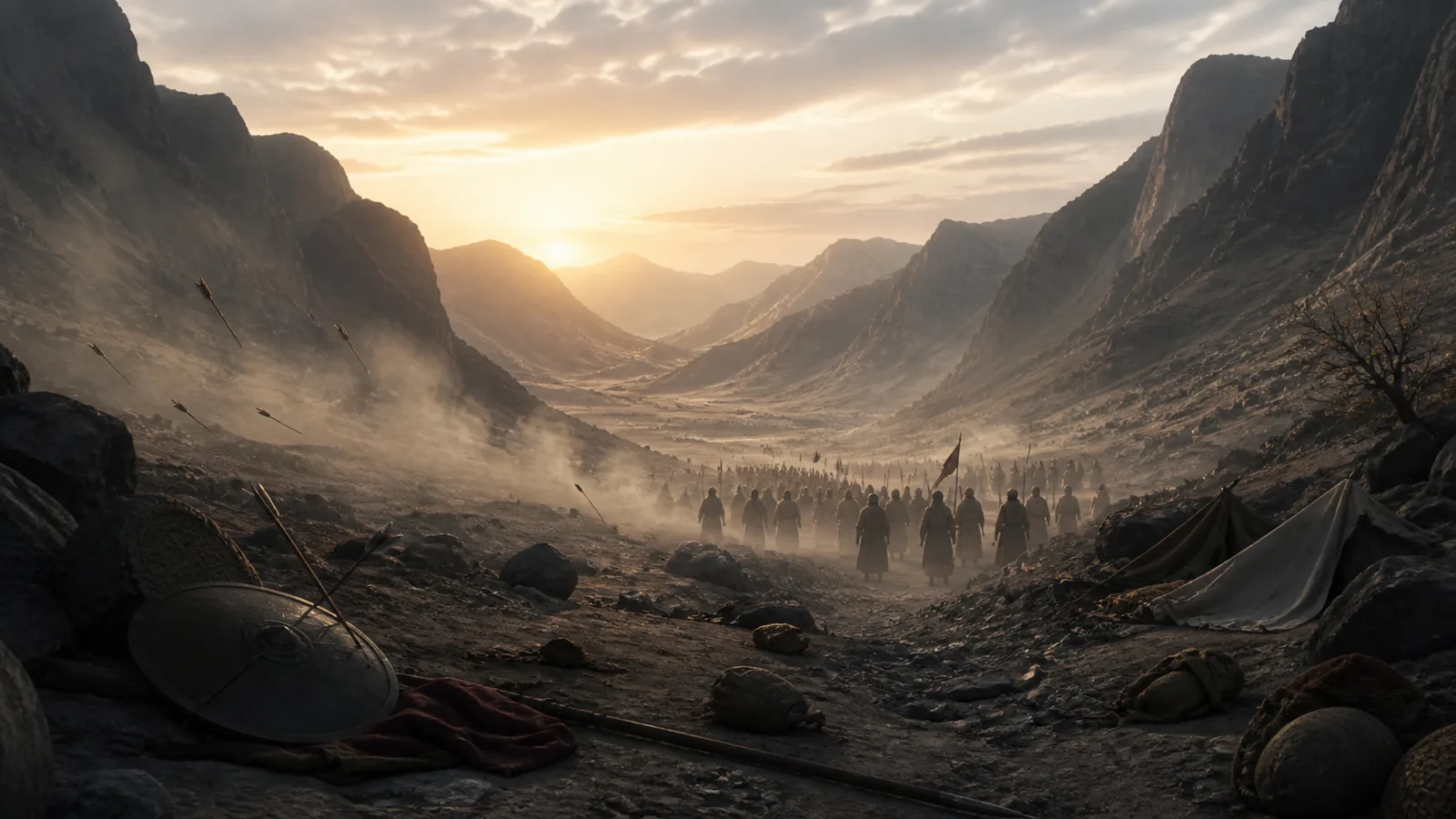
The Battle of Hunayn followed the conquest of Makkah in 8 AH. It is unusual among the campaigns in this series because the Quran names it directly and describes the Muslims’ initial setback. The account connects confidence in large numbers with the need for steadiness, help and recovery.
Who fought at Hunayn?
Seerah narratives associate the opposing coalition with Hawazin and Thaqif, and identify Malik ibn Awf as a leading commander. Hunayn is the place of the battle, not the name of a tribe. Thaqif should likewise not be confused with the altered tribal names that sometimes appear in rough translations.
The conflict arose in the changed political setting after Makkah’s submission. Explaining that setting does not require claiming to know the private intentions of every member of Hawazin or Thaqif. It is also misleading to portray the episode simply as revenge for the Prophet’s earlier rejection at Taif.
The Quran describes the setback
Quran 9:25 says that the Muslims’ large numbers pleased them but did not protect them from a moment of retreat. The surrounding land seemed constricted despite its breadth. This is a striking admission of vulnerability, not a description of an army that advanced without difficulty.
The passage continues in 9:26 with tranquillity granted to the Messenger and the believers, and forces they did not see. Verse 9:27 then turns to repentance and mercy. Reading all three verses together preserves the movement from overconfidence and fear to recovery, without omitting the final emphasis on mercy.
Abbas calls the companions back
In Sahih Muslim 1775a, Abbas describes remaining close to the Prophet with Abu Sufyan ibn al-Harith as others fell back. This Abu Sufyan is not Abu Sufyan ibn Harb, the better-known Makkan leader. Identifying them correctly prevents two different people from being merged.
The Prophet asked Abbas, whose voice carried strongly, to call the companions back. The report describes their return and renewed fighting. It also records the Prophet throwing small stones towards the opposing force. These details belong to Abbas’s narration; an elaborate account of black clouds turning into ants is not supplied by this source.
The eyewitness account complements the Quranic passage. One gives a participant’s view of the rally around the Prophet, while the other explains the event’s religious meaning. Neither requires us to label every person who initially retreated a hypocrite or to invent their thoughts.
Victory brought further responsibilities
Hunayn’s aftermath included the distribution of captured wealth and difficult conversations within the Muslim community. Bukhari 4330 describes the Ansar’s disappointment when gifts were directed towards people whose attachment was being strengthened. The Prophet addressed their feelings and reaffirmed his bond with them.
That later conversation matters because victory did not automatically remove tension. Leadership involved explaining decisions and recognising the loyalty of people who felt overlooked. The subsequent siege of Taif, discussed in the next article, must also be kept separate from the fighting at Hunayn itself.
The central lesson is therefore broader than “numbers do not matter.” Preparation and resources still have practical value, but they do not guarantee an outcome. In the Quranic account, confidence had to give way to humility and renewed steadiness. The aftermath adds another responsibility: treating the community’s concerns seriously once the immediate danger has passed.
Sources and further reading
- Quran 9:25–27: Hunayn, retreat, tranquillity and mercy.
- Muslim 1775a: Abbas’s account of the rally.
- Bukhari 4330: the Ansar and the distribution after Hunayn.
