
Close Menu
  • Home
  • Islamic History
    • Life of Prophet Muhammad
    • Abu Bakr al-Siddiq
    • Umar ibn al-Khattab
  • Companions
  • Series
    • 40,000 Years of Knowledge
    • The Secrets of the Universe
    • Amazon Series
  • About
  • Contact
  • Series Reading Guide
What's Hot

Ibrahim and Nimrod in Islam: What the Quran Says—and What History Cannot Confirm

2 October 2026

Prophet Ibrahim and Ancient Mesopotamia: Quran, Sumer and the Limits of History

30 September 2026

Thamud and Prophet Salih: The Quranic Account and the Archaeology of al-Hijr

28 September 2026
YouTube
YouTube Facebook
Religion Essence Hub
  • Home
  • Islamic History
    • Life of Prophet Muhammad
    • Abu Bakr al-Siddiq
    • Umar ibn al-Khattab
  • Companions
  • Series
    • 40,000 Years of Knowledge
    • The Secrets of the Universe
    • Amazon Series
  • About
  • Contact
  • Series Reading Guide
Religion Essence Hub
Home » Part 36 – Badr: Umayya ibn Khalaf and the Human Cost of Conflict
Life of Prophet Muhammad (PBUH)

Part 36 – Badr: Umayya ibn Khalaf and the Human Cost of Conflict

Religion Essence Hub Editorial TeamBy Religion Essence Hub Editorial Team19 February 2025Updated:28 August 2026No Comments4 Mins Read4 Views
Facebook Twitter Pinterest Telegram LinkedIn Tumblr Copy Link Email
Follow Us
Google News Flipboard
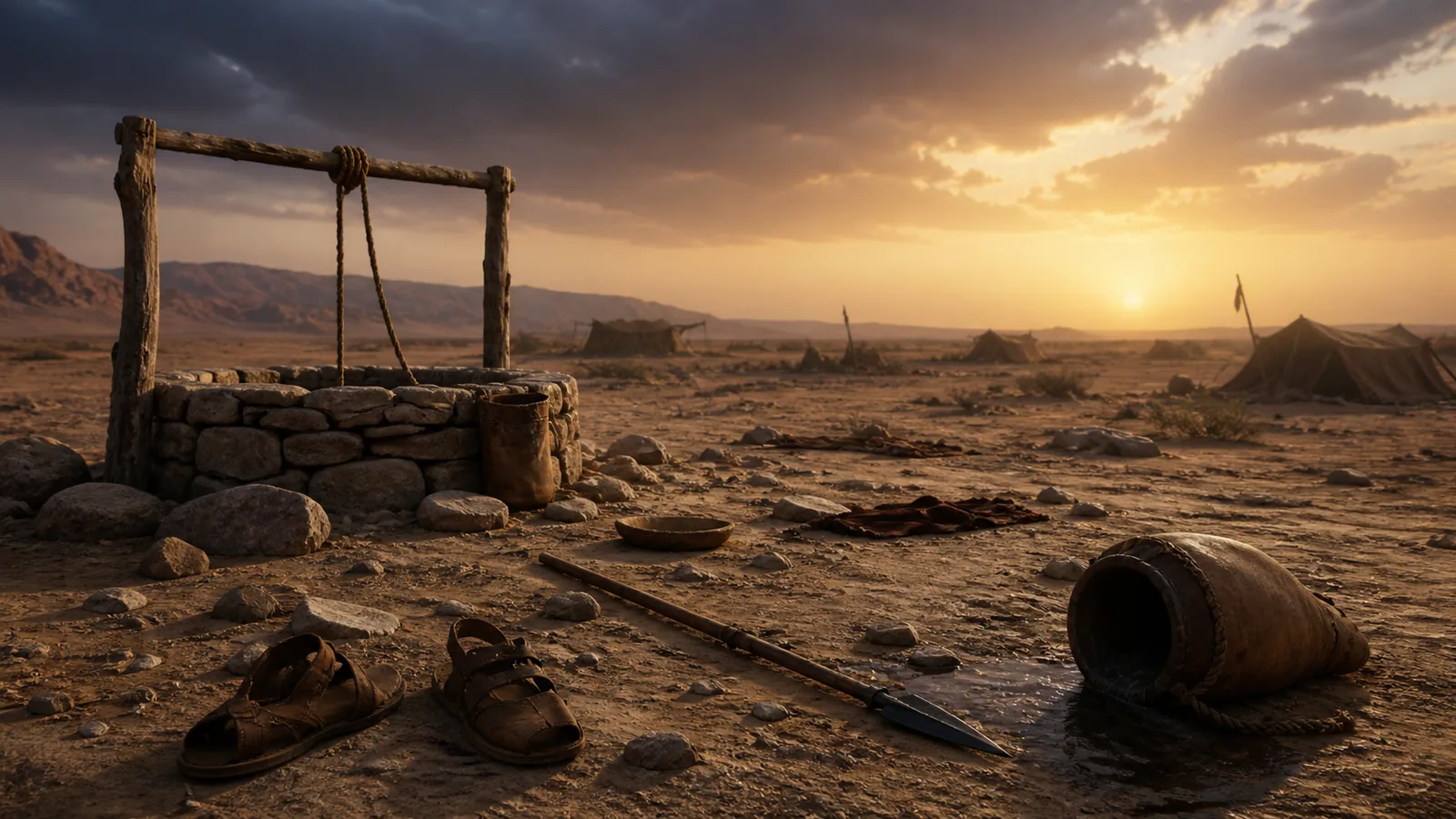
Quiet battlefield at Badr reflecting the human cost of conflict
Share
Facebook Twitter LinkedIn Pinterest Email Copy Link

Editorial note: This article uses the Quran and authenticated hadith for its central claims. It avoids unsupported statements about people’s motives, relatives or later beliefs and distinguishes the battle narrative from moral reflection.

Badr in its wider context

The Battle of Badr took place in 2 AH (624 CE) between the Muslim community of Madinah and a Quraysh force from Makkah. The Muslims had set out in connection with a Quraysh caravan, while a larger armed force moved from Makkah. The caravan escaped, but the two forces met near Badr.

Surah al-Anfal addresses the battle at length. Quran 8:42 describes the positions of the two sides and the caravan, while 8:9–12 describes prayer, reassurance and divine support. The Quranic account gives the event a religious meaning but does not remove the need to examine individual historical reports carefully.

Who was Umayya ibn Khalaf?

Umayya ibn Khalaf was a prominent Makkan associated in the Islamic sources with opposition to Muhammad and persecution of early Muslims. He is especially remembered in connection with Bilal ibn Rabah, who had suffered severe abuse in Makkah before Abu Bakr secured his freedom. That history helps explain the intensity of Bilal’s response when Umayya was recognised at Badr.

Authenticated reports also show that social and commercial relationships crossed the emerging political divide. Umayya had an agreement with Abd al-Rahman ibn Awf concerning the protection of property and relatives. This detail matters because the people at Badr were not anonymous armies: many had previous business ties, friendships or family connections.

Why Umayya joined the Makkan force

Sahih al-Bukhari 3950 reports that Umayya initially disliked the idea of leaving Makkah because he had heard a prediction that Muslims would kill him. Abu Jahl pressed him to accompany the Quraysh, arguing that other leaders might remain behind if a prominent man such as Umayya did not go. The report says he intended to travel only part of the way, but he continued until the army reached Badr.

This account is more reliable than dramatic modern retellings that invent speeches or describe the private beliefs of Umayya’s wife. The hadith records her reminding him of the warning he had received; it does not support adding unrelated claims about her later religious identity.

The encounter involving Bilal and Abd al-Rahman

Sahih al-Bukhari 2301 preserves Abd al-Rahman ibn Awf’s own account. During the fighting or its immediate aftermath, Abd al-Rahman tried to protect Umayya under their earlier agreement. Bilal recognised him and called members of the Ansar, insisting that Umayya should not escape. Abd al-Rahman’s protection failed, and Umayya and his son were killed.

The narration is uncomfortable because it brings together earlier persecution, personal loyalty and wartime vengeance. A responsible article should report those tensions without celebrating suffering. Bilal’s reaction is understandable in light of the torture associated with Umayya, while Abd al-Rahman’s effort reflects an existing pledge. The hadith presents both parts of the episode.

What should not be added to the story

  • Do not confuse Umayya ibn Khalaf with Ubayy ibn Khalaf; they are different people in the sources.
  • Do not claim that every detail in later battlefield storytelling appears in Sahih al-Bukhari or the Quran.
  • Do not assign later conversions, hatred or private motives to unnamed relatives without a traceable source.
  • Do not describe captives, casualties or opponents with dehumanising language. Historical explanation is stronger when it remains precise.

Aftermath and significance

Badr resulted in the death of several leading Quraysh figures and significantly strengthened the position of the Muslim community in Madinah. It also created lasting grief and a desire for retaliation in Makkah, contributing to the conflict that followed at Uhud.

For Muslims, the Quranic lesson of Badr centres on reliance on God, discipline and moral accountability rather than confidence in numbers alone. For historians, the battle also demonstrates how migration and political division transformed earlier relationships. The story of Umayya, Bilal and Abd al-Rahman is a particularly clear example: persecution, covenant and war all met in one encounter.

Sources for further reading

  • Surah al-Anfal — the Quran’s main discussion of Badr.
  • Sahih al-Bukhari 3950 — Umayya’s reluctance to join the Makkan force.
  • Sahih al-Bukhari 2301 — Abd al-Rahman’s agreement with Umayya and the encounter at Badr.
  • Sahih al-Bukhari 3971 — a concise parallel reference to Umayya’s death.

Continue the series

← PreviousAll partsNext →

Blog Life of Prophet Muhammad (PBUH)
Follow on Google News Follow on Flipboard
Share. Facebook Twitter Pinterest LinkedIn Telegram Email Copy Link
Religion Essence Hub logo
Religion Essence Hub Editorial Team
  • Website

The Religion Essence Hub Editorial Team researches, reviews and updates articles about religion, history, beliefs and culture.

Related Posts

Part 11 – Ridicule, Accusations and Demands for Signs

27 August 2026

Part 10 – Quraysh’s Objections and Attempts at Compromise

27 August 2026

Part 9 – The Warning at Mount Safa and Abu Lahab’s Response

27 August 2026

Comments are closed.

Top Posts

Part 2 – Shepherding as a Metaphor for Prophethood

19 August 202446 Views

Part 4 – Hanifs: Monotheism in Pre-Islamic Arabia

19 August 202436 Views

Part 6 – The First Revelation in the Cave of Hira

4 September 202429 Views

Part 3 – Prophet Muhammad’s Marriage to Khadijah: Partnership, Sources and Context

19 August 202424 Views
Don't Miss
40,000 Years of Knowledge

Ibrahim and Nimrod in Islam: What the Quran Says—and What History Cannot Confirm

2 October 20268 Mins Read1 Views

The Quranic debate between Ibrahim and an unnamed ruler, the later identification with Nimrod, and why claims connecting him to Sargon of Akkad remain unproven.

Prophet Ibrahim and Ancient Mesopotamia: Quran, Sumer and the Limits of History

30 September 2026

Thamud and Prophet Salih: The Quranic Account and the Archaeology of al-Hijr

28 September 2026

Aad, Iram and Prophet Hud: What the Quran and Archaeology Show

25 September 2026
About Religion Essence Hub

Religion Essence Hub publishes accessible articles about religion, history, beliefs, scripture and culture. We explain complex topics clearly and responsibly. Email: contact@religionessencehub.com

Facebook YouTube
Our Picks

Ibrahim and Nimrod in Islam: What the Quran Says—and What History Cannot Confirm

2 October 2026

Prophet Ibrahim and Ancient Mesopotamia: Quran, Sumer and the Limits of History

30 September 2026

Thamud and Prophet Salih: The Quranic Account and the Archaeology of al-Hijr

28 September 2026
Most Popular

Prophet Ibrahim and Ancient Mesopotamia: Quran, Sumer and the Limits of History

30 September 20261 Views

Ibrahim and Nimrod in Islam: What the Quran Says—and What History Cannot Confirm

2 October 20261 Views

Part 38 – Madinah’s Jewish Communities and Early Political Tensions

19 February 20252 Views
  • Home
  • Privacy Policy
  • About Us
  • Corrections Policy
  • Disclaimer
  • Editorial Policy
  • Editorial Team
  • Get In Touch
  • Terms of Use
  • Cookie Policy (UK)
© 2026 Religion Essence Hub. All rights reserved.

Type above and press Enter to search. Press Esc to cancel.

Manage Consent
To provide the best experiences, we use technologies like cookies to store and/or access device information. Consenting to these technologies will allow us to process data such as browsing behavior or unique IDs on this site. Not consenting or withdrawing consent, may adversely affect certain features and functions.
Functional Always active
The technical storage or access is strictly necessary for the legitimate purpose of enabling the use of a specific service explicitly requested by the subscriber or user, or for the sole purpose of carrying out the transmission of a communication over an electronic communications network.
Preferences
The technical storage or access is necessary for the legitimate purpose of storing preferences that are not requested by the subscriber or user.
Statistics
The technical storage or access that is used exclusively for statistical purposes. The technical storage or access that is used exclusively for anonymous statistical purposes. Without a subpoena, voluntary compliance on the part of your Internet Service Provider, or additional records from a third party, information stored or retrieved for this purpose alone cannot usually be used to identify you.
Marketing
The technical storage or access is required to create user profiles to send advertising, or to track the user on a website or across several websites for similar marketing purposes.
  • Manage options
  • Manage services
  • Manage {vendor_count} vendors
  • Read more about these purposes
View preferences
  • {title}
  • {title}
  • {title}