

Source note: The main narrative used here is Sahih al-Bukhari 2731–2732, read alongside Surah al-Fath. Later biographies contain additional details that should be assessed separately.
A pilgrimage stopped outside Makkah
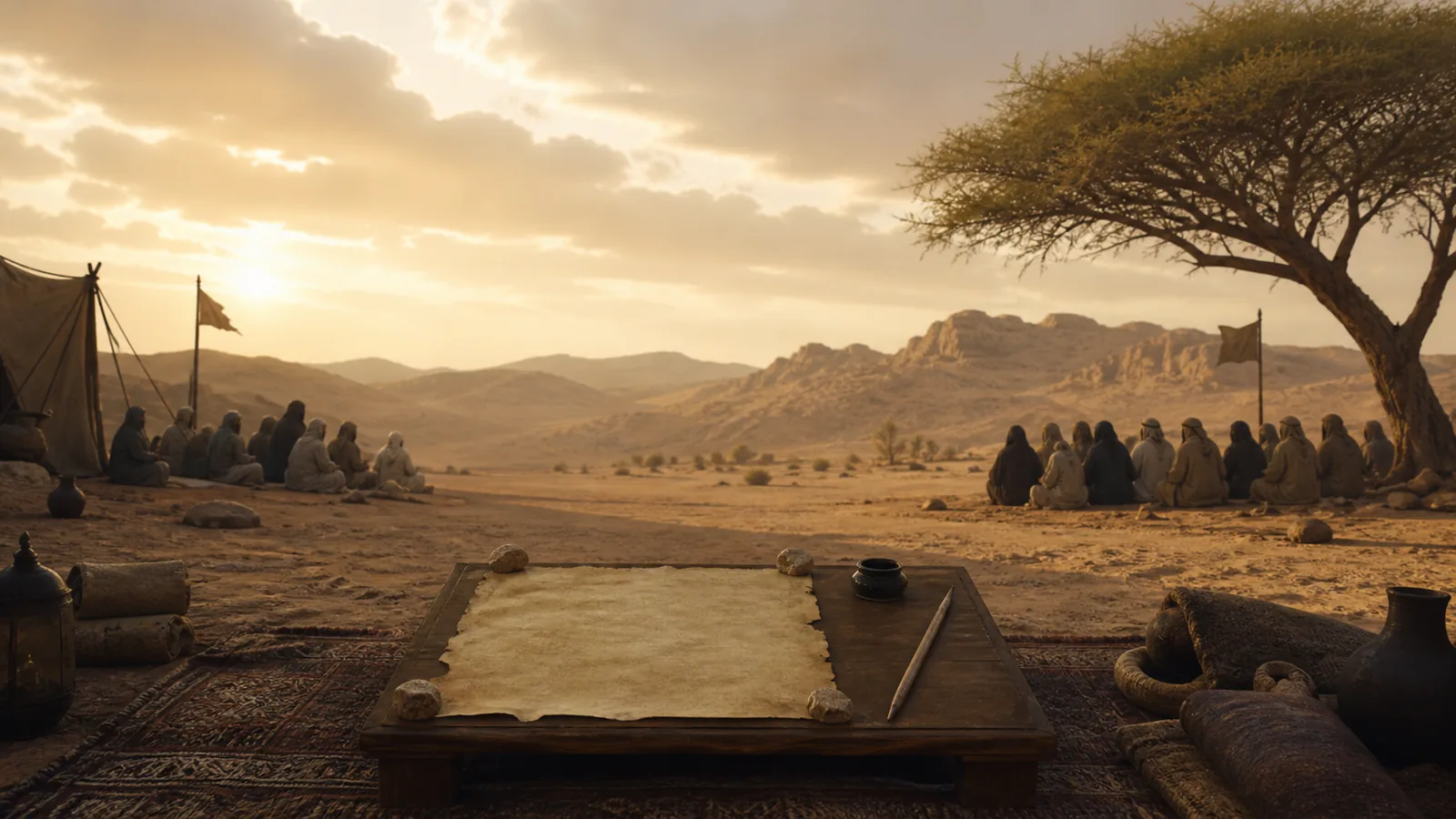
In 628 CE, Prophet Muhammad and his companions travelled toward Makkah intending to perform the lesser pilgrimage, not to begin a battle. Quraysh prevented their entry, and negotiations took place near Hudaybiyyah. The tension was real: the Muslims had come in pilgrimage dress, while both sides understood how quickly the encounter could become violent.
Sahih al-Bukhari records the Prophet stating that he would accept a proposal that respected sacred limits. The statement frames the treaty as a deliberate attempt to avoid bloodshed without abandoning the community’s religious purpose.
Terms that felt unequal
The written agreement postponed the pilgrimage and included return arrangements that many companions found painful. Umar questioned the terms because they appeared inconsistent with the Muslims’ confidence in their cause. The Prophet maintained the agreement, and Abu Bakr urged trust in his judgment. Umar later remembered his reaction with regret and tried to compensate through good deeds.
This episode should not be turned into a story in which asking questions is itself disloyal. It shows a difficult distinction: concerns may be voiced, but a lawful agreement made by legitimate leadership must still be honoured.
Why the Quran called it a victory
Surah al-Fath opens by describing a clear victory. The immediate result was not a captured city. It was a truce that reduced open conflict, acknowledged the Muslims as a negotiating party and created space for wider contact. The following period changed the political landscape more effectively than an unnecessary battle at the sanctuary would have done.
Enduring lessons
- Peace can be strategically strong even when its terms feel disappointing.
- Restraint is not the same as surrender.
- Treaties require patience and fidelity to agreed terms.
- Leaders must weigh long-term public benefit, not only immediate emotion.
- Historical success is broader than battlefield victory.
Sources
- Quran 48:1 — the “clear victory”
- Quran 48:18 — the pledge under the tree
- Sahih al-Bukhari 2731–2732 — the treaty narrative
- Quran 8:61 — inclination toward peace
