

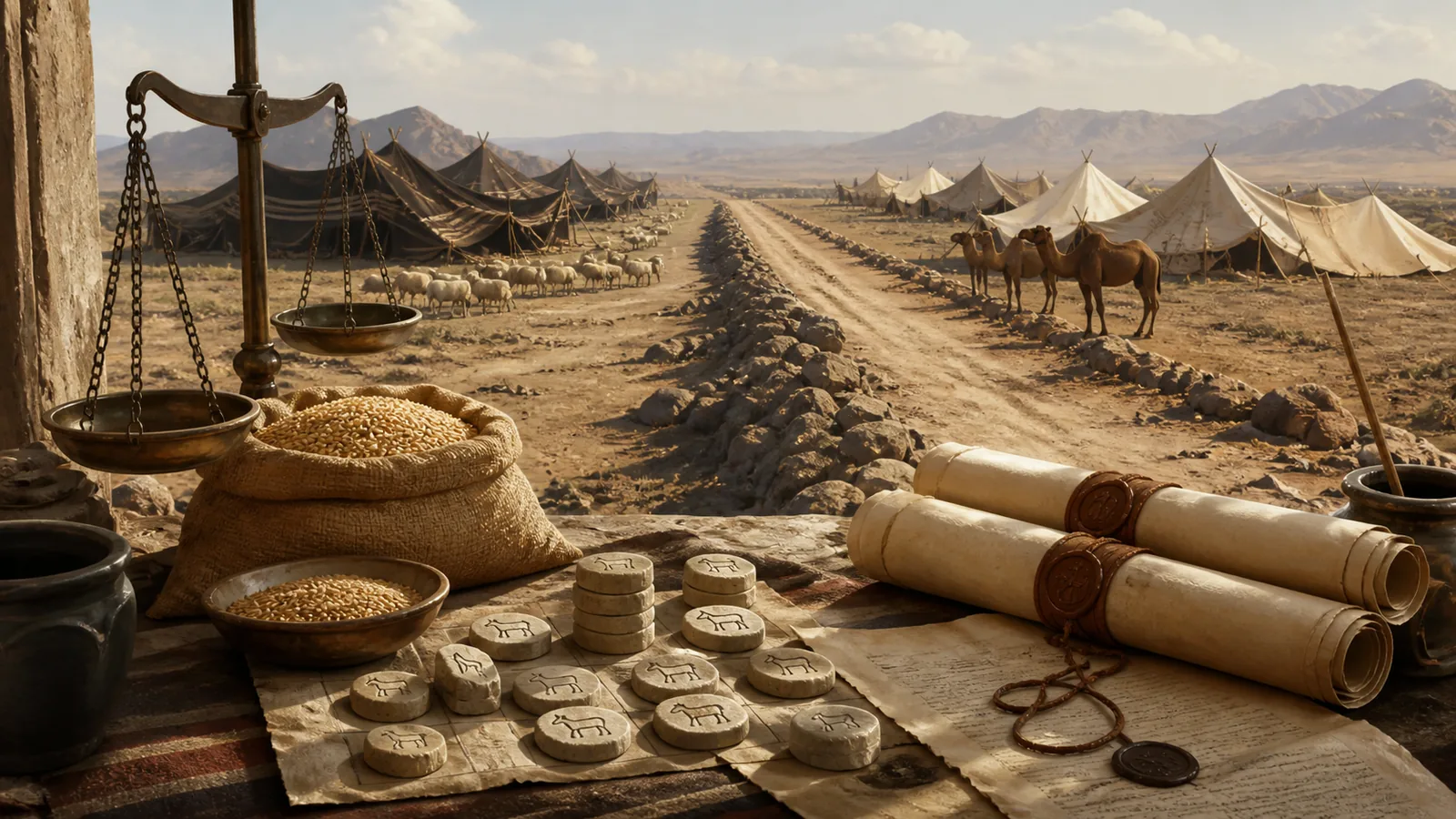
After the death of the Prophet Muhammad in 632 CE, the first Muslim community faced a sudden crisis of leadership and unity. Abu Bakr had only recently become caliph when reports arrived that several groups in Arabia no longer intended to maintain the same relationship with Medina. Some followed rival claimants to prophethood, some challenged the new political authority, and some continued to identify as Muslims while refusing to send zakat. These different situations became connected with the conflicts later called the Ridda wars.
The refusal of zakat created a particularly difficult question. Was it only a disagreement about money, or did it reject a public religious duty that supported the community and its vulnerable members? Early Islamic reports preserve a serious discussion between Abu Bakr and Umar ibn al-Khattab about how the new government should respond.
What Zakat Meant to the Early Muslim Community
Zakat meant more than an optional gift. The Quran identifies eligible recipients in verse 9:60, including people in poverty, people in debt and stranded travelers. Verse 9:103 also describes the collection of charitable dues and connects it with purification. In the community formed at Medina, worship, social responsibility and public administration therefore met in the institution of zakat.
This background helps explain why Abu Bakr did not treat the dispute as an ordinary change in local taxation. For him, the obligation did not end with the Prophet’s death. The caliph did not inherit prophethood, but the community still had to carry out duties already established in the Quran and the Prophet’s practice.
A Crisis with More Than One Cause
It is important not to describe every Arabian group in the same way. The early sources discuss rival prophetic movements, armed political rebellion, the breaking of agreements and the withholding of zakat. Later Muslim scholars also distinguished between outright rejection of Islam and rebellion against the authority responsible for collection. The label “Ridda” often covers the wider crisis. However, using it too simply can hide these differences.
The government in Medina was also in a vulnerable position. The Prophet had died, Usama’s expedition had already been prepared, and the new caliph had to show whether agreements and obligations would continue. If each tribe could keep the benefits of membership in the community while discarding duties it disliked, the shared system could quickly fragment.
The Debate Between Abu Bakr and Umar
Sahih al-Bukhari 1399–1400 records that Umar initially questioned the decision to fight people who professed the basic testimony of faith. His concern drew on a saying of the Prophet about the protection of life and property. Abu Bakr answered that he would oppose those who separated prayer from zakat and withheld what they had previously paid. The report ends with Umar recognizing the strength of Abu Bakr’s judgment.
This exchange shows consultation rather than automatic agreement. Umar raised a legal and moral objection; Abu Bakr explained why he believed the case fell within the exception for established rights and obligations. Abu Bakr defended continuity with the community’s existing obligations, not anger over lost revenue.
Why Abu Bakr Considered the Refusal So Serious
Abu Bakr’s decision had religious, social and political dimensions. Religiously, the Quran repeatedly joins prayer with giving. Socially, zakat moved resources toward defined groups whose needs continued during a national crisis. Politically, refusing collection could also signal that a tribe no longer recognized any binding agreement with Medina after the Prophet’s death.
Readers should keep these dimensions in their seventh-century setting. The episode is part of the history of the first caliphate; it is not a shortcut for judging modern disputes or for private individuals to take coercive action. Historical sources also differ about the motives of particular tribes, so careful writing should distinguish what a source reports from what the evidence establishes with confidence.
Outcome and Historical Significance
The campaigns associated with the Ridda crisis eventually restored the authority of Medina across much of Arabia. These events shaped Abu Bakr’s short caliphate, and the restored unity later affected the expansion of the Muslim state beyond Arabia. Yet the immediate issue was survival: whether the community formed during the Prophet’s lifetime would remain a connected society with shared duties after his death.
For readers, the most useful lesson is not a slogan about force. The episode shows the pressure of leadership during a constitutional crisis, the value of open disagreement among senior advisers, and the need to understand religious duties in their social context. Abu Bakr’s firmness and Umar’s questioning both became part of the remembered account.
Key Points
- Zakat supported defined social needs as a public obligation, not only a private donation.
- The post-Prophetic crisis included different kinds of opposition; not every group had the same beliefs or motives.
- Abu Bakr and Umar debated the legal basis of the response before Umar accepted Abu Bakr’s judgment.
- The decision aimed to preserve continuity, social responsibility and the unity of the early community.
