
Close Menu
  • Home
  • Islamic History
    • Life of Prophet Muhammad
    • Abu Bakr al-Siddiq
    • Umar ibn al-Khattab
  • Companions
  • Series
    • 40,000 Years of Knowledge
    • The Secrets of the Universe
    • Amazon Series
  • About
  • Contact
  • Series Reading Guide
What's Hot

Ibrahim and Nimrod in Islam: What the Quran Says—and What History Cannot Confirm

2 October 2026

Prophet Ibrahim and Ancient Mesopotamia: Quran, Sumer and the Limits of History

30 September 2026

Thamud and Prophet Salih: The Quranic Account and the Archaeology of al-Hijr

28 September 2026
YouTube
YouTube Facebook
Religion Essence Hub
  • Home
  • Islamic History
    • Life of Prophet Muhammad
    • Abu Bakr al-Siddiq
    • Umar ibn al-Khattab
  • Companions
  • Series
    • 40,000 Years of Knowledge
    • The Secrets of the Universe
    • Amazon Series
  • About
  • Contact
  • Series Reading Guide
Religion Essence Hub
Home » Part 55 – After Khaybar: Safiyya, Agreements and the Return to Madinah
Life of Prophet Muhammad (PBUH)

Part 55 – After Khaybar: Safiyya, Agreements and the Return to Madinah

Religion Essence Hub Editorial TeamBy Religion Essence Hub Editorial Team19 February 2025Updated:6 September 2026No Comments4 Mins Read3 Views
Facebook Twitter Pinterest Telegram LinkedIn Tumblr Copy Link Email
Follow Us
Google News Flipboard
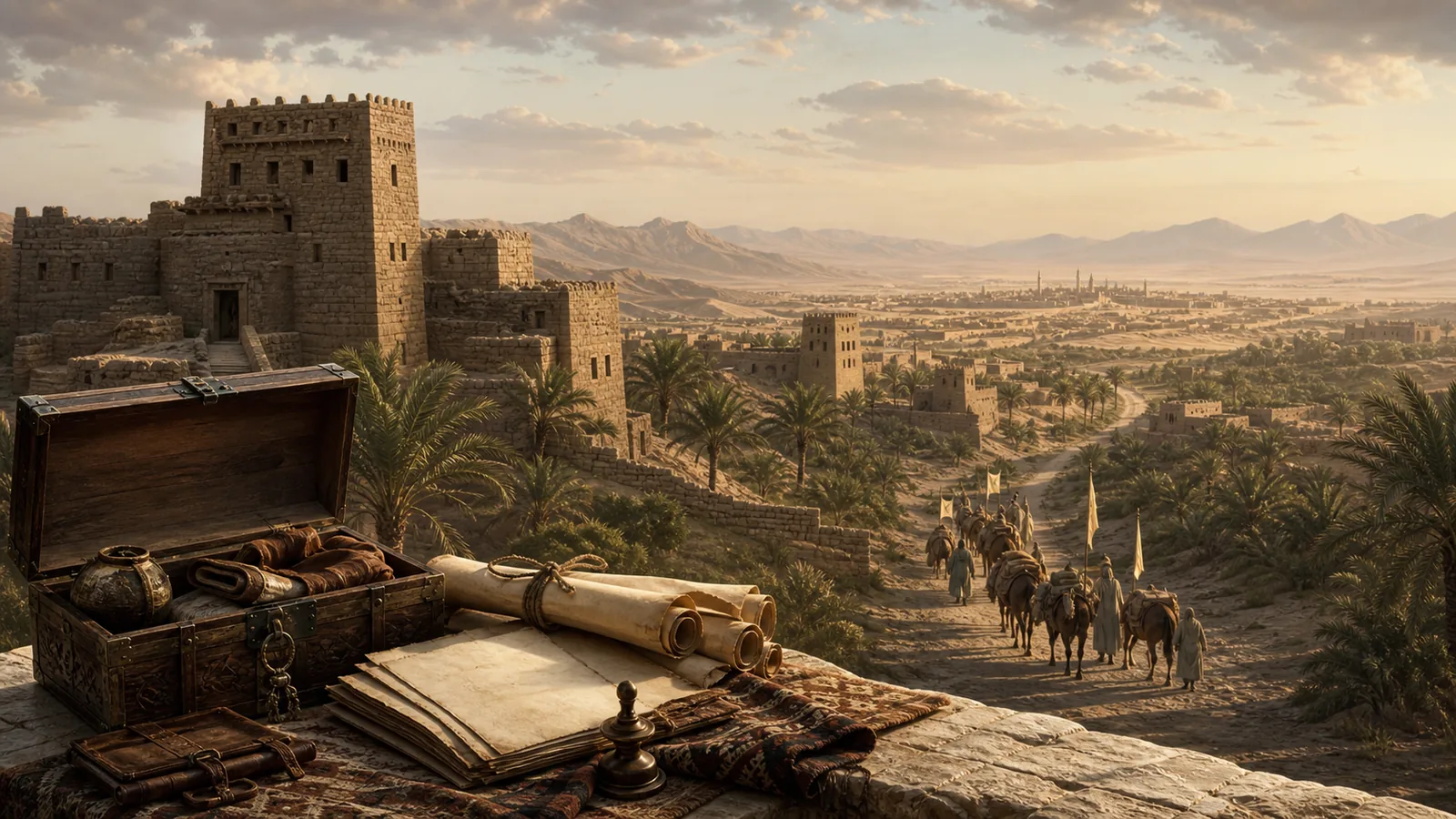
Khaybar oasis agreements and caravan returning to Madinah
Share
Facebook Twitter LinkedIn Pinterest Email Copy Link

Editorial note: This article separates material found in the Quran and authenticated hadith from details supplied by later sira and historical works. Khaybar was a violent seventh-century conflict. A responsible account must describe its human consequences plainly, without romanticism or sensationalism.

The setting after Khaybar

The campaign at Khaybar occurred in 7 AH (628 CE), after the Treaty of Hudaybiyyah. Khaybar was a group of fortified agricultural settlements north of Madinah, not a single castle. The Muslim victory changed the political and economic balance of the region. The Quran’s discussion of the pledge at Hudaybiyyah and a “victory near at hand” appears in Surah al-Fath 48:18–20; classical commentators commonly connect this promised near victory with Khaybar.

New arrangements after the forts’ surrender covered land and cultivation. Reports in the hadith collections describe the residents continuing to work the agricultural land in return for an agreed share of its produce. This arrangement is important because it shows that the aftermath was not simply the emptying of the oasis: production continued under a new political authority.

Safiyya bint Huyayy

Safiyya bint Huyayy came from the Jewish community of Banu Nadir and was among the captives after Khaybar. Her husband was killed during the conflict, and other members of her family had died in earlier confrontations. Any responsible account should acknowledge that background of war, bereavement and captivity.

Several authenticated reports state that the Prophet Muhammad freed Safiyya and married her, making her manumission her bridal gift. Both Sahih al-Bukhari 4200 and Sahih al-Bukhari 4201 record this. Other reports describe the marriage meal on the journey back and the companions recognising her status as a wife of the Prophet when she observed the rules of seclusion applied to his wives.

Sahih al-Bukhari 4211 describes a simple wedding meal and the care taken to help Safiyya mount the camel. Sahih al-Bukhari 4212 says the party stayed for three days on the road between Khaybar and Madinah. The sources establish her manumission, marriage and recognised status. Later narratives add conversations, dreams and motives, but those details vary in strength. Readers should not assume that every element has the same authentication.

How to discuss the marriage responsibly

Muslim tradition honours Safiyya as one of the Mothers of the Believers. Modern readers also ask ethical questions about power and consent because she had just experienced defeat, captivity and family loss. A credible article should not hide either side of the record. It can accurately report the authenticated tradition of manumission and marriage while recognising the severe wartime circumstances in which those events occurred.

Avoid claims that go beyond the available evidence. The sources do not support turning Safiyya into a one-dimensional symbol, whether for idealised storytelling or polemical attack. Her later life in Madinah, her learning and her position within the Prophet’s household also form part of her historical identity.

The poisoned food report

Hadith collections also preserve a report that a cooked sheep containing poison was presented to the Prophet after Khaybar. Sahih al-Bukhari 4249 gives the core report. Longer versions in other collections discuss questioning the woman associated with the food and the consequences for those who ate from it.

An account of this episode must avoid invented dialogue or medical certainty that the sources do not provide. The authenticated core is the presentation of poisoned food. Later discussions about motive, legal response and the relationship between the poisoning and the Prophet’s final illness require careful citation to the exact narration being used.

Return to Madinah and wider consequences

The return from Khaybar brought new resources and a more secure northern position for Madinah. It also brought difficult legal and social questions about land, agreements, captives and families affected by war. These subjects later became important in Islamic legal discussions, but readers should first examine the historical episode through its own sources rather than through slogans.

The next phase of the biography moves toward the fulfilment of the postponed pilgrimage agreed at Hudaybiyyah. Khaybar therefore sits between two major developments: the treaty that reduced immediate conflict with Makkah and the growing authority of the Madinan community.

Source guide

  • Quran 48:18–20 — the pledge at Hudaybiyyah and the promised near victory.
  • Sahih al-Bukhari 4200 and 4201 — Safiyya’s manumission and marriage.
  • Sahih al-Bukhari 4211 to 4213 — the journey, wedding meal and her recognised status as a wife.
  • Sahih al-Bukhari 4249 — the poisoned sheep report.

Continue the series

← PreviousAll partsNext →

Blog Life of Prophet Muhammad (PBUH)
Follow on Google News Follow on Flipboard
Share. Facebook Twitter Pinterest LinkedIn Telegram Email Copy Link
Religion Essence Hub logo
Religion Essence Hub Editorial Team
  • Website

The Religion Essence Hub Editorial Team researches, reviews and updates articles about religion, history, beliefs and culture.

Related Posts

Part 11 – Ridicule, Accusations and Demands for Signs

27 August 2026

Part 10 – Quraysh’s Objections and Attempts at Compromise

27 August 2026

Part 9 – The Warning at Mount Safa and Abu Lahab’s Response

27 August 2026

Comments are closed.

Top Posts

Part 2 – Shepherding as a Metaphor for Prophethood

19 August 202446 Views

Part 4 – Hanifs: Monotheism in Pre-Islamic Arabia

19 August 202436 Views

Part 6 – The First Revelation in the Cave of Hira

4 September 202429 Views

Part 3 – Prophet Muhammad’s Marriage to Khadijah: Partnership, Sources and Context

19 August 202424 Views
Don't Miss
40,000 Years of Knowledge

Ibrahim and Nimrod in Islam: What the Quran Says—and What History Cannot Confirm

2 October 20268 Mins Read1 Views

The Quranic debate between Ibrahim and an unnamed ruler, the later identification with Nimrod, and why claims connecting him to Sargon of Akkad remain unproven.

Prophet Ibrahim and Ancient Mesopotamia: Quran, Sumer and the Limits of History

30 September 2026

Thamud and Prophet Salih: The Quranic Account and the Archaeology of al-Hijr

28 September 2026

Aad, Iram and Prophet Hud: What the Quran and Archaeology Show

25 September 2026
About Religion Essence Hub

Religion Essence Hub publishes accessible articles about religion, history, beliefs, scripture and culture. We explain complex topics clearly and responsibly. Email: contact@religionessencehub.com

Facebook YouTube
Our Picks

Ibrahim and Nimrod in Islam: What the Quran Says—and What History Cannot Confirm

2 October 2026

Prophet Ibrahim and Ancient Mesopotamia: Quran, Sumer and the Limits of History

30 September 2026

Thamud and Prophet Salih: The Quranic Account and the Archaeology of al-Hijr

28 September 2026
Most Popular

Prophet Ibrahim and Ancient Mesopotamia: Quran, Sumer and the Limits of History

30 September 20261 Views

Ibrahim and Nimrod in Islam: What the Quran Says—and What History Cannot Confirm

2 October 20261 Views

Part 38 – Madinah’s Jewish Communities and Early Political Tensions

19 February 20252 Views
  • Home
  • Privacy Policy
  • About Us
  • Corrections Policy
  • Disclaimer
  • Editorial Policy
  • Editorial Team
  • Get In Touch
  • Terms of Use
  • Cookie Policy (UK)
© 2026 Religion Essence Hub. All rights reserved.

Type above and press Enter to search. Press Esc to cancel.

Manage Consent
To provide the best experiences, we use technologies like cookies to store and/or access device information. Consenting to these technologies will allow us to process data such as browsing behavior or unique IDs on this site. Not consenting or withdrawing consent, may adversely affect certain features and functions.
Functional Always active
The technical storage or access is strictly necessary for the legitimate purpose of enabling the use of a specific service explicitly requested by the subscriber or user, or for the sole purpose of carrying out the transmission of a communication over an electronic communications network.
Preferences
The technical storage or access is necessary for the legitimate purpose of storing preferences that are not requested by the subscriber or user.
Statistics
The technical storage or access that is used exclusively for statistical purposes. The technical storage or access that is used exclusively for anonymous statistical purposes. Without a subpoena, voluntary compliance on the part of your Internet Service Provider, or additional records from a third party, information stored or retrieved for this purpose alone cannot usually be used to identify you.
Marketing
The technical storage or access is required to create user profiles to send advertising, or to track the user on a website or across several websites for similar marketing purposes.
  • Manage options
  • Manage services
  • Manage {vendor_count} vendors
  • Read more about these purposes
View preferences
  • {title}
  • {title}
  • {title}