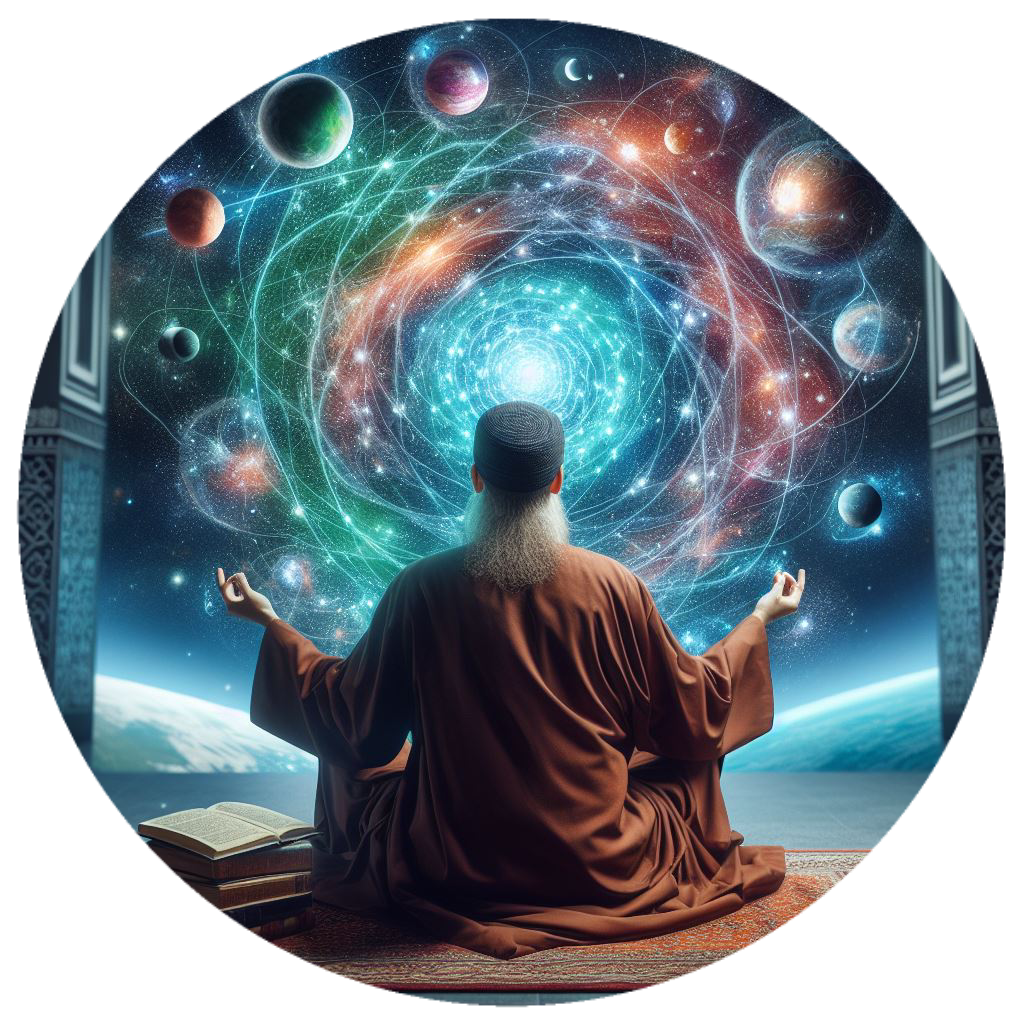


Source note: The Night Journey is stated in the Quran, while authenticated hadith provide accounts of the Ascension. Later popular retellings often combine different narrations and should not be treated as one verbatim transcript.
The Night Journey
Quran 17:1 describes God taking His servant by night from the Sacred Mosque to the Farthest Mosque and showing him divine signs. Muslim tradition identifies the journey as al-Isra, from Makkah to Jerusalem.
The verse does not provide a date or a complete itinerary. Biographical works often place the event during the difficult late Meccan period, but proposed dates differ. It is therefore better to say “before the Hijra” than to assert an exact night without qualification.
The Ascension
Hadith accounts describe the Prophet ascending through the heavens, meeting earlier prophets and witnessing signs. Sahih al-Bukhari 349 names Adam, Jesus, John, Joseph, Idris, Aaron, Moses and Abraham within the journey.
Quran 53:13–18 refers to a vision near the Lote Tree of the Utmost Boundary. Interpretations differ over how these verses relate to details in the hadith reports, so the Quranic wording and later explanation should remain distinguishable.
The five daily prayers
Bukhari 349 links the Ascension with the obligation of prayer. The narration says fifty prayers were first prescribed and the number was reduced after repeated exchanges involving Moses, while the reward remained equivalent to fifty. The final obligation was five daily prayers.
Faith, meaning and evidence
For Muslims, al-Isra and al-Mi’raj affirm divine power, continuity among prophets and the centrality of prayer. They are matters of religious belief, not scientific demonstrations of portals, dimensions or space travel. Modern scientific vocabulary should not be inserted into the sources as though the texts make those claims.
- Cite Quran 17:1 for the Night Journey.
- Use authenticated hadith for the heavenly ascent and prayers.
- Avoid exact dates that the primary sources do not establish.
- Do not combine weak popular details into a single “authenticated” story.
