
Close Menu
  • Home
  • Islamic History
    • Life of Prophet Muhammad
    • Abu Bakr al-Siddiq
    • Umar ibn al-Khattab
  • Companions
  • Series
    • 40,000 Years of Knowledge
    • The Secrets of the Universe
    • Amazon Series
  • About
  • Contact
  • Series Reading Guide
What's Hot

Ibrahim and Nimrod in Islam: What the Quran Says—and What History Cannot Confirm

2 October 2026

Prophet Ibrahim and Ancient Mesopotamia: Quran, Sumer and the Limits of History

30 September 2026

Thamud and Prophet Salih: The Quranic Account and the Archaeology of al-Hijr

28 September 2026
YouTube
YouTube Facebook
Religion Essence Hub
  • Home
  • Islamic History
    • Life of Prophet Muhammad
    • Abu Bakr al-Siddiq
    • Umar ibn al-Khattab
  • Companions
  • Series
    • 40,000 Years of Knowledge
    • The Secrets of the Universe
    • Amazon Series
  • About
  • Contact
  • Series Reading Guide
Religion Essence Hub
Home » Part 54 – Battle of Khyber
Life of Prophet Muhammad (PBUH)

Part 54 – Battle of Khyber

Religion Essence Hub Editorial TeamBy Religion Essence Hub Editorial Team19 February 2025Updated:9 September 2026No Comments4 Mins Read3 Views
Facebook Twitter Pinterest Telegram LinkedIn Tumblr Copy Link Email
Follow Us
Google News Flipboard
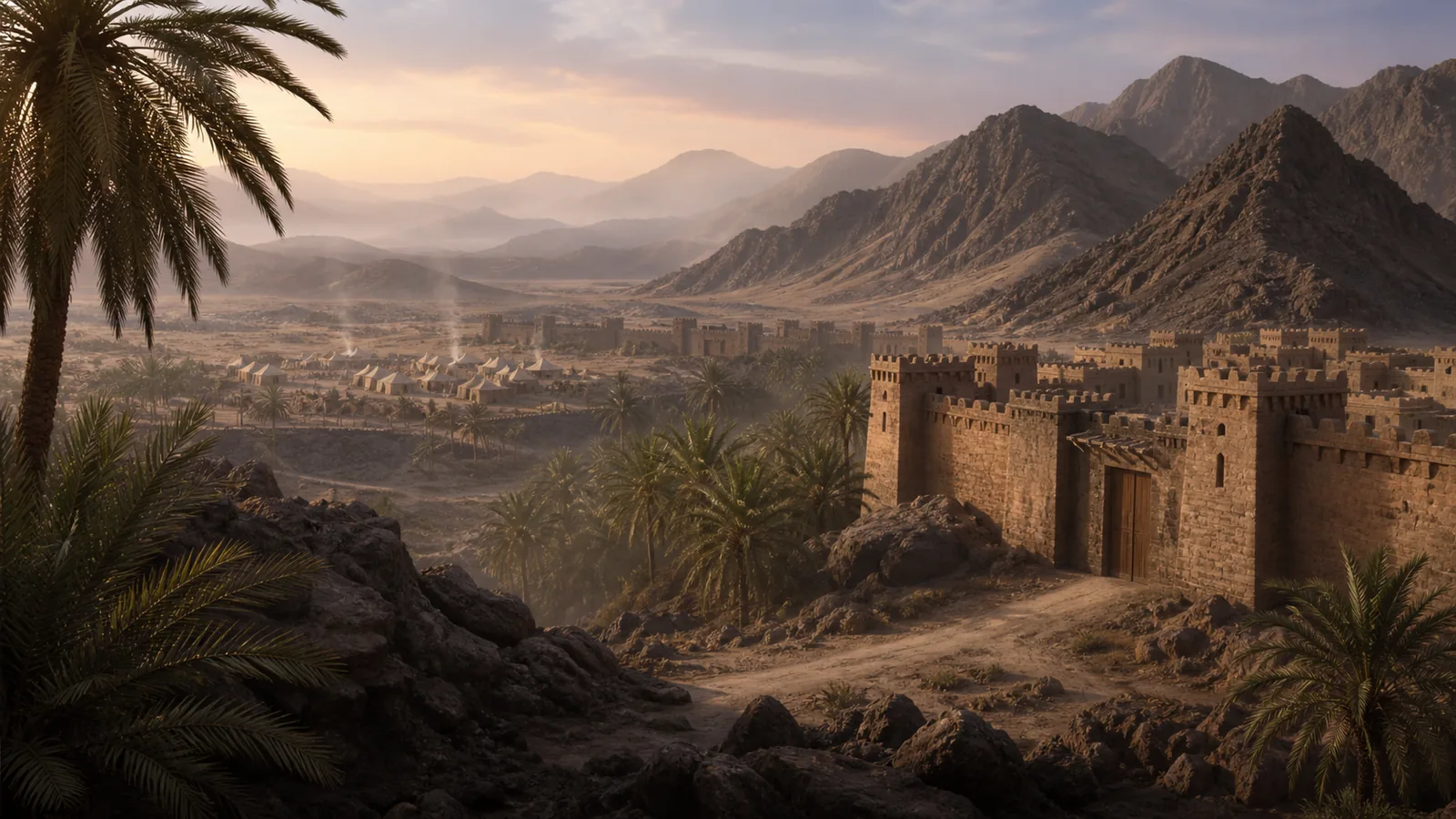
Khaybar oasis fortresses in the volcanic landscape
Share
Facebook Twitter LinkedIn Pinterest Email Copy Link

The Battle of Khaybar followed the Treaty of Hudaybiyyah and brought a fortified agricultural region north of Medina under the Prophet Muhammad’s authority. Its history includes fighting, negotiations and an arrangement for cultivating the land. Understanding all three is more useful than reducing the episode to a story about military victory alone.

Khaybar in its historical setting

Seerah chronologies generally place the campaign in 7 AH. Khaybar was an oasis with several fortified settlements and productive farmland. Its Jewish inhabitants were not a single undifferentiated army, and this particular conflict should not be described as a war against Jewish people everywhere.

Early Muslim narratives place the campaign against a background of regional alliances and hostility involving some leaders who had opposed Medina. Political relationships, fortifications and resources formed part of that setting. Religious identity alone does not explain every participant’s choices, nor does it establish collective guilt for civilians.

Quran 48:18–19 promises victory and gains following Hudaybiyyah. Muslim commentators connect these verses with later events, including Khaybar. The verses themselves do not name Khaybar, however. That distinction separates the Quran’s wording from the historical interpretation used to explain it.

Ali and the banner

One of the best-known accounts is Sahl ibn Sa‘d’s report in Sahih al-Bukhari 4210. The Prophet announced that the banner would be entrusted to a man who loved God and His Messenger and was loved by them. Ali ibn Abi Talib, who had been suffering from an eye complaint, was summoned and received it.

The report also preserves instructions that are sometimes lost in retellings. Ali was told to proceed without haste and explain the call to Islam and its obligations. Guiding a person was described as more valuable than prized camels. The account therefore concerns the purpose and discipline of leadership, not simply the honour of carrying a flag.

Fighting and everyday discipline

The campaign involved fortified positions rather than one brief encounter on an open plain. Popular summaries sometimes add precise routes, speeches or commanders’ names without identifying their sources. Such details should be checked against a named historical work before being presented as established facts.

Hadith collections also preserve less dramatic moments. Bukhari 4199 reports an announcement prohibiting the consumption of domestic donkey meat, followed by the emptying of cooking pots. In its narrative setting, the episode shows that conduct within the camp mattered alongside events at the fortifications. It should not be confused with a modern nutritional claim.

What happened to the farmland?

Bukhari 2328 describes an agricultural agreement under which the people of Khaybar continued working the land for a share of its produce. Half of the fruit or crops formed their share. The report also records later changes during Umar’s caliphate, which belong to a different period and should not be collapsed into the campaign itself.

This arrangement is an important part of the aftermath. The account does not end with a captured fortress: it continues into questions of labour, land and distribution. Describing those terms helps readers understand how military control affected ordinary economic life.

Khaybar’s place in this series is therefore both military and administrative. The surviving reports highlight Ali’s responsibility, discipline within the expedition and an agricultural settlement. They also require careful language about the communities involved. A seventh-century conflict is not a basis for hostility towards Jewish neighbours or any religious community today.

Sources and further reading

  • Bukhari 4210: Ali receives the banner and instructions.
  • Bukhari 4199: an announcement in the camp.
  • Bukhari 2328: the agricultural agreement.
  • Quran 48:18–19: the promise following the pledge at Hudaybiyyah.

Continue the series

← PreviousAll partsNext →

Blog Life of Prophet Muhammad (PBUH)
Follow on Google News Follow on Flipboard
Share. Facebook Twitter Pinterest LinkedIn Telegram Email Copy Link
Religion Essence Hub logo
Religion Essence Hub Editorial Team
  • Website

The Religion Essence Hub Editorial Team researches, reviews and updates articles about religion, history, beliefs and culture.

Related Posts

Part 11 – Ridicule, Accusations and Demands for Signs

27 August 2026

Part 10 – Quraysh’s Objections and Attempts at Compromise

27 August 2026

Part 9 – The Warning at Mount Safa and Abu Lahab’s Response

27 August 2026

Comments are closed.

Top Posts

Part 2 – Shepherding as a Metaphor for Prophethood

19 August 202446 Views

Part 4 – Hanifs: Monotheism in Pre-Islamic Arabia

19 August 202436 Views

Part 6 – The First Revelation in the Cave of Hira

4 September 202429 Views

Part 3 – Prophet Muhammad’s Marriage to Khadijah: Partnership, Sources and Context

19 August 202424 Views
Don't Miss
40,000 Years of Knowledge

Ibrahim and Nimrod in Islam: What the Quran Says—and What History Cannot Confirm

2 October 20268 Mins Read1 Views

The Quranic debate between Ibrahim and an unnamed ruler, the later identification with Nimrod, and why claims connecting him to Sargon of Akkad remain unproven.

Prophet Ibrahim and Ancient Mesopotamia: Quran, Sumer and the Limits of History

30 September 2026

Thamud and Prophet Salih: The Quranic Account and the Archaeology of al-Hijr

28 September 2026

Aad, Iram and Prophet Hud: What the Quran and Archaeology Show

25 September 2026
About Religion Essence Hub

Religion Essence Hub publishes accessible articles about religion, history, beliefs, scripture and culture. We explain complex topics clearly and responsibly. Email: contact@religionessencehub.com

Facebook YouTube
Our Picks

Ibrahim and Nimrod in Islam: What the Quran Says—and What History Cannot Confirm

2 October 2026

Prophet Ibrahim and Ancient Mesopotamia: Quran, Sumer and the Limits of History

30 September 2026

Thamud and Prophet Salih: The Quranic Account and the Archaeology of al-Hijr

28 September 2026
Most Popular

Prophet Ibrahim and Ancient Mesopotamia: Quran, Sumer and the Limits of History

30 September 20261 Views

Ibrahim and Nimrod in Islam: What the Quran Says—and What History Cannot Confirm

2 October 20261 Views

Part 38 – Madinah’s Jewish Communities and Early Political Tensions

19 February 20252 Views
  • Home
  • Privacy Policy
  • About Us
  • Corrections Policy
  • Disclaimer
  • Editorial Policy
  • Editorial Team
  • Get In Touch
  • Terms of Use
  • Cookie Policy (UK)
© 2026 Religion Essence Hub. All rights reserved.

Type above and press Enter to search. Press Esc to cancel.

Manage Consent
To provide the best experiences, we use technologies like cookies to store and/or access device information. Consenting to these technologies will allow us to process data such as browsing behavior or unique IDs on this site. Not consenting or withdrawing consent, may adversely affect certain features and functions.
Functional Always active
The technical storage or access is strictly necessary for the legitimate purpose of enabling the use of a specific service explicitly requested by the subscriber or user, or for the sole purpose of carrying out the transmission of a communication over an electronic communications network.
Preferences
The technical storage or access is necessary for the legitimate purpose of storing preferences that are not requested by the subscriber or user.
Statistics
The technical storage or access that is used exclusively for statistical purposes. The technical storage or access that is used exclusively for anonymous statistical purposes. Without a subpoena, voluntary compliance on the part of your Internet Service Provider, or additional records from a third party, information stored or retrieved for this purpose alone cannot usually be used to identify you.
Marketing
The technical storage or access is required to create user profiles to send advertising, or to track the user on a website or across several websites for similar marketing purposes.
  • Manage options
  • Manage services
  • Manage {vendor_count} vendors
  • Read more about these purposes
View preferences
  • {title}
  • {title}
  • {title}