

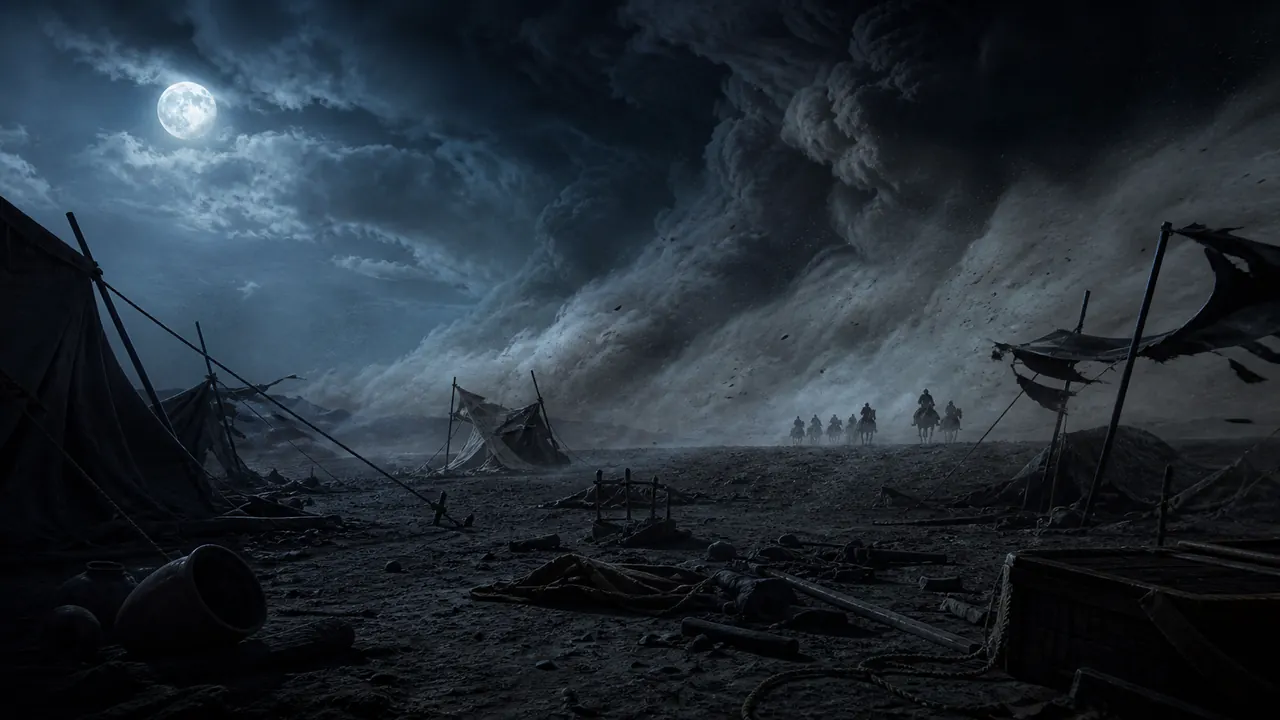
The withdrawal of the allied forces ended the immediate threat of the siege of Medina. Known as the Battle of the Trench or al-Ahzab, the confrontation tested the defenders through fear, exposure and uncertainty. Its conclusion involved more than a single clash on the battlefield.
This episode follows the proposed negotiations, the difficult conditions and Hudhayfa’s mission to obtain information. The Quranic passages and hadith reports give each part a distinct place in the story.
A coalition outside Medina
The attacking alliance included Quraysh and Ghatafan. The defenders used the trench as a barrier while facing the strain of a prolonged confrontation. The danger was not only a question of numbers: uncertainty about what might happen next placed pressure on the community.
Quran 33:9–11 recalls the arrival of the forces, the fear experienced by the believers and the severity of the test. The passage does not portray the defenders as people who felt no anxiety. It describes the trial through which they passed.
A proposal involving the date harvest
Biographical accounts describe a proposal to offer Ghatafan a share of Medina’s dates in return for withdrawing. The Prophet consulted Sa‘d ibn Mu‘adh and Sa‘d ibn Ubada, and the proposal was not carried through. The Jordanian Iftaa Department discusses this episode in its account of prophetic crisis management.
It is important to distinguish a proposal from a completed treaty. Describing the terms under discussion does not mean that the city actually paid the share or that Ghatafan withdrew because of that agreement.
The consultation also shows why the views of those affected mattered. The harvest belonged to a community with its own needs and responsibilities. Considering a way to reduce the danger was not the same as adopting it without discussion.
The wind and the end of the siege
Quran 33:9 attributes the relief to God’s help through wind and forces unseen by the believers. Quran 33:25 describes the attackers being turned back without achieving their purpose.
These passages explain the outcome in religious terms. They do not supply every dramatic detail sometimes added to the story, such as exact words shouted throughout the enemy camp or the destruction of houses. An account can preserve the Quran’s meaning without adding scenes that the cited verses do not describe.
Hudhayfa’s difficult assignment
Hudhayfa’s recollection in Sahih Muslim 1788 describes a night of strong wind and severe cold. The Prophet called on him to bring information about the opposing forces and instructed him not to provoke them.
During the mission, Hudhayfa saw Abu Sufyan near a fire. Although he considered shooting, he remembered the instruction and refrained. He returned with his report; afterward, the Prophet covered him with a cloak when he felt the cold.
The account is notable for its restraint. Hudhayfa’s task was to gather information, not to turn an opportunity into an unauthorized attack. It also gives a human detail often lost in grand accounts of victory: cold, fatigue and the need to care for someone after a difficult task.
Reading the outcome carefully
The withdrawal ended one immediate danger, but it did not mean that every conflict around Medina had ended. The following episode examines the separate campaign involving Banu Qurayza. Keeping the events distinct makes the sequence easier to understand.
The sources also discourage a simplistic contrast between practical action and faith. Defence, consultation and reliable information appear alongside prayer and trust in God. None requires a claim that the defenders were invulnerable or that every future difficulty must end in the same way.
Lessons from the episode
Three themes stand out: a proposed solution should be examined before it is treated as a decision; clear instructions can require restraint; and endurance does not mean an absence of fear or exhaustion.
This is an account of a particular historical siege, not a call for readers to undertake violence. Its value lies in understanding the event, the sources that describe it and the responsibilities visible within the narrative.
