

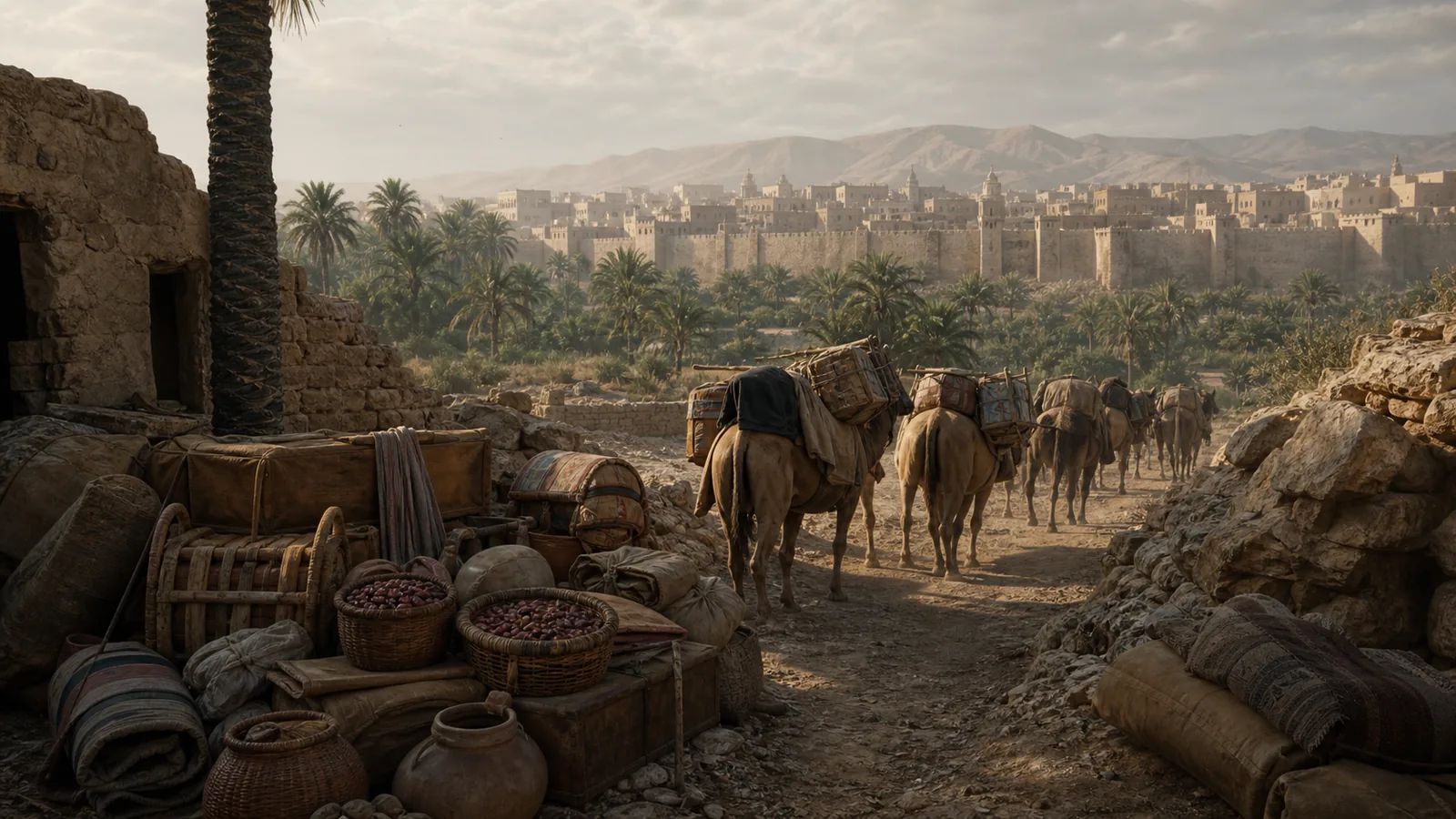
Source note: Surah al-Hashr directly addresses the expulsion associated with Banu Nadir. Later biographies explain the alleged assassination plot and negotiations, but their detailed sequences should be labelled as historical reports.
The conflict in context
Banu Nadir was a Jewish clan living near Madinah. The confrontation is usually dated to 4 AH, after Uhud. Later sira accounts connect it with a breakdown of political relations and an alleged plot against the Prophet Muhammad. Because those details come through later narrative sources, they should not be used to make claims about Jewish people generally.
What Surah al-Hashr says
Quran 59:2 describes people of the scripture leaving fortified homes and refers to destruction carried out during the confrontation. Quran 59:5 addresses the cutting and leaving of date palms, showing that the event involved both siege pressure and damage to property.
Sahih al-Bukhari 4032 also reports that palms belonging to Banu Nadir were cut or burned. This is a violent historical episode and should be described plainly rather than celebrated through hostile language.
Exile rather than a battlefield defeat
The clan ultimately left its homes. The Quran distinguishes the resulting property from ordinary battlefield spoils because Muslim cavalry had not fought a conventional battle for it: Quran 59:6. The next verses direct resources toward relatives, orphans, people in need and travellers so wealth does not circulate only among the rich: Quran 59:7–10.
How to discuss responsibility
- Name Banu Nadir rather than blaming “the Jews” as a single group.
- Distinguish Quranic statements from later accounts of motive.
- Recognise the displacement and material loss involved.
- Do not transfer a seventh-century political conflict onto modern Jewish communities.
The Banu Nadir episode affected security, property and alliances in Madinah. It also produced Quranic rules about wealth acquired without a conventional battle. A reliable account can explain those consequences without erasing the event’s human cost or using religious identity as a collective accusation.
