

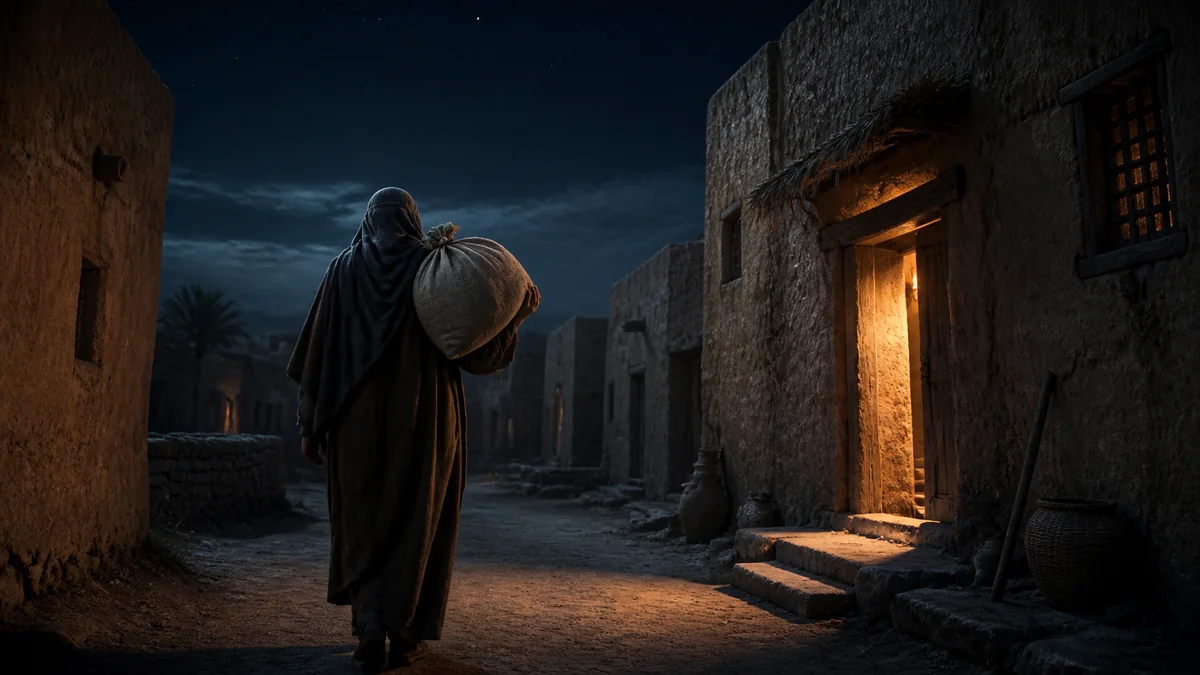
Source note: Many stories of Umar walking at night and helping individual families come from later historical and devotional works. They may express an enduring ethical memory, but their exact dialogue should not automatically be presented as authenticated hadith.
Leadership as guardianship
A report in Sahih al-Bukhari describes every person with authority as a guardian responsible for those in their care. For a ruler, this turns public office into accountability rather than privilege. Umar’s caliphate is remembered within that framework: administration had to respond to people who lacked family wealth, physical strength or political influence.
Structured support, not occasional charity alone
Quran 9:60 identifies categories entitled to zakat, including people living in poverty, those in need and travellers. Early caliphal welfare was not a modern social-security system, but it involved public revenue, stipends and distribution rather than depending entirely on spontaneous private gifts.
As Muslim-ruled territory expanded, the government also faced the needs of soldiers’ families, older people and communities affected by famine or disease. Arrangements varied by period and province. Claims that one uniform programme covered every person should therefore be treated cautiously.
Evidence from Umar’s final instructions
Sahih al-Bukhari records Umar expressing concern for future rulers, frontier communities and those entitled to public support. He also examined whether land taxation in Iraq exceeded what the land could bear. These concrete questions—capacity, entitlement and continuity—provide firmer evidence of social responsibility than long unverified conversations.
Dignity and fair process
Helping vulnerable people does not justify humiliating them or making support dependent on personal loyalty. Quranic justice requires consistent standards. Similarly, correcting an influential person requires evidence and due process, not merely a dramatic display of harshness.
Sources
- Quran 9:60 — categories of zakat recipients
- Sahih al-Bukhari 7137 — responsibility of guardians and rulers
- Sahih al-Bukhari 3700 — taxation and Umar’s final public concerns
- Quran 4:135 — justice without favouritism
