

Source note: The central account in this article is the report of Aishah recorded at the beginning of Sahih al-Bukhari. Later biographies add reflections and details, but they should not be merged into the hadith as though every sentence came from the same source.
Retreat and reflection
Before the beginning of revelation, Muhammad spent periods in the Cave of Hira outside Makkah. Aishah’s report describes truthful dreams and a growing love of solitude. He would take provisions, remain in worship for several nights and then return to Khadijah before going back.
The report does not present Hira as an escape from all responsibility. These retreats formed part of a life already known for family ties, work and concern for society. They provided quiet before a mission that would soon become public and demanding.
“Read in the name of your Lord”
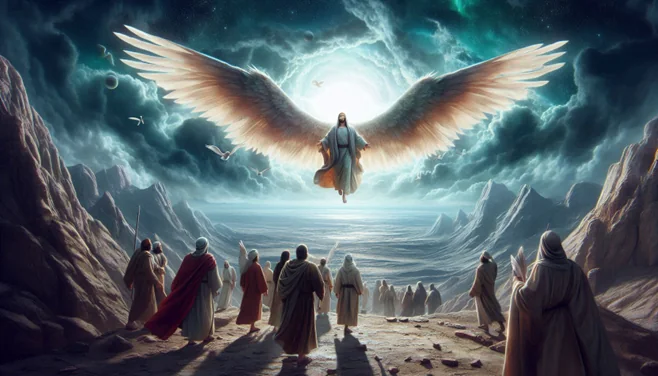
In the cave, the angel commanded him to read or recite. After the repeated encounter, the opening verses of Surah al-Alaq were conveyed: a call to read in the name of the Creator, who created the human being and taught by the pen. Knowledge, creation and dependence on God are therefore present at the beginning of the Quranic revelation.
Muhammad returned shaken and asked to be covered. This human reaction is important. The earliest account does not describe him seeking power or expecting public leadership; it describes fear, uncertainty and the need for reassurance.
Khadijah’s support
Khadijah comforted him by pointing to qualities already visible in his life: maintaining family relations, helping people in need, honouring guests and supporting those struck by hardship. Her response connected spiritual claims with observable character. She did not dismiss his fear, and she did not leave him to face it alone.
Waraqah ibn Nawfal
Khadijah took him to her relative Waraqah ibn Nawfal, an elderly man familiar with earlier scripture. After hearing the account, Waraqah identified the messenger as the one who had come to Moses and warned that Muhammad’s people would oppose and expel him. The prediction placed revelation within both continuity and conflict: the message belonged to a prophetic tradition, but accepting it would carry a social cost.
What the first revelation establishes
- Revelation begins with knowledge and accountability, not political power.
- Fear does not disprove sincerity; it can accompany a life-changing responsibility.
- Khadijah’s evidence-based reassurance made her the Prophet’s first and closest supporter.
- Later dramatic additions should not be attributed to the earliest report without qualification.
Sources
- Quran 96:1–5 — the opening revelation
- Sahih al-Bukhari 3 — Hira, Khadijah and Waraqah
- Quran 74:1–7 — the command to arise and warn
