

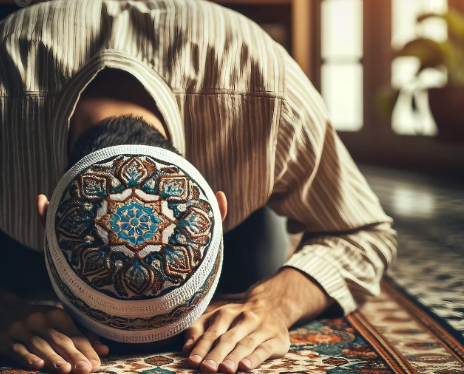
Another new episode of the biography of Omar Ibn Al-Khattab. And the topic of our episode today is how did Omar Ibn Al-Khattab (RA) behave with his family members as Amirul Momineen? What policies did he adopt? Or did his family members who were his father or husband or the closest family member take any unfair advantage? We will try to look at these issues in different incidents and at the end of this episode we will try to discuss more. Who did Omar Ibn Al-Khattab (RA) behave with the members of the family of the Prophet Muhammad (PBUH)? So in this episode we will also describe many incidents. Those of us who like to listen to incidents may like this episode. However, we must remember that our main purpose from these incidents of the Companions of Islam is not to receive any kind of entertainment. Rather, the main purpose is to learn from them. Use them as inspiration. Try to imitate them in our own lives, try to practice them. And encourage others. It may be difficult for us to remember so many separate incidents together later. We encourage the listeners to take some brief notes so that we can benefit from these events. They will remain in our memory and later, God willing, we can convey them to other people. We will start with the first event. One day, Umar and his son Abdullah ibn Umar were sitting with the companions of the Messenger of Allah (peace and blessings of Allah be upon him) in a gathering. The Messenger of Allah (peace and blessings of Allah be upon him) was a teacher. He taught them various subjects in different ways at different times. The Messenger of Allah (peace and blessings of Allah be upon him) would sometimes ask them various subjects in the form of questions. Sometimes, he would explain various subjects to them by drawing lines or pictures on the sand with a stick. Sometimes, the Messenger of Allah (peace and blessings of Allah be upon him) would present to them true events that happened in the past. For example, the Messenger of Allah (peace and blessings of Allah be upon him) was a skilled teacher and Allah Almighty taught him these subjects. One day, the Messenger of Allah (peace and blessings of Allah be upon him) asked his companions a question: “Can you tell me which tree is most similar to a Muslim?” The companions gave different answers. The names of various trees kept coming to their minds. Omar ibn al-Khattab said: “While I was sitting with the companions. The companions, upon hearing the question of the Prophet, started mentioning different types of trees. And they started thinking about the trees that are in the desert. However, the tree that the Prophet had asked them about or compared to was the tree of a Muslim right in front of their eyes. That is, that tree was abundant in Medina. When the Prophet saw that the companions could not answer him, he said that it was a date palm tree. So how is it similar to a believer? There are various examples of it. One example is that the date palm tree is a tree whose leaves never fall. It survives all storms and storms. A Muslim remains steadfast even in the face of various dangers and calamities. He also never falls in the face of danger. There are many other examples such as the date palm tree, which is a beneficial tree that benefits people. It benefits animals. Similarly, a Muslim is beneficial to the whole world. However, Abdullah ibn Umar returned home and he returned and said to his father, I knew the answer to the question that your father asked. Amr then asked his son, why were you silent? Why didn’t you answer there? He said, because I was the youngest there. The youngest. Moreover, there were respected or senior people like you and Abu Bakr Siddique present, so I felt shy or ashamed to answer there in their presence. And I felt that it might not be right for me to answer such distinguished people. For Amr, he did not like these words of his son. He advised his son and said, “If you had spoken there or answered the right question, it would have been more beloved to me than such and such wealth or a lot of wealth.” So Umar ibn Khattab advised his son and said, “If you had spoken and answered, I would have been more pleased.” What Omar Ibn Al-Khattab advised his son here is to have the courage to speak the truth. Many times we know the truth but still, due to various circumstances, we prefer to remain silent. We do not want to say the right thing.
Umar also thought not only about this world but also about religion and the Hereafter. We should develop in our children the qualities that are beneficial for us. You must have the courage to tell me the truth. In the second incident, we are going to. Umar Al-Khattab, his daughter Hafsa (may Allah be pleased with her). The incident of her marriage. She was married first. Then she became a widow at a time after the Battle of Badr. So my Khattab wanted to choose the best man as her husband. First, he went to Uthman Ibn Affan (may Allah be pleased with him). Uthman Ibn Affan was not married at that time. We know that before the Battle of Badr, Uthman’s wife was sick and when the companions returned to Medina after winning the Battle of Badr, they saw that Uthman (may Allah be pleased with him) was leveling the ground of his wife’s grave. He died at the last moment and he was not in favor of any marriage. Omar ibn Khattab came to Uthman and proposed that I would like to marry my daughter Hafsa to you. Omar ibn al-Khattab, as the father of the daughter, came directly to the groom and proposed. If in our society we have created various artificial restrictions and obstacles regarding marriage. On the other hand, we have made extramarital relationships easy. We have made marriage difficult by making adultery easy. They think that until a groom comes and proposes marriage to their daughter on his own, we will keep waiting, we will keep waiting. There was no such mentality. Omar wanted to ensure that for his daughter. So he did not accept such things. He went to Uthman and proposed to marry my daughter to you. He said that I am not interested in marriage at the moment. I am not thinking about marriage now. Khattab, of course, did not like this answer. But he ended the matter there. Since Uthman was not interested. He did not force anything. Later, Umar ibn al-Khattab was thinking about who the second best husband could be. And the thought of Abu Bakr Siddiq came to his mind. He came to Siddiq and proposed to him in marriage to his daughter. He did not give any answer to Umar ibn al-Khattab’s answer. He did not say anything. He directly ignored him and left. Although Uthman did not say anything directly, it was an answer. But Abu Bakr Siddiq did not say anything directly, he ignored him and left without answering. Umar said, I was very hurt by his behavior. He is not interested in getting married at this moment but he did not say anything and he directly avoided me. While my ibn al-Khattab was looking for the best husband for his daughter, in such a situation, after a few days, the Messenger of Allah (peace and blessings of Allah be upon him) directly sent a proposal of marriage to Hafsa (may Allah be pleased with her). So the Messenger of Allah (peace and blessings of Allah be upon him) accepted her as his wife.
Abu Bakr came and said, “O Umar, I think you are distressed because of that incident.” Abu Bakr said, “I did not answer you. It was the Messenger of Allah (ﷺ) who spoke to me about Hafsa. I wanted to see if the Messenger of Allah (ﷺ) would accept Hafsa as his wife.” Islam only consulted Abu Bakr Siddiq about this matter. So it was a secret or an internal matter between them. Abu Bakr Siddiq did not want to reveal it without the permission of the Messenger of Allah (ﷺ). Siddiq was protecting the privacy of the Messenger of Allah (ﷺ). That is why Abu Bakr Siddiq was not in a position to say yes or no to Umar’s proposal. Abu Bakr Siddiq said, “If the Messenger of Allah (ﷺ) had not married Hafsa, I would have married your daughter.” So from this incident we can see that my Ibn al-Khattab (may Allah be pleased with him) wanted to ensure the best things for his children. And when he thought about his daughter’s marriage, he went directly to the best grooms himself.
In these incidents, a similar thing becomes clear to us, that is, that he was very strict in ensuring that his children did not take any extra opportunity or privilege anywhere by using the identity of the Caliph, the Caliph of the Muslim world, the Amir al-Mu’minin. Nowadays, we are used to hearing a word in Bengali that is nepotism or taking unfair advantage of someone in a higher position, even in a case where I have no qualifications. We often say that nepotism is a culture of taking advantage of privileges, so that the culture of taking advantage does not develop in the Muslim society. Omar Ibn al-Khattab (may Allah be pleased with him) used to ensure that very strictly. In the first incident, we are going to Abdullah ibn Umar, he says that he bought some camels from the market, and when he bought them, they were very weak, sick, and diseased. He bought them and after buying them, the Muslims would take their animals to a pasture or wherever they were present to feed them. Those areas of Mecca and Medina were not like grass that was available everywhere. It was not like our country. So there were certain pastures there and the shepherds would gather there with their animals. One such pasture was Al-Hima. It was a protected area. It was not anyone’s private property. It was the common property of the Muslims. The animals of the Muslim leaders would be brought there to feed them. Abdullah ibn Umar, he would take those camels to Hema and gradually they would recover and become fat by eating the good quality grass there. Abdullah ibn Umar, when those weak ones got healthy, he would take them to the market to sell them. Amr ibn al-Khattab used to visit the market regularly. He came to a place and saw that there were some very beautiful and healthy fat camels. He asked who owned these camels? They are owned by Abdullah ibn Umar, your son. Then he called Abdullah. And he said, “O Abdullah.” Abdullah said, “I bought these camels when they were very weak and sick, and then I took them to Hima. And they ate the grass there and became fat.”
So now I have brought them to sell. Hearing this incident, he said, “Well, this is what people said. This is Abdullah ibn Umar, the son of Abdullah, the son of the Caliph, the son of Amir al-Mu’minin. And this is his camel. When you took them to Hema, the people said, “Take special care of these camels. Give them water. These are the camels of the Caliph’s son.” Umar said, “O Abdullah, keep the capital with which you bought these camels, and the excess profit you get from selling them will be deposited in the Bait al-Mal.” You will not gain anything by selling these camels. Rather, whatever profit you get should be deposited directly in the Bait al-Mal.” Amr ibn al-Khattab proposed to Abdullah and said, “You must know that as the Caliph, I am responsible for distributing this booty.” So I am giving you a proposal that you can keep whatever profit you would have made if you were a normal Quraysh merchant. For every dirham you earn, you buy for 40,000 dirhams, you keep up to 80,000 dirhams for yourself and distribute the rest of what you earn among the Muslims. That is, Abdullah ibn Umar was allowed to keep 40,000 dirhams. He collected the 40,000 dirhams that he sold and went to Saad ibn Abi Waqqas who was fighting on the border and ordered him to distribute this property among the fighters and mujahideen there. And he gave it to the son of the Caliph, who used this identity to ensure that his children did not get any extra benefits. Another similar incident. The two sons of Khattab, Abdullah and Ubaydullah, were in Iraq, on the battlefield. And there Abu Musa Al Azhari was a governor. He was a Basari Abdullah and Ubaydullah told them both that I want to send some money to the Caliph. How will that money be sent? He made a profitable offer. He said that first I will give you some money. You will buy some goods from Iraq with that money. Then you will take the goods to Medina and sell them. And you will keep the profit that you make there. And the principal money that you will pay to my Ibn Al Khattab. Another thing was mentioned that if you sell these goods and pay the remaining amount, you will deliver the rest to Khattab. That was the agreement. Abu Musa Al Ash’ari paid the money. Abdullah and Ubaydullah bought some goods from the market. They sold them in Medina and made a lot of profit there. After making the profit, they gave the principal money that Abu Musa had given them to Omar and kept the remaining profit for themselves. When he came to know about this agreement, he did not allow it. He said that all the money, that is, the capital or the principal money, along with the dividends that you have earned, will be deposited in the treasury of Baitul Mal. Amr was the ruler of his sons. Saying that Abu Musa mortgaged all the army to you or loaned it to you? We do not own all the army. Abdullah kept quiet. He was not objecting. But Ubaydullah objected on some points. Ubaydullah, his father, started arguing with us about this. He said that this agreement was such that if we were to lose in this business. That is, if we were to sell the goods with the money with which we bought them, if we could not raise the capital, then we would pay the entire amount from our own pockets. We would have returned the money to you. So in the whole incident, we see that instead of just bringing some money directly from Iraq and giving it to Umar, they bought some goods and sold them in Medina. Through this, they must have given the principal amount to Omar Ibn Al-Khattab. At the same time, a business transaction was carried out through which they also made some additional profit. So while we agreed to pay for the loss on our part. Now, on the contrary, when we have made a profit, why do we have to return all the money including the dividend?
Umar ibn al-Khattab said, “Do as I say. Return the money.” He was one of the companions present and he was listening to this discussion between them. And after listening, he argued against Umar on behalf of Abdullah and Ubaydullah. The companion said, “O Commander of the Faithful, you can do this much. Do not keep the whole amount, but keep half of it for the Muslims and give them the remaining half, 50%. Umar ibn al-Khattab did not put forward any further arguments. He accepted it. He remained silent. In this incident, we can see that there was no direct objection. Umar ibn al-Khattab (may Allah be pleased with him) was cautious. And he did not want to leave any room for doubt. So as an extra precaution, he asked for the entire amount with the dividend so that it would be deposited in the Bait al-Mal. He was in Iraq and when he returned to Medina he brought with him some goods. Some pots and some swords with designs and designs. Umar ibn al-Khattab and his son Asim came with these goods. Seeing this, Umar ibn al-Khattab called his servant Umayy to put everything that is here in the treasury, Baitul-Mal. Asim said, these are my personal belongings. Umar ibn al-Khattab said, no, rather you went to Iraq and when you went there you went out and told everyone that I am Asim. I am the son of the Caliph. And that is why the people gave you these things. You asked for them using your identity. He said, what was I to do? I only went to the people and the people themselves voluntarily said to me, O you, take them. Umar ibn al-Khattab said, put them in the Baitul-Mal. Regarding this incident, Hafizullah commented that this incident is an example where a person acquired wealth because of his positional status, or only because of his high position. He did not expend any effort or labor on his own part. Therefore, this income came under the ambit of suspicion. Umar ibn al-Khattab was uncomfortable because his son Asim had only acquired the title of being the son of the Caliph. He was not in favor of keeping it in his possession.
Now we are coming to the end of our discussion. How did Umar ibn al-Khattab (may Allah be pleased with him) treat the members of the family of the Prophet (peace and blessings of Allah be upon him)? What policy did he adopt? We will look at those issues. The wife of the Prophet (peace and blessings of Allah be upon him), Umm al-Mu’minin, used to pay for their expenses from the public treasury. They were given allowances. To take special care of them. He loved the grandsons of the Prophet (peace and blessings of Allah be upon him) Hasan and Husayn (may Allah be pleased with them). He also loved Ali ibn Abu Talib (may Allah be pleased with him) and Ibn Abbas (may Allah be pleased with them) and gave them high positions in his government. The Prophet (peace and blessings of Allah be upon him) used to send money or allowances to the family of the Prophet (peace and blessings of Allah be upon him). He used to give them large amounts and take care that their amount did not decrease and if it decreased, it would be for his own daughter Hafsa. Far be it from giving his daughter this name more, rather if it decreased, he would give less for his own daughter Hafsa. One such incident. Once, Amr ibn al-Khattab (may Allah be pleased with him) gave her so much wealth that it was piled up on the floor of her house. When he gave her so much wealth, Zaynab (may Allah be pleased with her) said, “May Allah forgive the Commander of the Faithful.” There are other wives of the Messenger of Allah (peace and blessings of Allah be upon him) who can distribute this wealth.” So Zaynab thought that the wealth had been given to her to distribute. It was not to distribute but rather it was all for her as she deserved. She told her servant to cover it with a cloth. This amount of wealth was presented to her as a temptation. Later, she told her maidservants to put their hands under this cloth and start giving it freely to the helpless orphans, widows, poor and the poor. So, when they started giving it to the helpless people from here, the height of the wealth that had been piled up gradually decreased and it almost reached a flat level. In such a situation, he said, “Zainab, aren’t you allocating some portion for us? Can we get something from here? Okay, take the rest for yourselves.” He removed the cloth and saw that there was still more left. Seeing such a huge amount of property, seeing it coming into his hands, he saw property as a temptation.
The remaining property of the Messenger of Allah (peace and blessings of Allah be upon him) which was given as charity. Because we know from the hadith of the Messenger of Allah (peace and blessings of Allah be upon him) that the prophets do not leave any property. What they leave is charity. Let us now discuss the dispute over this property and what it was. We see that many hadiths have come regarding that incident, we are referring to the hadith mentioned by Abu Dawud Sharif. Malik ibn Hadd Hasan (may Allah be pleased with him) narrated that once Umar ibn al-Khattab (may Allah be pleased with him) called me. I went to him and saw him sitting on an empty bed. When I reached him, he said to me, “O Malik, some people from my community have come to me. I have ordered them to give them some property and distribute it. I said, “It would have been better if you had ordered someone else to do the work besides me.” Umar said, “You take this responsibility.” At this time, Yarpa Bezini Khadim, who was a servant, arrived there. And he said, O Commander of the Faithful, Uthman ibn Affan, Abdur Rahman ibn Awf, Zubayr, and Saad ibn Abi Waqqas (may Allah be pleased with them) are seeking your permission to come to you. The distinguished companion Abdur Rahman Zubayr, Saad ibn Abi Waqqas, asked for his permission. He said, “All right, give permission. Let me come to you.” They entered there. After a while, Yar Faz was again located here. He said, “O Commander of the Faithful, Abbas and Ali, give them permission to come to my house.” I said, “Give permission to any of them to come to me.” They came there. Already, Uthman, Abdur Rahman Zubayr, Saad ibn Abi Waqqas, were present there. In such a situation, Abbas and Ali also came there. You decide the matter between me and Ali. Make a decision. A person from the people said, “Make a decision and have mercy on them.” He said that I think that for this matter, that is, for the settlement of this dispute, the previous people, namely Uthman Abdur Rahman Zubair, had sent them there before. He said, Do not be busy. He told Abbas to be patient and calm. Then he told Uthman and the others that when the dispute was presented to Khattab about me, then Umar said, I ask you by Allah, by Whose Command the heavens and the earth are established, do you know that the Messenger of Allah, peace and blessings be upon him, said that we prophets do not leave any land, but what we leave is charity? Then Umar addressed Ali and Abbas and said, I ask you both by Allah, by Whose Command the heavens and the earth are established, do you know that he said that we do not leave wealth. Rather, what I leave is charity. They both said, Allah Almighty has given His Messenger some special characteristics. He has given unique and comprehensive characteristics that He has not given to anyone else. Allah Almighty says in the sixth verse of Surah Al-Hashr, where Allah Almighty says: And you did not ride horses or camels to gain from what Allah has given to His Messenger, nor did you gain it by riding horses or camels, but Allah gives victory to His Messenger over whom He wills. He has power over all things. Umar says that Allah Almighty gave His Messenger the spoils of the tribe of Banu Nadir as booty. They were gained, so they were Umar says, By Allah, the Messenger of Allah (peace and blessings of Allah be upon him) did not give you exclusive preference over this spoils. And no one else took it except you, but the Messenger of Allah (peace and blessings of Allah be upon him) took from this spoils what he and his family would spend a year on.
And the rest would be like the other booty. Then he addressed them and said, I ask you by the One by Whose Command the heavens and the earth are established, are you aware of this? We are aware of this. Then he addressed Abbas and Ali and said, I ask you both by the One by Whose Command the heavens and the earth are established, are you aware of this? In fact, when Abu Bakr Siddiq was elected as the Caliph after the death of the Messenger of Allah (peace and blessings of Allah be upon him), Abu Bakr Siddiq said, I am the Caliph after the Messenger of Allah (peace and blessings of Allah be upon him). You, O Abbas, and he came to Abu Bakr. At that time, you claimed the inheritance of your abandoned property and he, i.e. Ali (may Allah be pleased with him), the respected father of his wife, claimed the ascension of the Messenger of Allah (peace and blessings of Allah be upon him). Abu Bakr Siddiq said that the Messenger of Allah (peace and blessings of Allah be upon him) said, “We do not leave anything behind, but what we leave behind is charity.” And Allah knows that Abu Bakr was truthful, the owner of the right path, the guide of the right path. And the follower of the truth. Then Abu Bakr Siddique was the caretaker of that property of the Messenger of Allah (peace be upon him). I was appointed as the Caliph and I said that I am the caretaker of this property on behalf of the Messenger of Allah (peace be upon him) and I will remain as its caretaker or caretaker for as long as Allah wills. Now the two of you have come and you have the same desire, that is, Ali and Abbas, what was the share between them was that they did not want any of that property as an inheritance for themselves, but they wanted to be appointed as the caretaker or caretaker of the property as a mutawalli. Umar says that you two have the same thought. You are demanding this from me, you are demanding the said property from me. Then the two of you came and you also had the same idea. Until the first two years of his caliphate, he himself was taking care of the properties left by the Messenger of Allah (peace be upon him). He was the guardian over them. Abbas appointed them as caretakers of the property, then a dispute arose between them as to whether they should both take care of this property or which one of them should take care of this property. Is that reminding you that I gave you the property on the condition that you swear by Allah that you will take care of this property in the way that the Messenger of Allah (peace be upon him) used to do. You took this property from me on this condition. Now again you both have come to me so that I may give a decision contrary to it. Omar says that I will not give any decision other than the decision I have given until the Day of Judgment. However, if you are unable to take care of this property properly, I will return the responsibility of taking care of this property to me again. Then you should entrust me with the responsibility of looking after it. From the narration of Bukhari, we see that the narrator Ibn says that this charity was ultimately under the care of Ali. He refused to give it to Abbas. Later, he prevailed over Abbas in this matter. He was victorious and was followed by Hasan ibn Ali and Husayn ibn Ali and so on and so on.
