

Editorial note: The Quran is the primary source for the objections discussed here. Later sirah reports about negotiations are presented as historical reports rather than as authenticated hadith.
Why Meccan leaders objected
The Prophet Muhammad’s public call challenged more than individual religious practice. It declared that worship belongs to God alone, that human beings will be raised and judged, and that wealth or lineage cannot determine a person’s worth before God. These teachings confronted assumptions woven into Mecca’s social and religious life.
The Quran records the surprise of opponents who regarded one God as an astonishing claim and who wondered why a messenger had come from among them. Other passages describe people defending beliefs simply because they found their ancestors following them. The conflict was therefore not a lack of vocabulary; it was a dispute over authority, tradition, and accountability.
Common objections recorded in the Quran
- Attachment to ancestral religion: inherited custom was treated as proof even when revelation called for reflection.
- Resistance to resurrection: some rejected the idea that people would be raised after death and held accountable.
- Status expectations: opponents questioned why revelation came to Muhammad rather than to a powerful leader of their choosing.
- Fear of social disruption: monotheism removed the religious privilege attached to idols, clans, and influential patrons.
Reports of negotiation
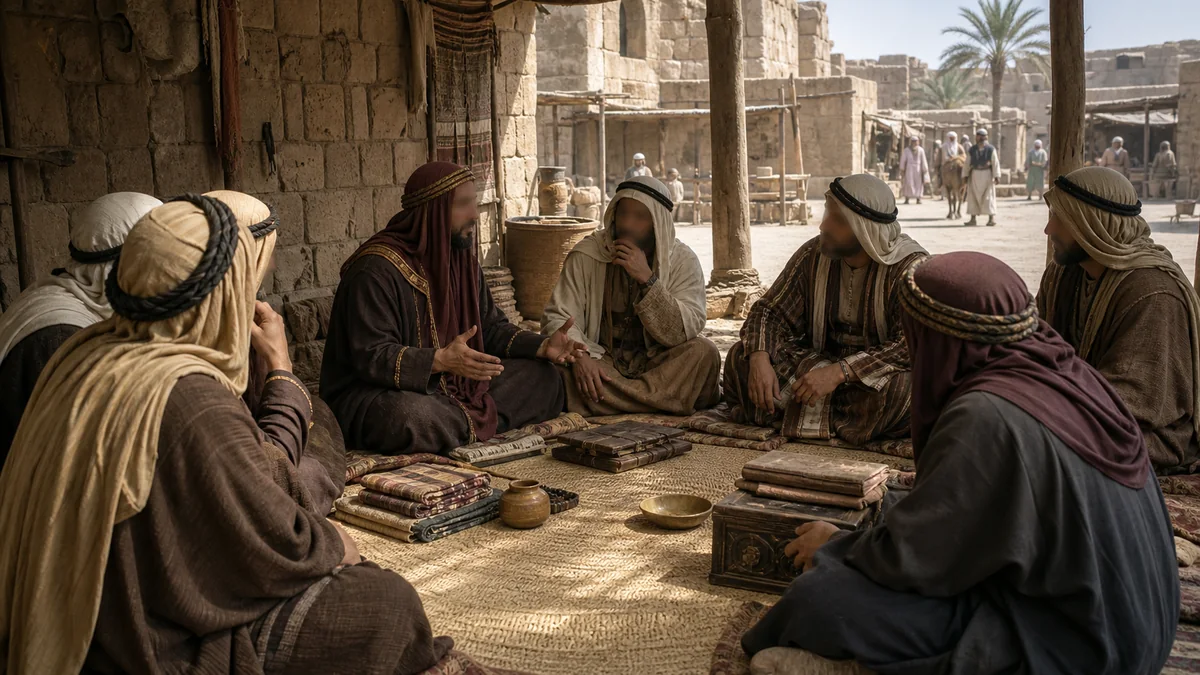
Early biographical literature preserves reports that representatives of Quraysh approached the Prophet with offers or proposals: wealth, leadership, treatment for supposed illness, or an arrangement that would reduce confrontation. The precise wording and combinations vary across the historical reports, so they should be read with appropriate caution.
What is certain from the Quran is that the Meccan dispute included pressure to soften the distinction between worship of God and worship of other beings. The Quran repeatedly rejects the idea that revelation could be adjusted to satisfy social power.
No bargain over worship
Surah al-Kafirun gives a concise answer to religious compromise: the Prophet would not worship what his opponents worshipped, nor would the distinct commitments be disguised as agreement. The chapter ends by recognizing the separation of religious commitments without permitting a blended form of worship.
This was firmness without dishonesty. Islam encourages fair speech, keeping agreements, and justice toward others. Those ethical duties differ from changing the central claim of monotheism. Respectful coexistence does not require a person to pretend that contradictory acts of worship are the same.
Lessons from the encounter
The response of Quraysh shows how communities can confuse familiarity with truth. An inherited belief may be meaningful to a family, but inheritance alone cannot settle a question of evidence. The Quran instead asks listeners to observe, reason, remember earlier revelation, and consider the moral consequences of their choices.
The episode also demonstrates that pressure does not always begin with physical persecution. It can begin with labels, social bargaining, or attractive offers designed to make a message less demanding. The Prophet’s refusal protected the clarity of the call while leaving room for continued conversation.
Source notes
The Quran directly documents the theological objections and the rejection of compromise. Details about delegations and offers come mainly through later biographical transmission. They can illuminate the setting, but they should not be presented with the same confidence as the Quran or a rigorously authenticated hadith.
Key sources
- Quran 38:4–7 — objections to the messenger and to worshipping one God.
- Quran 43:22–24 — the appeal to ancestral custom.
- Surah al-Kafirun (Quran 109) — refusal to compromise worship.
- Quran 39:64–66 — the command to worship God sincerely.
Series note: This is Part 10 of the Life of Prophet Muhammad (PBUH) series. Part 11 examines ridicule, accusations, and demands for miraculous signs.
