

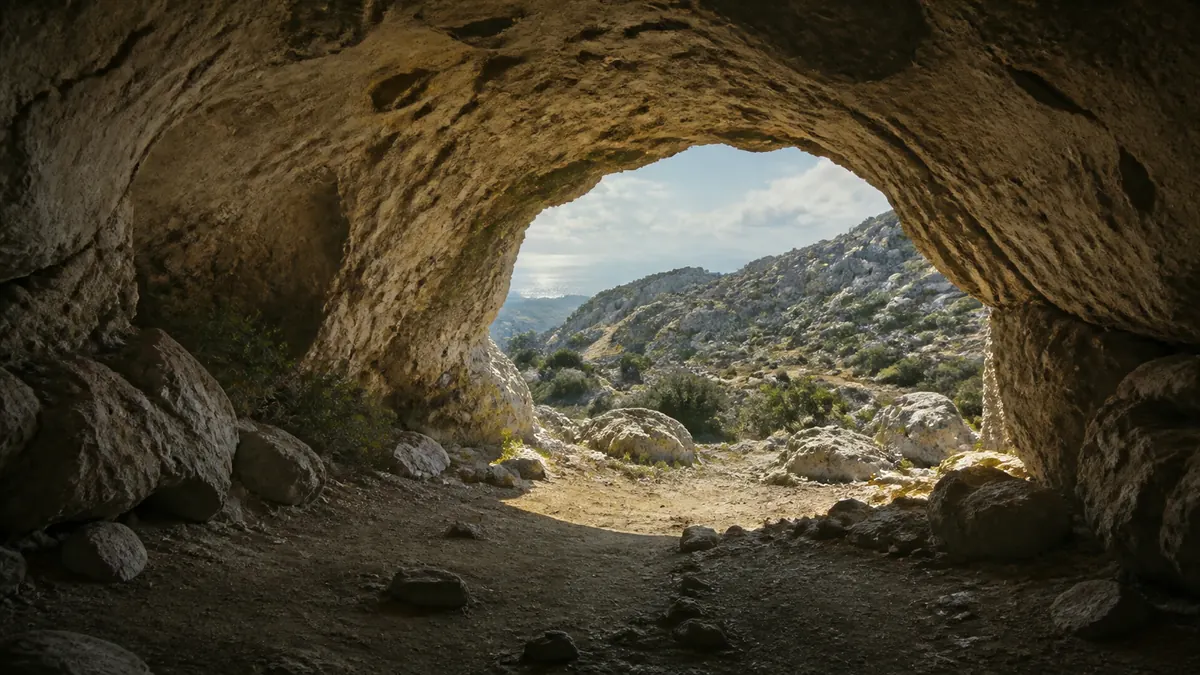
Ashab al-Kahf, the Companions of the Cave, are remembered for seeking refuge in order to preserve their faith. Their long sleep and awakening invite questions about time, identity and the limits of human knowledge. The Quran tells the story with striking details, but also warns against arguments built on uncertain information.
That warning matters when the story is linked with Roman history, particular caves, sound frequencies or animal hibernation. Each comparison can be examined, but none should quietly become a claim that archaeology or modern medicine has proved exactly how the event happened.
Follow the Quranic account before searching for a location
Quran 18:9–26 describes young believers taking shelter in a cave and asking God for mercy and guidance. Their sleep, the movement of the sun, their turning from side to side and the dog at the entrance all form part of the account.
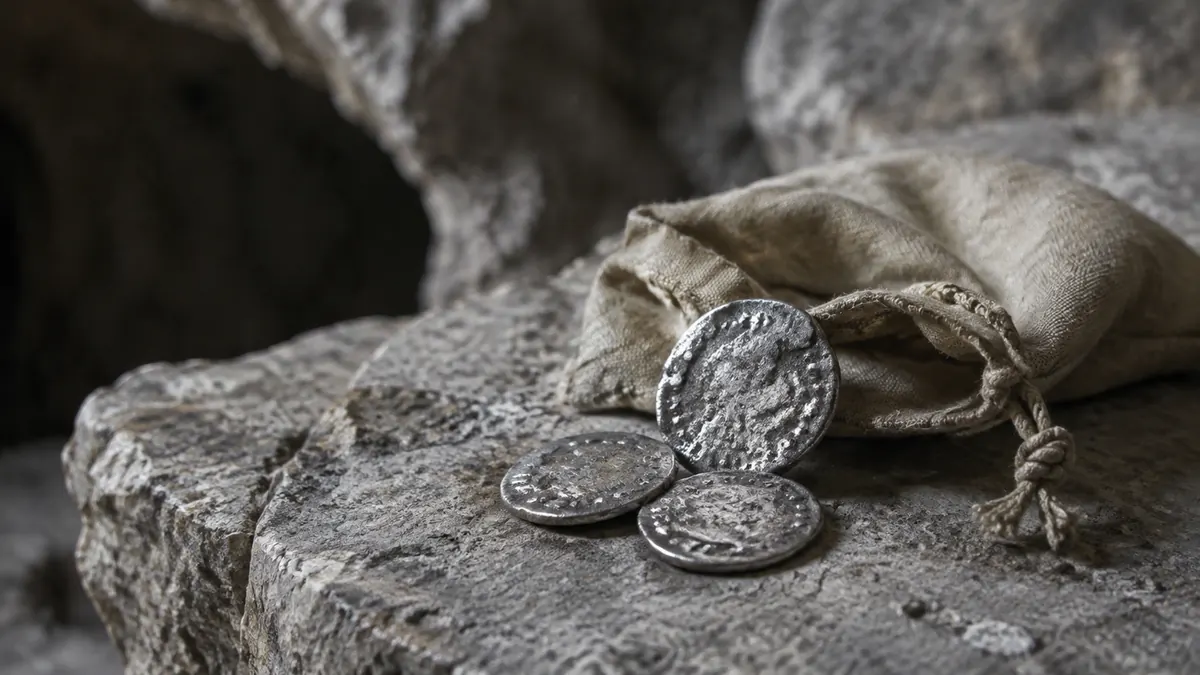
When they awaken, they disagree about how long they have remained. One is sent with silver money to obtain suitable food while acting discreetly. Their discovery becomes a sign connected with the promise of resurrection. The account also reports disagreement over their number and directs attention away from confident argument without knowledge.
The Quran’s account is religious testimony. It is not written as a modern excavation report, a medical case history or a travel guide to a named cave. Starting with that distinction prevents later additions from overshadowing its main concerns: faith under pressure, protection, resurrection and humility.
What is al-Raqim?
The opening refers to the people of the cave and al-Raqim. The term has been interpreted in different ways, including a written record or inscription associated with them. The existence of more than one interpretation should be acknowledged.
A modern numbered catalogue of saints’ stories can help researchers find manuscripts, but the fact that it contains numbered entries does not establish that the Quran predicted that catalogue. Similarities between a word and a later scholarly practice are not enough to identify the word’s original referent.
The safer approach is to distinguish linguistic interpretation from a new personal hypothesis. A reader can investigate both without assigning them the same authority.
Roman persecution: a real background, not a complete identification
Christian traditions about the Seven Sleepers are often associated with persecution under the Roman emperor Decius. Independent evidence confirms that sacrifice requirements were enforced during his reign. Surviving papyrus certificates record participation in sacrifices in 250 CE.
The Oxford Oxyrhynchus Papyri project and the Berlin Papyrus Database describe such documents. They illuminate the pressures religious dissenters could face. They are certificates associated with compliance, however, not documents naming the Quran’s cave companions.
The Quran itself does not name Decius. Using these papyri to explain a possible historical setting is different from using them to prove the identities, city or exact chronology of the sleepers. It would also be inaccurate to portray the certificates as the emperor’s personal signed testimony about these particular young people.
Can a modern cave be identified with certainty?
Places in Turkey, Jordan and elsewhere have been associated with the story. Such sites belong to the history of pilgrimage, local tradition and religious memory. Their significance does not automatically establish an exclusive archaeological identification.
A cave’s size, direction or proximity to a former Roman settlement cannot settle the question alone. Nor does the discovery of many graves at a pilgrimage site, without further evidence, prove a massacre or identify the companions’ remains.
The same restraint applies to proposed dates. A calculation based on one assumed starting ruler can produce an attractive match with another ruler centuries later, but it remains dependent on the original assumption. The Quran’s statement about the duration should not be converted into a securely dated reign-by-reign chronology without independent support.
Sound can affect matter, but that does not explain the long sleep
The wording about the companions’ ears has prompted comparisons with acoustics. Sound is a physical phenomenon, and vibration can produce patterns in suitable materials. Resonance can also amplify an object’s vibration under particular conditions. These are observable processes.
But a sand pattern on a vibrating plate does not demonstrate that a sound can preserve a human body for centuries. The Quran does not state a frequency, describe headphones or give a medical protocol. Jumping from an effect of sound to a mechanism for the cave story crosses several unsupported steps.
Claims that 528 Hz repairs human DNA, or that mixing it with another tone shuts down most of the brain, should not be repeated as established medical facts. A frequency number is not a guarantee of healing. Relaxing music, a laboratory observation and a clinical treatment are different things requiring different evidence.
The US National Center for Complementary and Integrative Health discusses research into music-based interventions with qualifications about the evidence. That research does not establish a method for inducing centuries-long sleep. Persistent sleep difficulties should be discussed with a qualified clinician, not treated with purported miracle-frequency instructions.
Sleep, torpor and hibernation are not interchangeable
Ordinary human sleep cycles through stages and alternates with wakefulness. The National Heart, Lung, and Blood Institute explains this pattern. Animal hibernation involves specialised changes in metabolism and physiology; describing it as simply a very long nap is misleading.
Researchers study those adaptations because they may offer insights into human health and future space travel. NASA’s discussion of torpor research presents synthetic human torpor as a research goal, not an established ability to suspend people safely for centuries.
Comparisons with bears or small hibernating mammals therefore remain comparisons. They do not show that a human can remain without ordinary care for 309 years, nor that every detail of the Quranic narrative corresponds to a known biological adaptation.
Similarly, the account of turning from side to side may remind readers of the importance of movement during prolonged immobility. That resemblance does not turn the passage into a complete clinical explanation. A spiritual reading does not need such a mechanism in order to be meaningful.
Let the uncertainty remain part of the lesson
The cave story is memorable partly because its scale exceeds ordinary experience. Trying to remove every uncertainty can lead to confident claims about places, bodies and technologies that the evidence does not support.
A more careful reading keeps three questions separate: what the Quran says, how later communities remembered the story, and what modern research can actually demonstrate. That preserves both intellectual honesty and the narrative’s religious significance.
For the chapter’s place within the broader surah, see Surah Al-Kahf: Major Themes and Interpretations. Follow the published sequence through the Series Reading Guide. The images here are illustrative, not evidence identifying the cave.
