

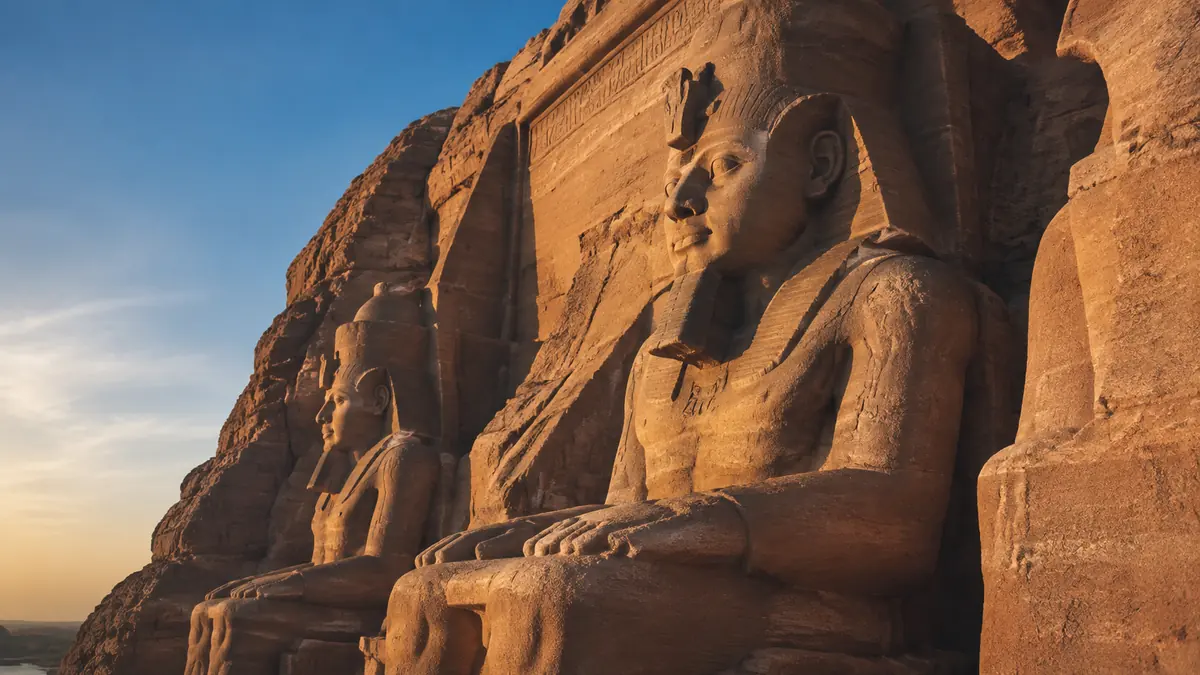
Who was the Pharaoh who opposed Prophet Musa? Ramesses II is often proposed, and photographs of his mummy regularly accompany the claim. Yet a familiar identification is not the same as a demonstrated one. The Quran describes Pharaoh’s actions and downfall without giving him an Egyptian royal name.
The question opens a wider story: the authority of Egypt’s kings, the survival of their monuments, Musa’s confrontation with oppression, and the golden calf made during his absence. Reading these subjects together is illuminating, provided that scripture, archaeological evidence and later interpretation remain distinguishable.
Pharaoh was a title, not a personal name
In discussions of Musa, Pharaoh or Firon usually means the particular ruler who resisted him. In Egyptian history, however, the term belongs to kingship rather than identifying a single man. Recognising this distinction prevents a circular argument: calling a mummy “Pharaoh” does not establish that it belongs to the ruler in the Quranic account.
Egyptian kings presented themselves through religious ceremonies, military imagery and monumental building. Their public image joined political command with a sacred role. A king’s statue was therefore more than a portrait; its scale, setting and inscriptions communicated how his authority should be understood.
This provides useful background to the confrontation in the Quran. It does not make every Egyptian king interchangeable, nor does it mean that the precise beliefs of all Egyptians remained unchanged across many centuries.
What the Quran establishes about Musa’s opponent
The account centres on a ruler who oppressed the Children of Israel and rejected Musa’s message. Musa’s survival as an infant, his departure from Egypt and his return with a prophetic commission belong to the narrative in Surah al-Qasas. The events are about vulnerability, responsibility and the limits of worldly power—not merely a puzzle about a dynasty. See Quran 28:3–35.
Surah Yunus describes Pharaoh pursuing the Israelites and declaring belief as drowning overtakes him. His body is then made a sign for those who follow. The passage is explicit about the warning but does not name Ramesses II, a burial chamber or a modern museum. Those additional identifications require a separate argument. See Quran 10:90–92.
For a Muslim reader, accepting the scriptural account does not require claiming certainty about an archaeological identification that the text itself leaves unstated.
Why Ramesses II attracts attention
Ramesses II left an unusually visible architectural legacy. Abu Simbel, the Ramesseum and his additions to other temples make him a natural focus for anyone studying the relationship between royal power and religious imagery. His monuments also show why an impressive building can be persuasive evidence of a ruler’s self-presentation without identifying a particular event in scripture.
The National Museum of Egyptian Civilization places him in the Nineteenth Dynasty and records his long reign, major building projects and military campaigns. It also identifies his original burial as KV7 and explains that his body was moved to the Deir el-Bahari cache to protect it from looting. See the museum’s Ramesses II record.
That documented movement matters. A mummy found away from its original royal tomb is not, by that fact alone, evidence of a ruler denied burial or of a body washed ashore. The same cache preserved other royal mummies. A historical explanation for relocation must be considered before attaching a different meaning to the discovery place.
What Abu Simbel can—and cannot—tell us
The enormous statues and carefully organised sacred spaces at Abu Simbel convey Ramesses II’s royal ambitions. They help us understand the visual language of Egyptian kingship. They cannot independently show that the people represented in a military scene were the Israelites following Musa.
Likewise, a large image of a king is not an inscription identifying him as the Pharaoh of the Exodus. Monumental scale, religious language and a powerful personality are contextual clues, not a complete chain of identification.
The sound conclusion is limited: Ramesses II is a proposed candidate in discussions of Musa’s Pharaoh. His monuments make the proposal understandable, but they do not settle it.
Does the mummy prove that he drowned?
Online accounts sometimes claim that scans, salt or supposed marine material conclusively establish drowning. Such a conclusion needs an identifiable study, a clear account of what was examined and an explanation of alternative causes. A dramatic caption or an unnamed “scientific report” does not supply those things.
Mummies are also bodies that underwent preservation, burial, relocation and later conservation. An observation must be interpreted in that history. This article does not present an unverified scan claim as a medical finding or use it to establish the ruler’s identity.
Two questions should remain separate: what does the Quran say happened to Pharaoh, and what has research demonstrated about this particular mummy? Combining them too quickly can make uncertainty look like a discovery.
Al-Samiri and the golden calf
The source episode moves from Pharaoh to another problem of misplaced authority: the calf fashioned while Musa was absent. In Surah Taha, al-Samiri produces a calf-shaped object that makes a sound. Harun warns the people, and Musa later confronts al-Samiri. The passage challenges their devotion to something that cannot genuinely answer or help them. See Quran 20:83–98.
The Quran includes al-Samiri’s explanation involving a handful taken from the messenger’s trace. Later commentaries discuss what that means, including reports concerning Jibril. Those explanations should be identified as interpretation, not silently inserted into the Quran’s wording.
Al-Samiri’s exact background is another question on which caution is useful. A resemblance between names is not enough to establish a historical person’s identity, date or community. Nor should a late manuscript be treated as direct testimony about someone who lived many centuries earlier.
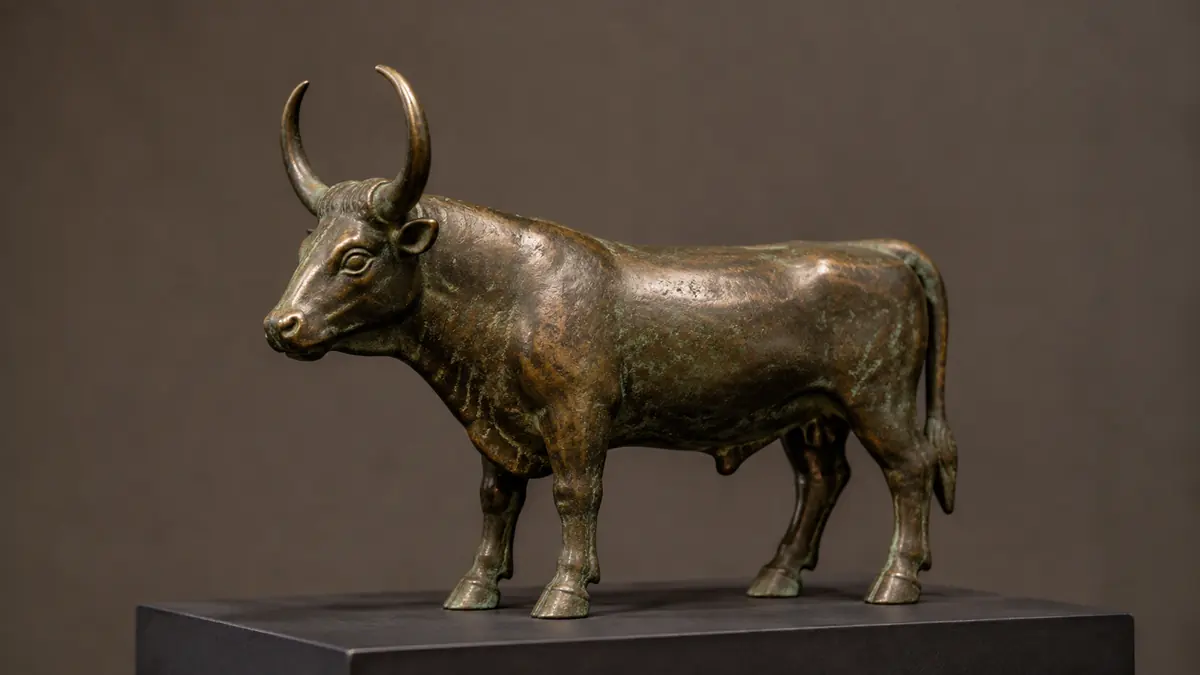
Why a calf? Bull symbolism in context
Bull imagery had established religious associations in ancient Egypt. The Apis bull, for example, was an important focus of devotion connected with Ptah and, in other contexts, Osiris. The Metropolitan Museum’s Apis collection record provides a documented example of this tradition.
That background helps explain why bovine imagery could carry religious significance. It does not prove that al-Samiri copied one particular Egyptian ceremony or that similar images in different societies all came from a single source.
It is especially important not to flatten the beliefs of Egypt, Mesopotamia, India or other regions into one undifferentiated “bull religion.” A shared animal motif can carry different meanings. In this article, the comparison offers historical context rather than a claim that all those traditions are identical.
The thread connecting the two stories
Pharaoh’s overwhelming political power and the calf’s material splendour are very different things. Within the Quranic narratives, however, both raise questions about what deserves obedience and worship. Visible power is not the same as truth, and an impressive object is not made divine by admiration.
The calf episode also concerns named actors and a particular community at a particular moment. It is not a licence to generalise negatively about Jewish people or any present-day religious community.
The most useful answer to the opening question is therefore an honest one: the Quran’s Pharaoh is clearly described, but identifying him with Ramesses II remains uncertain. Readers can learn from both the religious narrative and Egyptian archaeology without pretending that either supplies information it does not contain.
For the next part of Musa’s story, read our existing guide to Moses and al-Khidr in the Quranic narrative.
