
Ancient Egyptian magic survives in monuments, medical recipes, prayers and ritual texts. Reading those sources beside the Quranic account of Musa can illuminate a world in which kingship, healing and sacred power overlapped. It cannot identify every Quranic figure with a named ruler or turn a literary tale into an eyewitness report.
The source episode ranges from Nile canals and the Hyksos to magical papyri and Pharaoh’s contest with Musa. This article preserves that broad journey while separating three kinds of evidence: what the Quran states, what surviving Egyptian objects show and what later writers have proposed.
The previous chapter examined sleep paralysis, religious guidance and medical evidence. The series now moves from how people interpreted frightening nights to the ritual language and political power of ancient Egypt.
From Yusuf to Musa: a gap the sources do not date
Surah Yusuf ends with Yusuf’s family settled in Egypt and his childhood vision fulfilled. The Quran later describes a Pharaoh who oppressed the Children of Israel and ordered the killing of their sons, including in Quran 28:4. It does not tell us the number of generations between these events, identify a dynasty or name the Pharaoh of Musa.
Later reports supply numbers and genealogical details, but they should not be presented as if they appear in the Quran. Likewise, the Quran does not say that the Israelites became the Hyksos rulers of Egypt.
The Hyksos were rulers with strong connections to western Asia who held power in parts of Egypt during the Second Intermediate Period. The Metropolitan Museum’s chronology of ancient Egypt describes western Asiatic kings based at Avaris and their eventual expulsion as Theban power rose. That history shows movement between Canaan and Egypt. It does not establish that the Hyksos were Bani Israel or that their expulsion caused the Quranic oppression.
Why waterways represented royal power
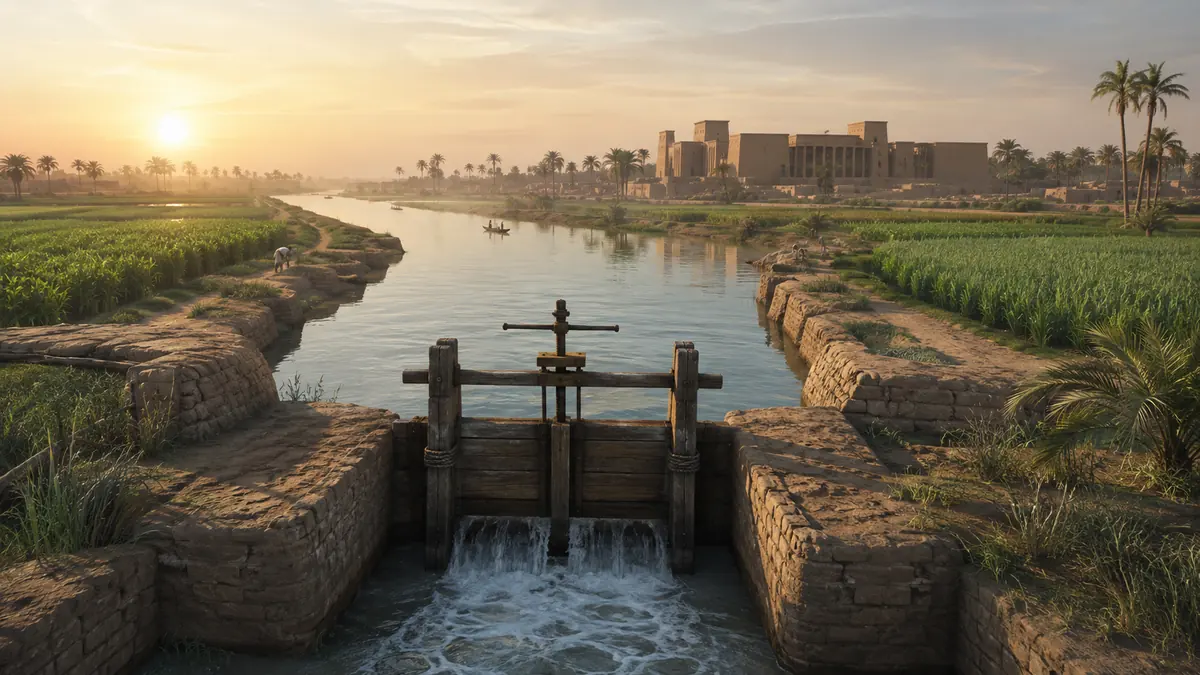
In Quran 43:51, Pharaoh boasts of the kingdom of Egypt and the rivers flowing beneath him. The passage presents water within a claim to authority. The Nile and its managed channels supported crops, transport, taxation and communication; control of water and grain could therefore reinforce state power.
The verse does not say that canals were Pharaoh’s only source of strength, nor does it provide an engineering history. It does, however, make the boast intelligible. Monumental buildings impressed viewers, while waterways connected rule to the food and movement of everyday life.
Ancient Egyptian magic, religion and medicine overlapped
Modern readers often place religion, magic and science into separate boxes. Ancient Egyptian practice did not always make those divisions. Ritual speech, divine names, physical remedies and observation could appear in the same healing context.
The Metropolitan Museum describes a magical stela with Horus the Child whose images and spells were used against poisonous bites and wounds. Water poured over the inscriptions could be consumed as part of the healing practice. The object documents what Egyptians believed and did; it does not prove that the ritual itself produced a supernatural cure.
This is the right way to read such material. An artefact can establish the existence of a belief, a text and a practice. Evaluating whether the claimed power worked requires different evidence.
Ancient Egyptian magic in Papyrus Westcar
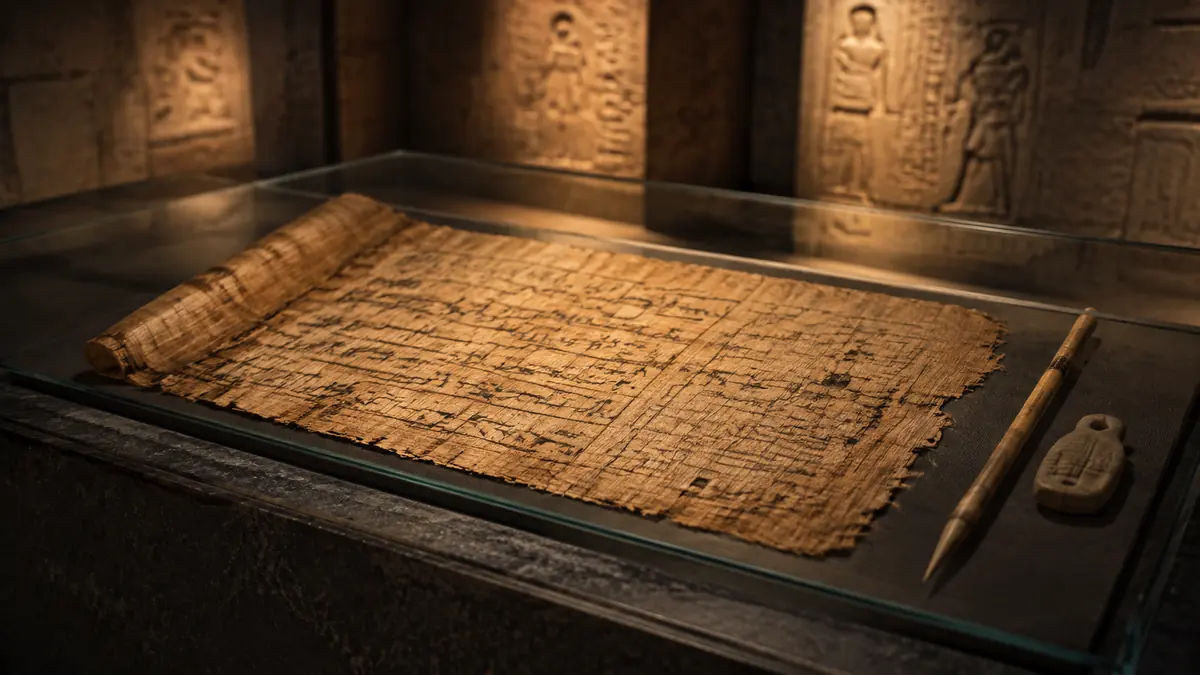
The episode retells stories from Papyrus Westcar, including a magician who joins severed animal heads and a wax crocodile that becomes dangerous. The manuscript is real. The Staatliche Museen zu Berlin identifies Papyrus Westcar, P 3033 as a hieratic manuscript from the Seventeenth Dynasty containing wonder tales framed as stories told to King Khufu.
The museum describes the collection as literature that develops into a political parable about the transition from the Fourth to the Fifth Dynasty. That context is crucial. The papyrus is evidence that Egyptians told stories about royal courts, wonders and legitimate rule. It is not a contemporary incident log proving that a wax figure physically became a crocodile.
Calling the tales “myth” or “literature” does not make the manuscript unimportant. It helps us ask the right question: what did the story communicate to its audience?
Ancient Egyptian magic and medicine in the Ebers Papyrus
Leipzig University Library preserves the Ebers Papyrus. Its collection guide describes the object as an approximately 18-metre-long, 3,600-year-old medical manuscript written in hieratic script. The full manuscript and translations have been digitised.
The text contains many remedies and also incantatory material. This mixture shows that practical treatment and ritual protection could coexist. It should not be reduced either to “pure science” or to a manual that proves every magical claim. Its value lies partly in showing how ancient healers understood the body, illness, ingredients and sacred language together.
Exact counts of spells or translated passages vary with how editors divide the text. A responsible summary links to the manuscript and avoids using an impressive number as a substitute for context.
The “Book of the Dead” was not one secret book
The source episode describes a famous body of funerary material. “Book of the Dead” is a modern label, not the title of one author’s volume. The British Museum’s explanation calls it a collection of spells intended to help the deceased navigate the afterlife.
Different selections could be written on papyri and placed in burials. Related funerary texts also appeared on coffins and tomb walls across long periods. The collection reflects Egyptian beliefs about the body, name, heart, breath, protection and judgement after death.
Hollywood stories often turn the material into a single forbidden manual that raises the dead. The surviving texts are more diverse. They provide evidence for funerary religion and ritual hopes, not a demonstrated method for opening a physical gateway to another realm.
What the Quran says about Musa and the magicians
The Quran repeatedly records Pharaoh’s accusation that Musa was a magician. That charge was a way to dismiss revelation as a human technique and to defend political power.
In Quran 20:65–70, the magicians cast their ropes and staffs, which appear to move because of their magic. Musa experiences fear, receives reassurance and casts what is in his right hand. It swallows what they produced. The magicians then fall in prostration and declare belief in the Lord of Musa and Harun.
Quran 7:116 describes the magicians as bewitching people’s eyes and producing a great magic. The text does not require readers to reconstruct a chemical trick or a supernatural mechanism. Its emphasis is the contrast between their practised display and Allah’s sign given to Musa.
The magicians themselves recognise that distinction. Their response is not to copy the sign, but to believe despite Pharaoh’s threat. The account is therefore about truth, tyranny and courage as much as it is about an extraordinary public contest.
Do Egyptian staffs prove a direct link?
Ancient Egyptian ritual objects sometimes include rods, wands or snake imagery. Such objects can help historians understand symbolism. They do not prove that a surviving museum object was used by Pharaoh’s magicians in Musa’s presence.
The chronology of Musa remains debated, the Pharaoh is unnamed and no excavated object carries a secure label connecting it to the Quranic event. A visual resemblance should be described as a parallel, not as archaeological confirmation.
The same discipline applies to attempts to name a particular Pharaoh. Ramses II is a popular proposal, but other identifications have been offered. The Quran’s moral and theological account does not depend on choosing one ruler when the evidence cannot decide the matter.
Claims about etymology need special care
The episode derives the modern word “magic” from an Egyptian word meaning a powerful person. That chain is not supported by standard historical linguistics. English magic came through Latin and Greek terms associated with magoi, a word linked with ancient Persian religious specialists.
Ancient Egyptian heka is a separate term commonly used for a sacred force or practice. Similar sounds across languages are not enough to establish descent. This is a useful general rule for historical writing: etymology needs dated forms and a traceable path, not only resemblance.
History should not become an instruction manual
Studying ritual texts does not require reproducing incantations or experimenting with occult practices. For Muslims, sorcery is religiously prohibited. For every reader, handling ancient recipes or psychoactive substances without specialist knowledge can be dangerous.
The educational value lies elsewhere:
- Compare Quranic claims with the wording of the Quran itself.
- Use museum catalogues to identify what an object actually is.
- Distinguish a literary story from an administrative or medical record.
- Treat proposed identifications as proposals until evidence supports them.
- Avoid sensational claims that an artefact proves a supernatural event.
Ancient Egyptian magic: evidence and the lesson of the contest
Ancient Egyptian material reveals a society in which kingship, ritual, medicine and writing were closely connected. The Nile helped sustain the state; papyri preserved both practical remedies and sacred formulas; funerary texts expressed hopes and fears about death.
The Quran places Musa before a ruler who used wealth, spectacle and coercion to maintain authority. Pharaoh’s experts recognised something their ruler refused to admit: power does not make a false claim true. Reading the Quran beside archaeology is most valuable when neither source is forced to say what it does not say.
That approach leaves room for wonder without sacrificing accuracy. Surviving objects can deepen the historical setting, while the Quran supplies its own moral argument. The result is stronger than a fragile identification built from matching names, dates or dramatic stories.
