
Close Menu
  • Home
  • Islamic History
    • Life of Prophet Muhammad
    • Abu Bakr al-Siddiq
    • Umar ibn al-Khattab
  • Companions
  • Series
    • 40,000 Years of Knowledge
    • The Secrets of the Universe
    • Amazon Series
  • About
  • Contact
What's Hot

Episode 14 – Umar’s Night Patrols and Public Accountability – Part 1

27 August 2026

Part 11 – Ridicule, Accusations and Demands for Signs

27 August 2026

Part 10 – Quraysh’s Objections and Attempts at Compromise

27 August 2026
YouTube
YouTube Facebook
Religion Essence Hub
  • Home
  • Islamic History
    • Life of Prophet Muhammad
    • Abu Bakr al-Siddiq
    • Umar ibn al-Khattab
  • Companions
  • Series
    • 40,000 Years of Knowledge
    • The Secrets of the Universe
    • Amazon Series
  • About
  • Contact
Religion Essence Hub
Home » Moses and Al-Khidr in the Quranic Narrative
The Secrets of the Universe

Moses and Al-Khidr in the Quranic Narrative

Religion Essence Hub Editorial TeamBy Religion Essence Hub Editorial Team19 December 2025Updated:27 August 2026No Comments4 Mins Read6 Views
Facebook Twitter Pinterest Telegram LinkedIn Tumblr Copy Link Email
Follow Us
Google News Flipboard
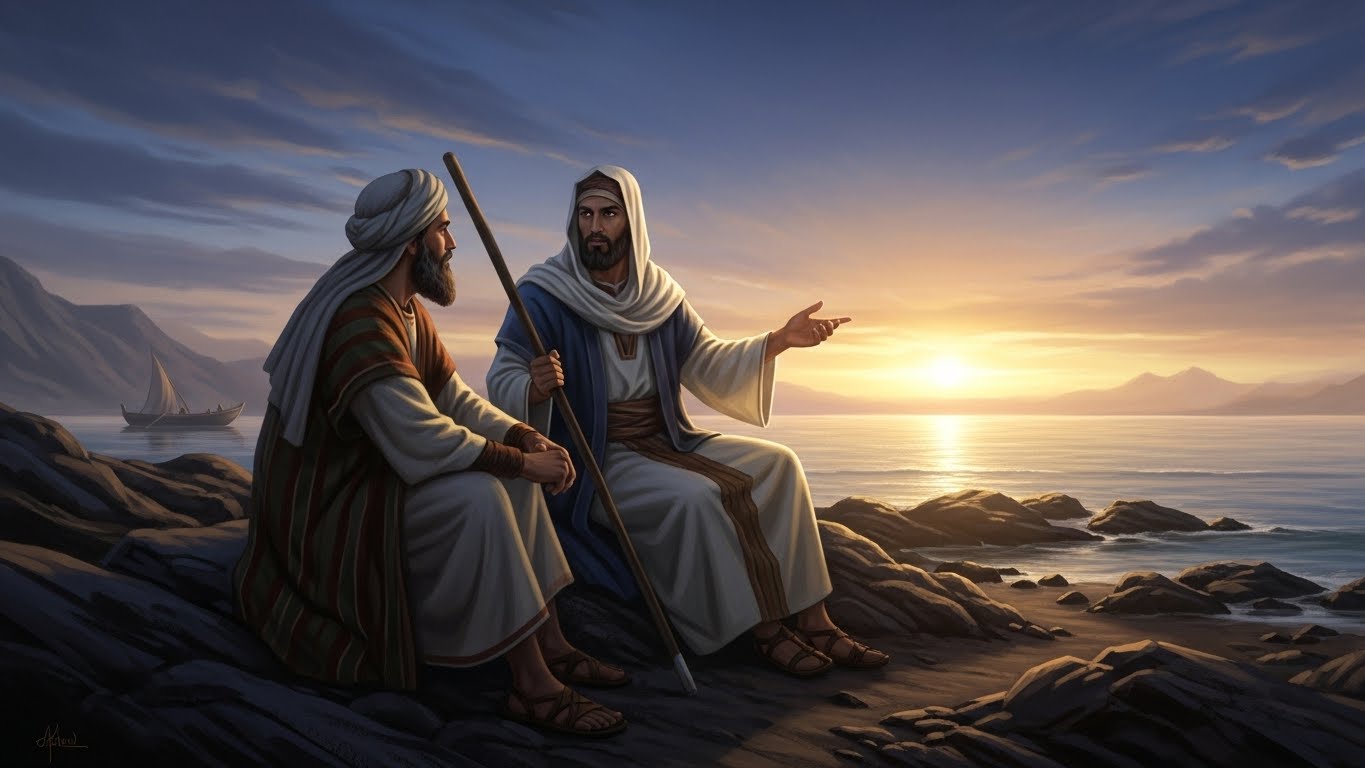
Historical illustration for Moses and Al-Khidr in the Quranic Narrative
Share
Facebook Twitter LinkedIn Pinterest Email Copy Link

Editorial note: This revised article separates Quranic wording, later interpretation and modern scientific ideas. Speculative comparisons are identified as speculation and are not presented as established doctrine or scientific proof.

Moses and al-Khidr in the Quran

The meeting of Moses and al-Khidr in Surah al-Kahf is a carefully structured lesson about knowledge, patience and divine wisdom. The Quranic narrative does not require portals, time travel or a hidden-planet theory to convey its meaning.

Moses and Al-Khidr in the Quranic Narrative — editorial illustration

The Quranic narrative

Quran 18:60–82 describes Moses traveling with a young companion to the meeting of the two seas. After the fish is lost, Moses meets a servant granted mercy and knowledge by God. Moses asks to follow him and struggles to remain patient as three troubling events unfold.

The explanation at the end reveals purposes that Moses could not initially see: protection of a boat belonging to poor workers, the difficult case of a child, and preservation of a treasure for two orphans. The narrative repeatedly distinguishes limited human judgment from knowledge granted by God.

Who was al-Khidr?

The Quran calls him a servant of God but does not name him in the passage. Hadith and later tradition identify him as al-Khidr and supply additional details. Scholars have differed about whether he was a prophet and about questions concerning his lifespan. Those disagreements should be reported rather than collapsed into certainty.

The “meeting of the two seas” has also received geographical and symbolic interpretations. The Quran does not identify it with the Dome of the Rock, a wormhole or a planetary gateway. Such identifications need evidence beyond word association.

The fish and modern speculation

The fish’s disappearance is a sign within the sacred narrative. Recasting it as proof of a time portal or alternate dimension is a modern hypothesis, not the Quran’s stated explanation. No scientific observation is provided that would allow the story to function as an experiment.

Readers can explore literary structure and theology without reducing the passage to a physics claim. The story’s central questions concern humility, patience, moral appearances and the limits of knowledge.

Responsible conclusion

The responsible reading begins with the Quranic sequence, notes what authenticated hadith adds, and labels later geography or portal theories as speculation. This preserves both the power of the story and the integrity of its sources.

Selected sources

  • Quran 18:60–82 — Moses and the servant of God.
  • Sahih al-Bukhari 4725 — the Moses and Khidr narrative.
  • Quran 18:83–98 — the distinct Dhul-Qarnayn narrative that follows.

Continue this series

Browse more articles in The Secrets of the Universe, or use the Series Reading Guide to follow every episode in order.

The ethical tension of the three events

Moses objects because each event appears wrong according to the information available to him: damaging a working boat threatens poor owners, killing a young person is shocking, and repairing a wall without payment seems unreasonable after a town refused hospitality. The final explanation does not teach indifference to injustice. It reveals that Moses had not been shown the full circumstances and that al-Khidr acted through knowledge granted for this particular narrative.

Muslim interpreters therefore do not treat the story as permission for ordinary people to harm others while claiming secret knowledge. Human legal and moral responsibility is based on evidence that people can legitimately know. The exceptional actions in the passage cannot be copied by someone who merely feels spiritually certain.

Knowledge and humility

Moses remains an honoured prophet; the episode teaches that excellence in one field does not make a person the possessor of every kind of knowledge. Patient questioning, recognition of limits and willingness to learn are central lessons. These themes are strong without adding a theory of time travel or alternative dimensions.


Continue the series

← Previous: Solomon’s Portals in Later Religious Traditions  |  All The Secrets of the Universe articles  |  Next: Dajjal, Yajuj and Majuj, Dhul-Qarnayn and Surah Al-Kahf →

Follow on Google News Follow on Flipboard
Share. Facebook Twitter Pinterest LinkedIn Telegram Email Copy Link
Religion Essence Hub Editorial Team
  • Website

The Religion Essence Hub Editorial Team researches, reviews and updates articles about religion, history, beliefs and culture.

Related Posts

The Meaning of Alamin (Worlds) in Islamic Thought

21 December 2025

Angels Associated with the Divine Throne in Islamic Tradition

21 December 2025

The Divine Throne and Creation in Islamic Cosmology

21 December 2025

Comments are closed.

Top Posts

Part 2 – Shepherding as a Metaphor for Prophethood

19 August 202443 Views

Part 4 – Hanifs: Monotheism in Pre-Islamic Arabia

19 August 202434 Views

Part 6 – The First Revelation in the Cave of Hira

4 September 202429 Views

Part 3 – Prophet Muhammad’s Marriage to Khadijah: Partnership, Sources and Context

19 August 202423 Views
Don't Miss
Umar ibn al-Khattab

Episode 14 – Umar’s Night Patrols and Public Accountability – Part 1

27 August 20264 Mins Read5 Views

What later historical reports about Umar’s night patrols teach about public accountability, welfare, justice, and the limits of historical certainty.

Part 11 – Ridicule, Accusations and Demands for Signs

27 August 2026

Part 10 – Quraysh’s Objections and Attempts at Compromise

27 August 2026

Part 9 – The Warning at Mount Safa and Abu Lahab’s Response

27 August 2026
About Religion Essence Hub

Religion Essence Hub publishes accessible articles about religion, history, beliefs, scripture and culture. We explain complex topics clearly and responsibly. Email: contact@religionessencehub.com

Facebook YouTube
Our Picks

Episode 14 – Umar’s Night Patrols and Public Accountability – Part 1

27 August 2026

Part 11 – Ridicule, Accusations and Demands for Signs

27 August 2026

Part 10 – Quraysh’s Objections and Attempts at Compromise

27 August 2026
Most Popular

Part 10 – Quraysh’s Objections and Attempts at Compromise

27 August 20260 Views

Episode 8 – The Beginning of the Caliphate

28 July 20251 Views

Part 9 – The Warning at Mount Safa and Abu Lahab’s Response

27 August 20261 Views
  • Home
  • Privacy Policy
  • About Us
  • Corrections Policy
  • Disclaimer
  • Editorial Policy
  • Editorial Team
  • Get In Touch
  • Terms of Use
  • Cookie Policy (UK)
© 2026 Religion Essence Hub. All rights reserved.

Type above and press Enter to search. Press Esc to cancel.

Manage Consent
To provide the best experiences, we use technologies like cookies to store and/or access device information. Consenting to these technologies will allow us to process data such as browsing behavior or unique IDs on this site. Not consenting or withdrawing consent, may adversely affect certain features and functions.
Functional Always active
The technical storage or access is strictly necessary for the legitimate purpose of enabling the use of a specific service explicitly requested by the subscriber or user, or for the sole purpose of carrying out the transmission of a communication over an electronic communications network.
Preferences
The technical storage or access is necessary for the legitimate purpose of storing preferences that are not requested by the subscriber or user.
Statistics
The technical storage or access that is used exclusively for statistical purposes. The technical storage or access that is used exclusively for anonymous statistical purposes. Without a subpoena, voluntary compliance on the part of your Internet Service Provider, or additional records from a third party, information stored or retrieved for this purpose alone cannot usually be used to identify you.
Marketing
The technical storage or access is required to create user profiles to send advertising, or to track the user on a website or across several websites for similar marketing purposes.
  • Manage options
  • Manage services
  • Manage {vendor_count} vendors
  • Read more about these purposes
View preferences
  • {title}
  • {title}
  • {title}