

Famine and epidemic disease presented different challenges during Umar ibn al-Khattab’s caliphate. This episode examines accounts of hunger and relief, then turns to a well-documented report about his response to an epidemic in Syria. Keeping those events distinct helps explain the decisions without confusing their causes or locations.
The Year of Ashes, not Ramadan
The famine is remembered as ‘Am al-Ramadah, usually translated as the “Year of Ashes.” The expression describes the severe conditions associated with drought. It does not mean the month of Ramadan. The earlier version of this article confused the two names.
The traditional chronology places the Year of Ashes in 18 AH. Fred Donner’s scholarly discussion of early Islamic chronology records that dating from al-Tabari in Narratives of Islamic Origins. A year label alone, however, cannot establish the exact duration or every detail of the relief stories.
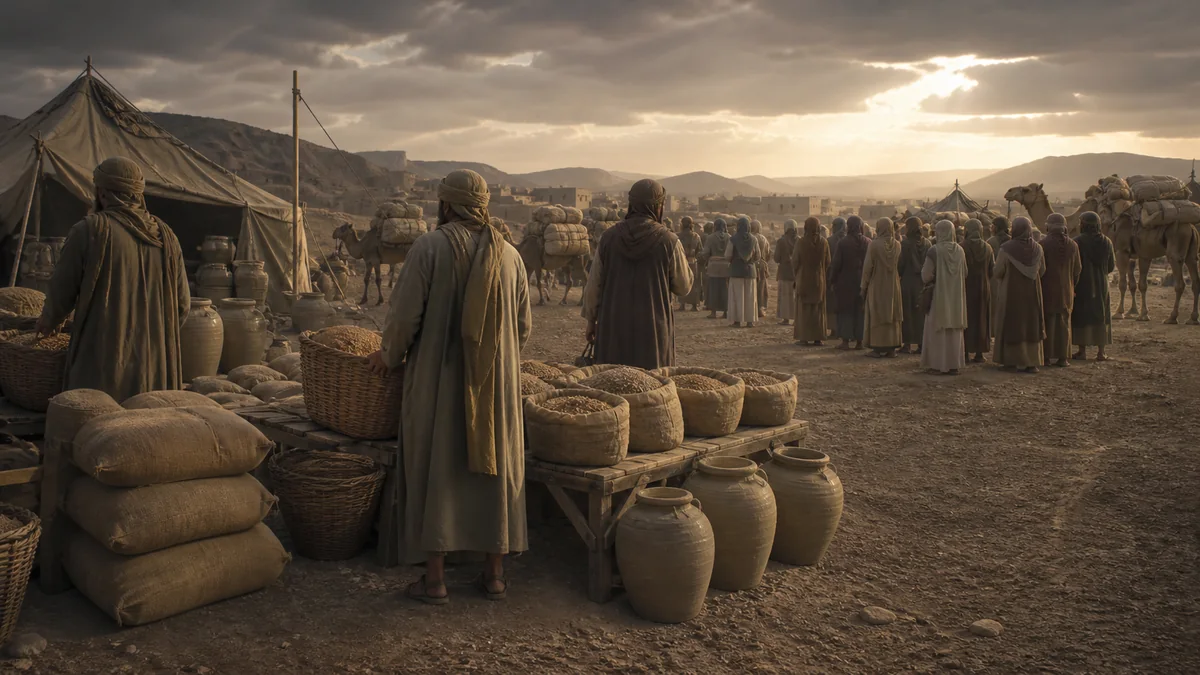
The narrative followed in this series describes poor rainfall, loss of livestock and people seeking food around Madinah. It is an account of a regional crisis, not a claim that the entire world had only 60,000 inhabitants. That population statement in the previous text was erroneous.
Hunger and the ruler’s own household
Several reports in the episode describe Umar limiting his food while others went hungry. In one, a man’s eagerness to gather the last traces of fat from a dish makes the deprivation visible. In another, Umar resolves not to enjoy foods that were unavailable to the people around him.
These are stories about sharing hardship and recognising need. The exact words attributed to Umar, the details of his meals and descriptions of his physical condition need individual source assessment. They should not be turned into nutritional advice.
The earlier article also confused dietary fat with protein and offered a universal dietary percentage without an appropriate health source. Those claims have been removed. A historical account cannot tell a present-day reader what to eat or how to treat malnutrition.
Relief meant more than personal austerity
The episode describes people arriving near Madinah in search of assistance. It portrays Umar and others distributing supplies, preparing food, visiting people in need and making arrangements for families to return home when conditions improved.
The practical theme is clear: a ruler’s simple diet would not, by itself, feed displaced families. Relief required food, people to distribute it and attention to those unable to obtain it for themselves.
Precise totals are a different matter. The earlier version gave a camp population and an enormous death toll without a dependable citation. It also combined several caravan sizes, payments and dates. Those figures are not retained as established facts.
Descriptions of aid from other provinces likewise need to be checked against the chronology of those provinces. In particular, stories about Egyptian supplies cannot simply be attached to any famine year without examining when the relevant campaign and administration occurred. This article does not treat all such reports as one securely dated shipment.
The epidemic in Syria: a separate decision
Sahih al-Bukhari 5729 provides a specific account of Umar travelling towards Syria and learning at Sargh that an epidemic had broken out. He consulted different groups of companions. Their advice was not initially unanimous.
Umar decided to return rather than take the travelling group into the affected area. When Abu Ubaydah asked whether he was fleeing divine decree, Umar explained that choosing a safer course also lay within divine decree. Abd al-Rahman ibn Awf then reported the Prophet’s instruction about not entering a plague-stricken land or leaving it to flee the plague.
The important distinction is between a group that had not entered the affected region and people already within it. The report should not be reduced to the slogan that everyone must either travel or stay put in every kind of emergency.
Prudence and religious trust
The discussion at Sargh does not portray consultation as a lack of faith. Umar considers different views, makes a decision and receives additional evidence. Within the report, taking precautions and trusting God are not opposites.
This historical account is not a replacement for current medical or public-health advice. Different diseases and emergencies require different responses. It would be misleading to use the narrative as proof that hot climates prevent germs or that people in dry areas cannot become ill.
Prayer without blaming people who suffer
The series recalls appeals for prayer, repentance and relief during hardship. Those themes belong to its religious interpretation of the events. They do not establish that a particular hungry family, sick person or disaster victim caused their suffering through wrongdoing.
The previous text made the sweeping claim that all natural disasters were created by people’s sins. That claim went beyond what this article could support. It has been removed, along with an unverified earthquake speech.
A careful account can discuss spiritual reflection while still recognising the immediate duties of feeding people, caring for the sick and reducing avoidable harm. It need not identify the hidden reason for another person’s suffering.
What this episode contributes to the series
Accounts of the famine emphasise material need and the responsibilities of leadership. The Sargh narration contributes a more precisely sourced example of consultation during danger. Reading them together is useful only when their different evidential limits remain visible.
The lesson is not that a single leader could control every outcome. It is that concern had to lead to action: learning about conditions, seeking help and reconsidering a planned journey when new information made it unsafe.
Sources and reading notes
- Sahih al-Bukhari 5729 — consultation at Sargh and the decision concerning the epidemic.
- Fred M. Donner, Narratives of Islamic Origins — discussion of early chronology, including the traditional dating of the Year of Ashes.
Editorial note: Famine anecdotes are distinguished from the cited Sargh narration. Unsupported population and mortality figures, dietary advice and claims assigning guilt to disaster victims have been removed.
