
Close Menu
  • Home
  • Islamic History
    • Life of Prophet Muhammad
    • Abu Bakr al-Siddiq
    • Umar ibn al-Khattab
  • Companions
  • Series
    • 40,000 Years of Knowledge
    • The Secrets of the Universe
    • Amazon Series
  • About
  • Contact
  • Series Reading Guide
What's Hot

Ibrahim and Nimrod in Islam: What the Quran Says—and What History Cannot Confirm

2 October 2026

Prophet Ibrahim and Ancient Mesopotamia: Quran, Sumer and the Limits of History

30 September 2026

Thamud and Prophet Salih: The Quranic Account and the Archaeology of al-Hijr

28 September 2026
YouTube
YouTube Facebook
Religion Essence Hub
  • Home
  • Islamic History
    • Life of Prophet Muhammad
    • Abu Bakr al-Siddiq
    • Umar ibn al-Khattab
  • Companions
  • Series
    • 40,000 Years of Knowledge
    • The Secrets of the Universe
    • Amazon Series
  • About
  • Contact
  • Series Reading Guide
Religion Essence Hub
Home » Episode 26 – Umar’s Final Days and the Succession Council
Umar ibn al-Khattab

Episode 26 – Umar’s Final Days and the Succession Council

Religion Essence Hub Editorial TeamBy Religion Essence Hub Editorial Team15 November 2025Updated:9 September 2026No Comments2 Mins Read13 Views
Facebook Twitter Pinterest Telegram LinkedIn Tumblr Copy Link Email
Follow Us
Google News Flipboard
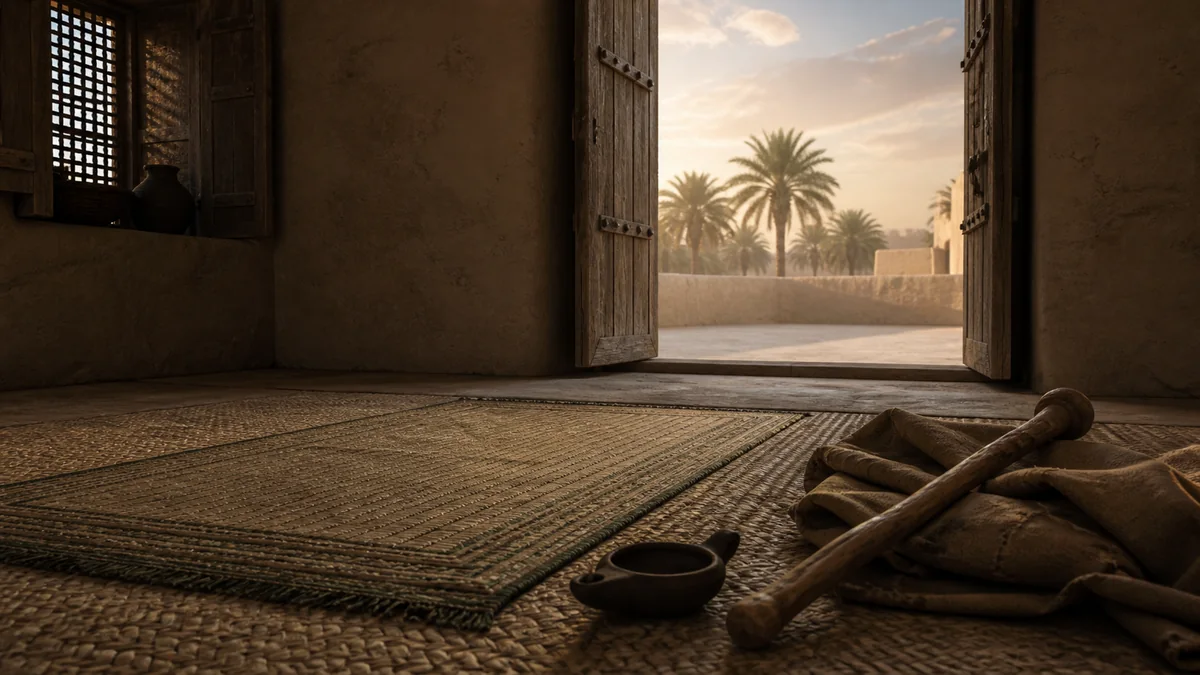
Empty prayer mat, wooden staff and patched cloak in a dawn Medina interior
Share
Facebook Twitter LinkedIn Pinterest Email Copy Link

Source note: Detailed authenticated reports describe Umar’s final days. This article avoids ethnic or religious insults when identifying his attacker and does not turn the assassination into collective blame.

The attack in Madinah

An assassin attacked Umar ibn al-Khattab while he led the dawn prayer in Madinah in 644 CE. Sahih al-Bukhari 3700 gives a long eyewitness account from ‘Amr ibn Maymun. The attacker also stabbed several worshippers, and Umar soon understood that his wound was fatal.

Historical accounts commonly identify the assassin as Abu Lu’lu’a, an enslaved Persian craftsman. However, his individual act does not justify accusing Persians, Zoroastrians or any modern community. Some translated editions use derogatory labels. These labels have no place in the article’s own narration.

Public duties in his final days

Bukhari 3700 remembers Umar checking taxation on Iraqi land shortly before the attack and expressing concern for widows. After being wounded, he asked about his debts and instructed his family to settle them. These details present leadership as financial and moral accountability, not only authority.

Burial beside the Prophet and Abu Bakr

Umar sent his son Abdullah to request Aisha’s permission for burial beside the Prophet and Abu Bakr. Aisha granted the request. Umar also asked for a fresh request after his death, recognising that she might reconsider while under emotional pressure.

Choosing the next caliph

Umar did not name a single successor. He appointed a council of six prominent companions to deliberate. Sahih al-Bukhari 7218 records him reflecting that Abu Bakr had appointed a successor while the Prophet had not, and expressing fear of carrying the burden of the caliphate after death.

Eventually, the consultation resulted in Uthman ibn Affan becoming the third caliph. The process was not a modern election, but neither was it simple hereditary transfer.

A balanced farewell

  • Describe the assassination without glorifying violence.
  • Identify the attacker without blaming a population.
  • Include Umar’s concern for debt and public responsibility.
  • Explain the succession council without forcing modern political labels onto it.

Umar’s death ended a transformative decade of rule. The strongest reports close his biography with vulnerability, unfinished responsibilities and concern for how authority would pass to others.

Sources

  • Sahih al-Bukhari 3700.
  • Sahih al-Bukhari 7218.
  • Encyclopaedia Britannica: Umar I.

Continue the series

← PreviousAll parts

Follow on Google News Follow on Flipboard
Share. Facebook Twitter Pinterest LinkedIn Telegram Email Copy Link
Religion Essence Hub logo
Religion Essence Hub Editorial Team
  • Website

The Religion Essence Hub Editorial Team researches, reviews and updates articles about religion, history, beliefs and culture.

Related Posts

Episode 14 – Umar’s Night Patrols and Public Accountability – Part 1

27 August 2026

Episode 25 – Al-Farooq Miscellaneous Matters of the Caliphate

15 November 2025

Episode 24 – Umar’s Caliphate and the Byzantine Front

15 November 2025

Comments are closed.

Top Posts

Part 2 – Shepherding as a Metaphor for Prophethood

19 August 202446 Views

Part 4 – Hanifs: Monotheism in Pre-Islamic Arabia

19 August 202436 Views

Part 6 – The First Revelation in the Cave of Hira

4 September 202429 Views

Part 3 – Prophet Muhammad’s Marriage to Khadijah: Partnership, Sources and Context

19 August 202424 Views
Don't Miss
40,000 Years of Knowledge

Ibrahim and Nimrod in Islam: What the Quran Says—and What History Cannot Confirm

2 October 20268 Mins Read1 Views

The Quranic debate between Ibrahim and an unnamed ruler, the later identification with Nimrod, and why claims connecting him to Sargon of Akkad remain unproven.

Prophet Ibrahim and Ancient Mesopotamia: Quran, Sumer and the Limits of History

30 September 2026

Thamud and Prophet Salih: The Quranic Account and the Archaeology of al-Hijr

28 September 2026

Aad, Iram and Prophet Hud: What the Quran and Archaeology Show

25 September 2026
About Religion Essence Hub

Religion Essence Hub publishes accessible articles about religion, history, beliefs, scripture and culture. We explain complex topics clearly and responsibly. Email: contact@religionessencehub.com

Facebook YouTube
Our Picks

Ibrahim and Nimrod in Islam: What the Quran Says—and What History Cannot Confirm

2 October 2026

Prophet Ibrahim and Ancient Mesopotamia: Quran, Sumer and the Limits of History

30 September 2026

Thamud and Prophet Salih: The Quranic Account and the Archaeology of al-Hijr

28 September 2026
Most Popular

Prophet Ibrahim and Ancient Mesopotamia: Quran, Sumer and the Limits of History

30 September 20261 Views

Ibrahim and Nimrod in Islam: What the Quran Says—and What History Cannot Confirm

2 October 20261 Views

Part 38 – Madinah’s Jewish Communities and Early Political Tensions

19 February 20252 Views
  • Home
  • Privacy Policy
  • About Us
  • Corrections Policy
  • Disclaimer
  • Editorial Policy
  • Editorial Team
  • Get In Touch
  • Terms of Use
  • Cookie Policy (UK)
© 2026 Religion Essence Hub. All rights reserved.

Type above and press Enter to search. Press Esc to cancel.

Manage Consent
To provide the best experiences, we use technologies like cookies to store and/or access device information. Consenting to these technologies will allow us to process data such as browsing behavior or unique IDs on this site. Not consenting or withdrawing consent, may adversely affect certain features and functions.
Functional Always active
The technical storage or access is strictly necessary for the legitimate purpose of enabling the use of a specific service explicitly requested by the subscriber or user, or for the sole purpose of carrying out the transmission of a communication over an electronic communications network.
Preferences
The technical storage or access is necessary for the legitimate purpose of storing preferences that are not requested by the subscriber or user.
Statistics
The technical storage or access that is used exclusively for statistical purposes. The technical storage or access that is used exclusively for anonymous statistical purposes. Without a subpoena, voluntary compliance on the part of your Internet Service Provider, or additional records from a third party, information stored or retrieved for this purpose alone cannot usually be used to identify you.
Marketing
The technical storage or access is required to create user profiles to send advertising, or to track the user on a website or across several websites for similar marketing purposes.
  • Manage options
  • Manage services
  • Manage {vendor_count} vendors
  • Read more about these purposes
View preferences
  • {title}
  • {title}
  • {title}