

The encounter between Prophet Ibrahim and a powerful ruler is one of the Quran’s sharpest arguments about political power. Ibrahim says that his Lord gives life and causes death. The ruler claims the same ability. Ibrahim then points to the sunrise and challenges him to reverse its course. The ruler is left without an answer.
Muslim tradition commonly calls this ruler Nimrod or Namrud. The name is familiar, but it is not in the Quran. The source lecture explores whether the king could be identified with Sargon of Akkad and connects the account with Mesopotamian archaeology. That proposal is interesting to examine, but the evidence does not establish it.
The Quranic debate with the unnamed king
The complete Quranic account appears in Quran 2:258. The verse introduces a man who disputed with Ibrahim about his Lord because Allah had given him kingship.
Ibrahim states that his Lord gives life and death. The king answers, “I give life and death.” Later commentaries explain this boast through the story of two prisoners: the ruler pardons one and orders the other killed. That detail helps illustrate his evasion, but it is not stated in the Quranic verse.
Ibrahim does not become trapped in the ruler’s wordplay. He says that Allah brings the sun from the east and challenges the king to bring it from the west. The disbelieving ruler is confounded.
The argument exposes the difference between limited political authority and divine power. A king can issue orders affecting human lives, but he does not create life, control death or govern the order of the cosmos.
Does the Quran name Nimrod?
No. Quran 2:258 does not give the ruler’s name, city, dynasty or date. Classical tafsir and historical narratives often identify him as Nimrod, but that identification belongs to interpretation rather than the explicit wording of revelation.
This distinction is not merely academic. If the Quran leaves a person unnamed, an article should not turn a traditional identification into certainty. “The ruler traditionally identified as Nimrod” is more accurate than “the Quran says Nimrod.”
The biblical Nimrod appears in Genesis as a mighty ruler associated with Babel and cities in Mesopotamia. Later Jewish, Christian and Muslim storytelling expanded the character considerably. Those traditions influenced one another, and their details do not all have the same historical weight.
The idols and the fire
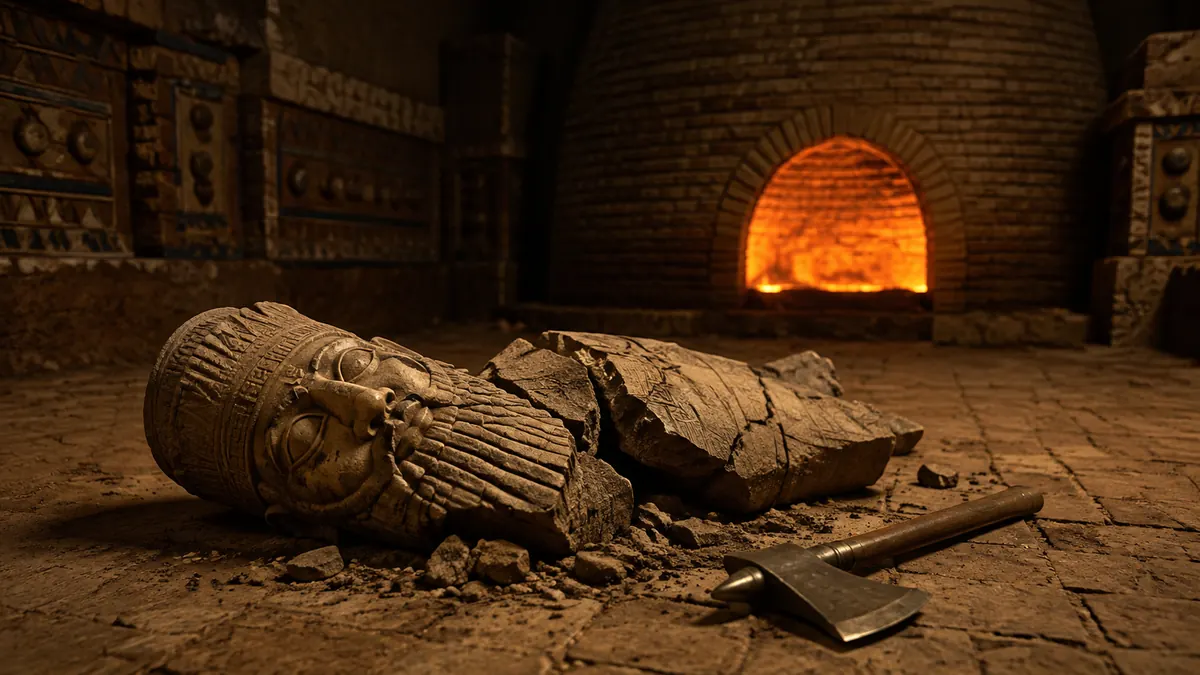
The ruler’s debate is often told together with Ibrahim’s destruction of the idols and his rescue from a fire. These events appear in other Quranic passages.
Quran 21:57–70 recounts Ibrahim’s plan against the idols, the people’s realization that he was responsible, and their decision to burn him. Allah commands the fire to become coolness and safety for Ibrahim.
Quran 37:91–98 similarly describes him striking the idols and his opponents building a structure in which to cast him. The Quran affirms the rescue, but it does not identify a particular excavated furnace, name the king supervising the punishment or describe the dimensions of the fire.
Why Sargon of Akkad is proposed
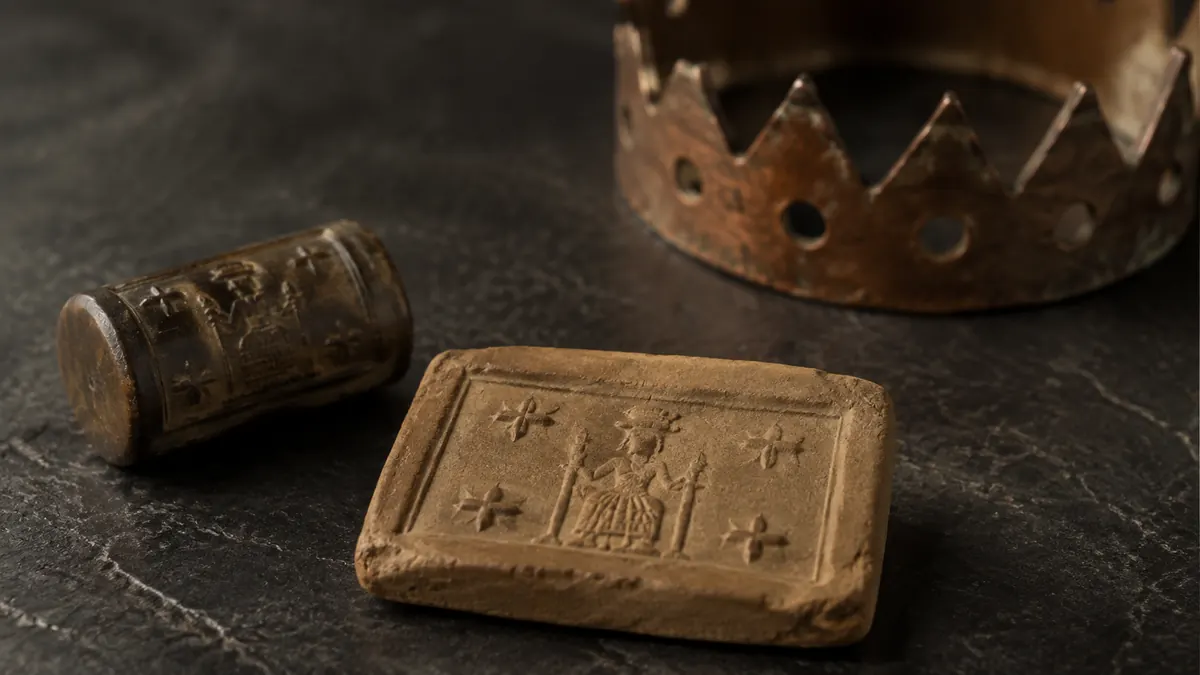
The lecture considers Sargon of Akkad because he created a powerful empire, used ambitious royal titles and ruled in a religious culture shaped by temples and celestial divination. Sargon is a real, well-attested king of the third millennium BCE.
The Metropolitan Museum of Art dates the Akkadian period to approximately 2350–2150 BCE and Sargon’s reign to about 2340–2285 BCE. His dynasty brought rival Sumerian cities under one political power and campaigned across a large part of the ancient Near East.
Sargon’s capital, Agade or Akkad, is known from texts but has still not been located. The museum notes that it was probably situated near the Tigris–Diyala confluence, close to modern Baghdad. An undiscovered capital is not the same as a city erased without trace by a supernatural event; rivers, settlement changes and the incomplete nature of archaeological discovery can all make a site difficult to locate.
Why the identification does not work as proof
The proposed Sargon–Nimrod identification depends on similarities rather than a direct link. Sargon possessed a large kingdom. Some royal inscriptions used expansive titles. Akkadian art shows warfare and prisoners. Mesopotamian communities experienced drought and famine. None of those facts is unique enough to identify him as the Quranic king.
There is no known Akkadian inscription naming Ibrahim, describing the debate in Quran 2:258 or calling Sargon “Nimrod.” The Quran does not give a chronological marker that places the encounter in Sargon’s reign.
Royal titles also require context. Phrases such as “king of the four quarters” expressed universal ambition within Mesopotamian kingship. They cannot by themselves connect a ruler to a later religious narrative.
Enheduanna and what archaeology really confirms
One valuable part of the lecture concerns Enheduanna. She was Sargon’s daughter and served as high priestess of the moon god at Ur. The British Museum’s collection record describes a disk representing Enheduanna and an inscription identifying her as Sargon’s daughter and the moon god’s priestess.
Works attributed to her make her an important figure in literary history. This evidence confirms the close relationship between Akkadian royal power and temple institutions. It does not prove that Ibrahim confronted her father or lived in the same century.
Famine and the fall of the Akkadian Empire
Environmental stress may have contributed to political disruption near the end of the Akkadian period. Researchers have examined evidence for increasing aridity and settlement change in northern Mesopotamia. The empire’s decline was nevertheless a historical process involving political conflict, regional variation and uncertain chronology—not a single event with one uncontested explanation.
The lecture connects famine traditions surrounding the unnamed king with Akkadian drought evidence. This is a possible comparison, not an identification. Famines occurred in many ancient societies, and a later exegetical report cannot securely date a third-millennium archaeological layer.
The mosquito story belongs to later tradition
Later Muslim histories tell that Nimrod’s forces were overwhelmed by insects and that a mosquito entered the king’s nose or head, causing a humiliating death. The story carries a moral theme: the smallest creature can defeat a tyrant who imagines himself invincible.
The Quran does not narrate this death. Archaeology has not demonstrated that insects destroyed Sargon, Agade or another candidate city. The account may be discussed as later religious storytelling, but it should not be presented as a confirmed archaeological explanation for the Akkadian collapse.
Lost tablets and claims of suppressed knowledge
The lecture also describes nineteenth-century attempts to transport Mesopotamian antiquities, a river disaster involving archaeological finds, and later damage to Babylon. The destruction and removal of Iraqi heritage are serious, documented issues.
UNESCO records that a 150-hectare military base was installed within Babylon after the 2003 invasion and organized damage assessments. That evidence supports concern for cultural heritage. It does not support the claim that governments hid dangerous astronomical knowledge or that lost tablets were deliberately kept from humanity.
Thousands of cuneiform tablets remain unpublished or only partly studied because conservation, cataloguing and translation require time and specialists. A lack of publication is not proof of a secret ban.
The scriptures of Ibrahim
The Quran does refer to scriptures associated with Ibrahim. Quran 87:18–19 mentions the earlier scriptures, those of Ibrahim and Musa. Quran 53:36–42 recalls teachings that no bearer carries another’s burden, that a person receives what he strives for, and that the final return is to Allah.
No surviving Mesopotamian tablet has been securely authenticated as the scripture of Ibrahim. The Quranic reference establishes their religious reality for Muslims; it does not identify a museum object that historians can label as the original manuscript.
Frequently asked questions
Is Nimrod named in the Quran?
No. The ruler in Quran 2:258 is unnamed. Nimrod is the standard identification in later commentary and storytelling.
Does the Quran say the ruler released one prisoner and killed another?
No. That explanation comes from tafsir and illustrates how later scholars understood the ruler’s claim to give life and death.
Was Nimrod actually Sargon of Akkad?
There is no direct archaeological or textual evidence proving that identification. Similarities in royal power, titles and setting are insufficient.
Has the city of Akkad been found?
No. Its existence is well attested in ancient texts, but its archaeological location remains uncertain.
Did a mosquito kill Nimrod?
That story appears in later narrative traditions, not in the Quran, and it is not archaeologically verified.
What the account teaches
The power of Quran 2:258 does not depend on discovering the ruler’s modern museum label. Ibrahim’s argument remains clear: delegated political power is not divine sovereignty. The king can manipulate people, but he cannot reverse the sunrise or claim the creative authority of Allah.
Archaeology adds a rich picture of Mesopotamian kingship, temples, writing and empire. It becomes misleading only when circumstantial parallels are presented as proof. Keeping the Quranic account, tafsir and historical reconstruction distinct gives each source its proper value.
Read the preceding article: Prophet Ibrahim and Ancient Mesopotamia: Quran, Sumer and the Limits of History.
