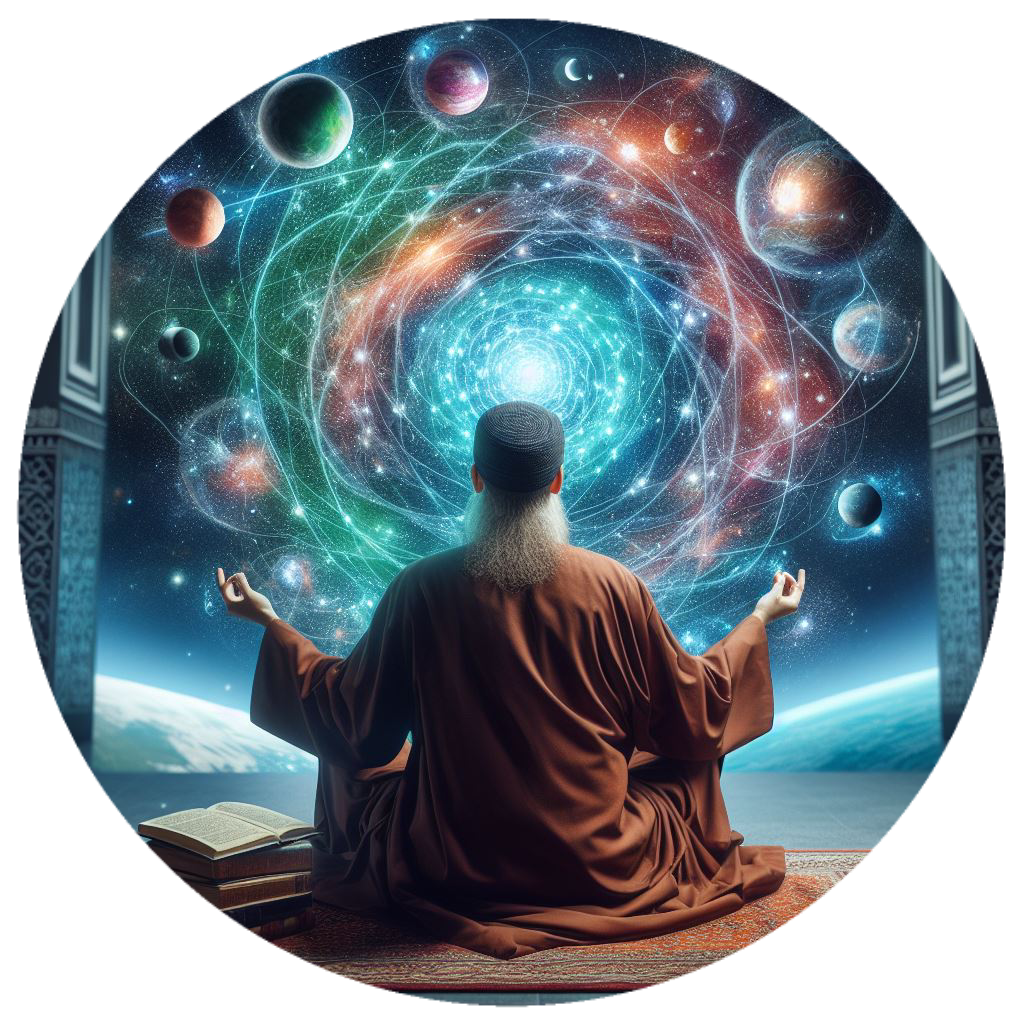

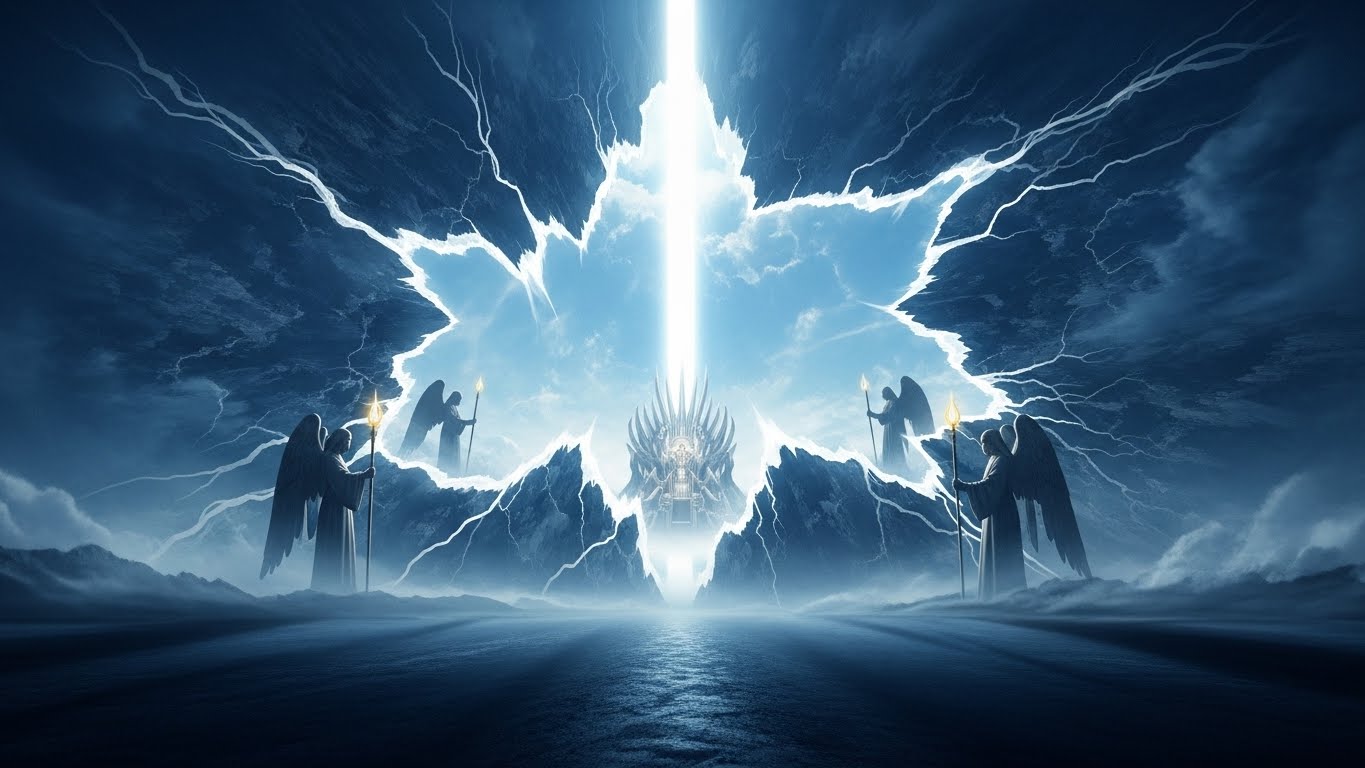
Editorial note: This revised article separates Quranic wording, later interpretation and modern scientific ideas. Speculative comparisons are identified as speculation and are not presented as established doctrine or scientific proof.
Angels and the Divine Throne: what the sources say
Islamic scripture speaks about angels associated with the Divine Throne, but the details are not all equal in authority. A careful account begins with Quranic statements, then identifies rigorously authenticated hadith, and finally labels material from later commentary or comparative religion.
Quranic foundations
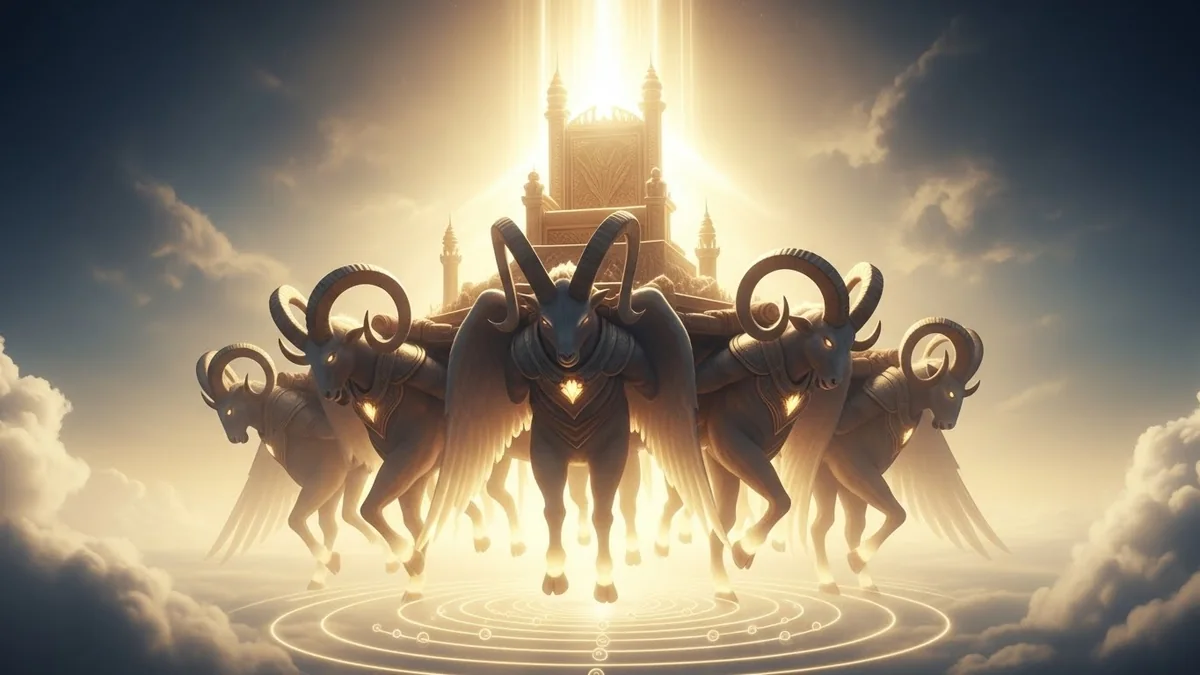
The Quran states that angels glorify God and pray for believers, and it specifically mentions those who bear the Throne and those around it. Quran 69:17 says that eight will bear the Throne on the Day described in that passage. Quran 39:75 portrays angels surrounding the Throne in praise. These verses establish the religious teaching without giving a physical diagram of the unseen realm.
The Quran also says that angels do not disobey God and carry out what they are commanded. This is a theological description of their obedience. It should not be expanded into precise claims about their biology, dimensions, speed or material composition unless a reliable text supplies those details.
Hadith and later reports
Sahih Muslim records the statement that angels were created from light, jinn from a smokeless flame, and Adam from what has been described. The report supports the traditional distinction among these creations; it does not define “light” as an electromagnetic frequency that physics can measure.
Descriptions of named throne-bearing angels, exact sizes, materials, colors or residences often circulate from weak reports, later compilations or earlier scriptural traditions. Such accounts require individual authentication. Parallels with Ezekiel or other scriptures can be discussed comparatively, but similarity does not prove that two texts describe the same physical mechanism.
Dimensions, wormholes and scientific limits
Modern physics sometimes uses higher-dimensional mathematics, but no scientific observation shows that angels are higher-dimensional organisms. Likewise, a scriptural “gate of heaven” is not automatically a wormhole. A metaphor can help a reader imagine an idea, yet it is not evidence.
NASA explicitly explains that black holes are not wormholes or portals to other universes. Scientific language should therefore be used only for established observations or clearly labelled hypotheses, not as confirmation of an unseen theological claim.
Responsible conclusion
The strongest conclusion is modest: the Quran affirms angels around and bearing the Throne, while many popular details come from later interpretation. Readers should evaluate each narration by its source and grade and avoid turning devotional imagery into unsupported science.
Different kinds of detail require different confidence
The Quran clearly mentions bearers of the Throne and angels around it. Authenticated hadith provide further descriptions, including reports intended to communicate immense scale. Later commentaries sometimes add names, colours, shapes or stories taken from weak reports and earlier religious traditions. An article should not merge these levels into one seamless description.
Descriptions of vast size also require literary and theological sensitivity. Their purpose is not to give a modern engineering diagram. They express the greatness of creation and, by comparison, the majesty and power of the Creator. Converting them into calculations about galaxies or dimensional travel goes beyond the evidence.
How to present disputed material
If a later report is culturally important, it can still be discussed with a label such as “a later commentary relates” or “a report of disputed authenticity states.” The source, date and grading should be supplied. This approach respects tradition while preventing an uncertain story from being mistaken for a Quranic statement or rigorously authenticated hadith.
Selected sources
- Quran 40:7 — angels who bear the Throne and pray for believers.
- Quran 69:17 — the Throne and the eight bearers in the scene of Judgment.
- Quran 39:75 — angels surrounding the Throne.
- Sahih Muslim 2996 — creation of angels, jinn and Adam.
- NASA: Black holes — black holes are not portals or wormholes.
