
Editorial note: This revised article separates Quranic wording, later interpretation and modern scientific ideas. It identifies speculative comparisons as speculation, not as established doctrine or scientific proof.
Dajjal, Gog and Magog, Dhul-Qarnayn and Surah al-Kahf
Popular end-times discussions connect these subjects, but the Quran and hadith address them in distinct passages. A reliable study should first preserve those distinctions and then identify where later interpreters propose connections.

Dhul-Qarnayn and the barrier
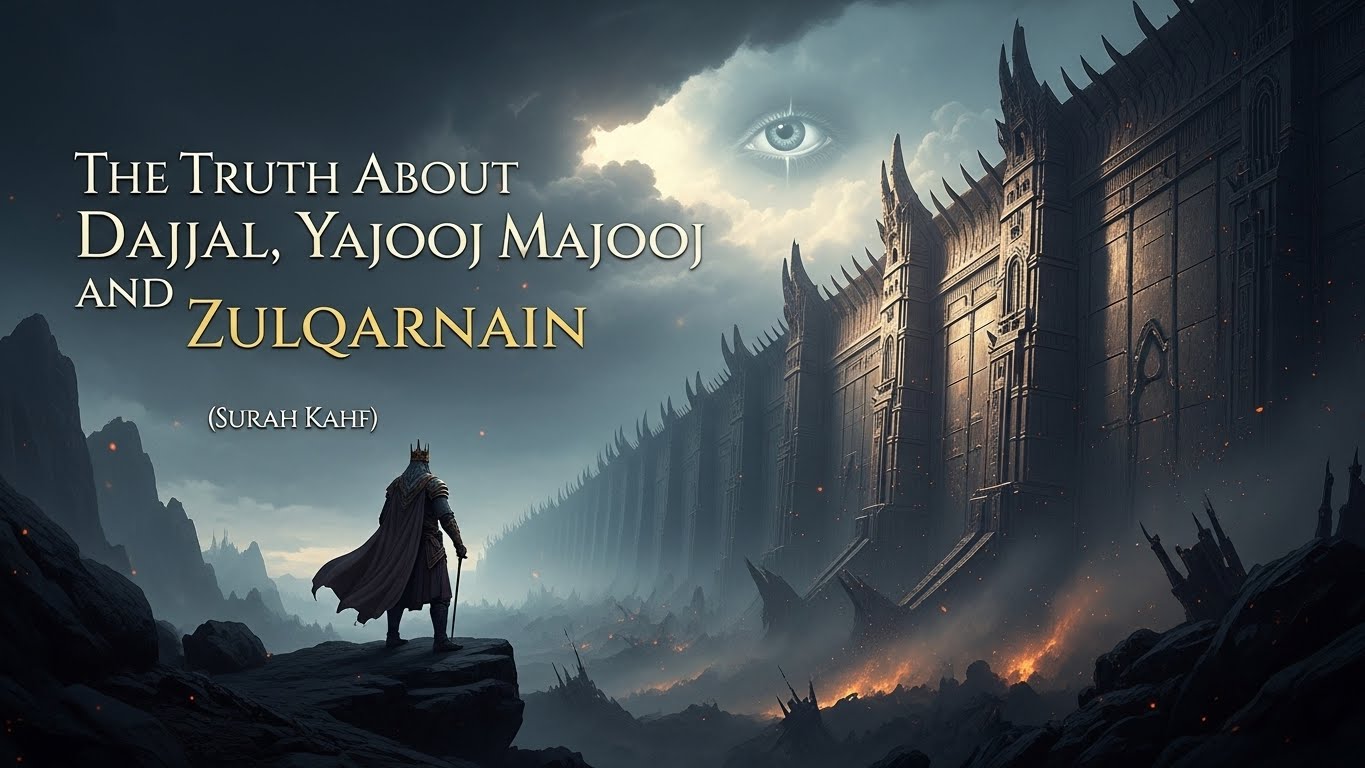
Quran 18:83–98 recounts the journeys of Dhul-Qarnayn and the construction of a barrier requested by a community threatened by Gog and Magog. The passage emphasizes justice, responsibility, human effort and God’s ultimate power. It does not identify the barrier by modern coordinates or describe it as a portal.
Quran 21:96 refers to the release of Gog and Magog near the approach of the promised time. Muslim commentators have offered different geographical and eschatological readings. Therefore, writers should present modern identifications as proposals, not as facts established by the verses.
Dajjal traditions
Descriptions of Dajjal appear mainly in hadith literature rather than in Surah al-Kahf’s narrative of Dhul-Qarnayn. Sahih Muslim preserves the report of Tamim al-Dari and al-Jassasah on an island, and other authentic reports describe Dajjal’s deceptive water and fire. These reports carry a moral warning about deception and faith.
Water in these narrations does not prove a network of portals. Nor does the setting of an island demonstrate travel between planets or dimensions. Those are modern additions to the texts.
How to evaluate modern theories
Claims locating Gog and Magog with satellite imagery, black holes or hidden dimensions need independent geographical or scientific evidence. A resemblance between a modern image and a religious description is not sufficient.
NASA states that black holes are not wormholes or portals to other universes. Readers should not use end-times texts to override established astronomy. Likewise, writers should not claim that astronomy has verified a specific end-times interpretation.
Responsible conclusion
The primary sources teach accountability, the limits of human power and the danger of deception. The exact identity and location of every figure or barrier remain matters on which caution is appropriate.
Keep the source passages distinct
Dhul-Qarnayn and the barrier appear in Quran 18:83–98. Gog and Magog also appear in Quran 21:96, and authenticated hadith contain additional end-times reports. Hadith discuss Dajjal extensively, but the Quran does not name him. Combining every passage into one detailed timeline can make later assumptions look like explicit revelation.
A sound method lists what each source actually states before proposing a relationship. The Quran describes a just ruler who travels, listens to a vulnerable community and uses available means to build a barrier. The moral focus includes justice, cooperation and recognition that the structure will not outlast God’s decree. The passage does not supply its precise historical location.
Avoid map-based certainty
Modern theories have proposed mountains, walls and passes across Asia as the barrier. None has achieved a consensus that turns a proposal into established fact. Satellite images alone cannot authenticate a Quranic identification. Archaeology, inscriptions, dating and the history of interpretation would all be needed, and even then theological claims require caution.
