

Editorial note: This revised history article distinguishes archaeological evidence, scholarly interpretation and traditional narrative. Dates and explanations are attributed where evidence is incomplete or debated.
The Mexica (Aztec) Empire: rise, society and conquest
“Aztec” is a broad modern label. The imperial power centered on Tenochtitlan was led by the Mexica and the Triple Alliance with Texcoco and Tlacopan from 1428 until the Spanish-led conquest of 1521.
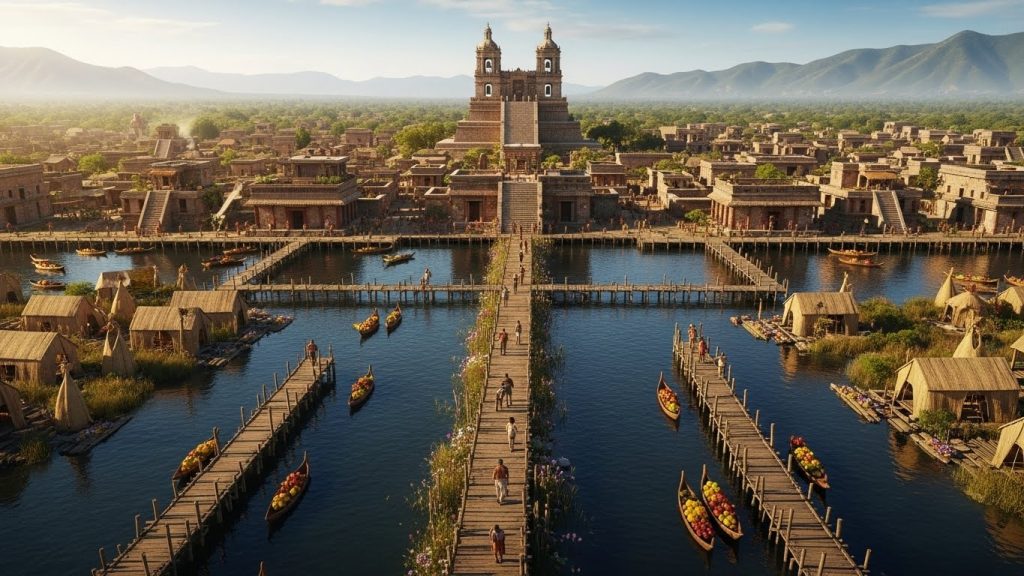
Tenochtitlan and the Triple Alliance
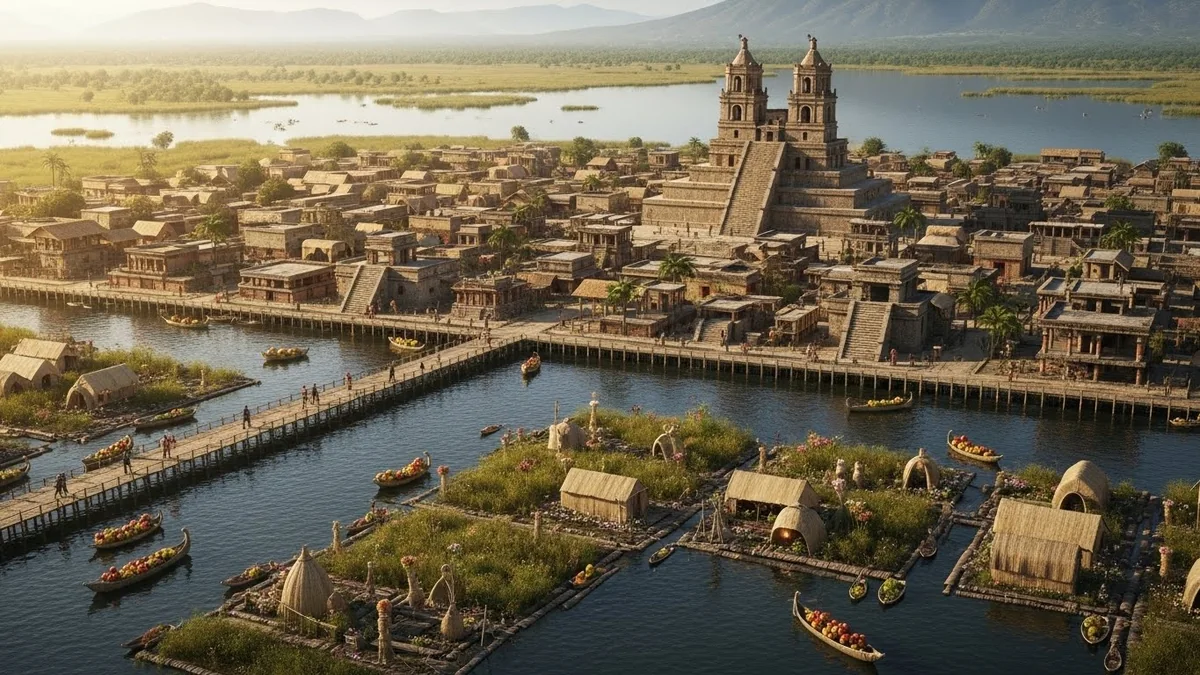
Tenochtitlan grew on islands in Lake Texcoco into one of the world’s largest cities of its time. Causeways, canals, aqueducts, markets and chinampa agriculture supported a dense urban population.
The alliance expanded through war, diplomacy and tribute. Many subject polities retained local rulers while sending goods and labor to the imperial center, creating wealth and resentment.
Religion, art and political power
Temples and public ritual linked government, warfare, agriculture and sacred time. Human sacrifice was part of state religion, but sensational retellings often repeat uncertain colonial numbers without examining the source.
Codices, sculpture, poetry and material remains reveal a sophisticated intellectual and artistic world. Spanish accounts must be read alongside Indigenous-language sources and archaeology.
Why Tenochtitlan fell
Hernán Cortés did not defeat the empire with a small Spanish force alone. Thousands of Indigenous allies, especially peoples opposed to Mexica power, were essential.
Smallpox, siege, disrupted supplies, political divisions and military technology combined in the fall. The conquest was a coalition war and demographic catastrophe, not proof of simple European superiority.
What remains debated
Population figures, ritual numbers and colonial chronicles remain debated. Claims should identify whether they come from archaeology, an Indigenous account or a Spanish witness.
Conclusion
The Mexica Empire was powerful, creative and unequal. Understanding its achievements and the grievances of subject peoples explains the conquest better than heroic or demonizing legend.
Why the conquest cannot be explained by one factor
The fall of Tenochtitlan was not a simple contest between a small Spanish force and an isolated empire. Hernán Cortés depended on thousands of Indigenous allies, including communities that opposed Mexica tribute and power. Political rivalries, unfamiliar military technologies, the siege of the island city and epidemic disease all shaped the result. Smallpox caused devastating mortality and social disruption, but disease acted within an existing military and political crisis.
Terminology also matters. “Aztec” can refer broadly to Nahua-speaking peoples connected with Aztlan traditions, while “Mexica” more precisely identifies the dominant people of Tenochtitlan and Tlatelolco. Using the terms carefully helps readers distinguish an imperial government from the many communities it ruled or fought.
Reading the evidence
Accounts written after the conquest preserve essential information but reflect the aims and experiences of their authors. Historians compare Spanish narratives, Nahuatl-language testimonies, pictorial manuscripts and archaeology rather than treating one account as complete. This method reveals both imperial achievement and the violence of conquest without turning history into legend.
