
Close Menu
  • Home
  • Islamic History
    • Life of Prophet Muhammad
    • Abu Bakr al-Siddiq
    • Umar ibn al-Khattab
  • Companions
  • Series
    • 40,000 Years of Knowledge
    • The Secrets of the Universe
    • Amazon Series
  • About
  • Contact
  • Series Reading Guide
What's Hot

Human Evolution and Adam in Islam: Evidence, Boundaries and Open Questions

11 September 2026

What Is the Ruh? Adam’s Creation and the Soul in the Quran

9 September 2026

Seven Earths in the Quran: Classical Interpretations and Modern Questions

7 September 2026
YouTube
YouTube Facebook
Religion Essence Hub
  • Home
  • Islamic History
    • Life of Prophet Muhammad
    • Abu Bakr al-Siddiq
    • Umar ibn al-Khattab
  • Companions
  • Series
    • 40,000 Years of Knowledge
    • The Secrets of the Universe
    • Amazon Series
  • About
  • Contact
  • Series Reading Guide
Religion Essence Hub
Home » Part 5 – The Amazon, Atlantic Trade and Piracy
Amazon Series

Part 5 – The Amazon, Atlantic Trade and Piracy

Religion Essence Hub Editorial TeamBy Religion Essence Hub Editorial Team11 December 2025Updated:6 September 2026No Comments3 Mins Read4 Views
Facebook Twitter Pinterest Telegram LinkedIn Tumblr Copy Link Email
Follow Us
Google News Flipboard
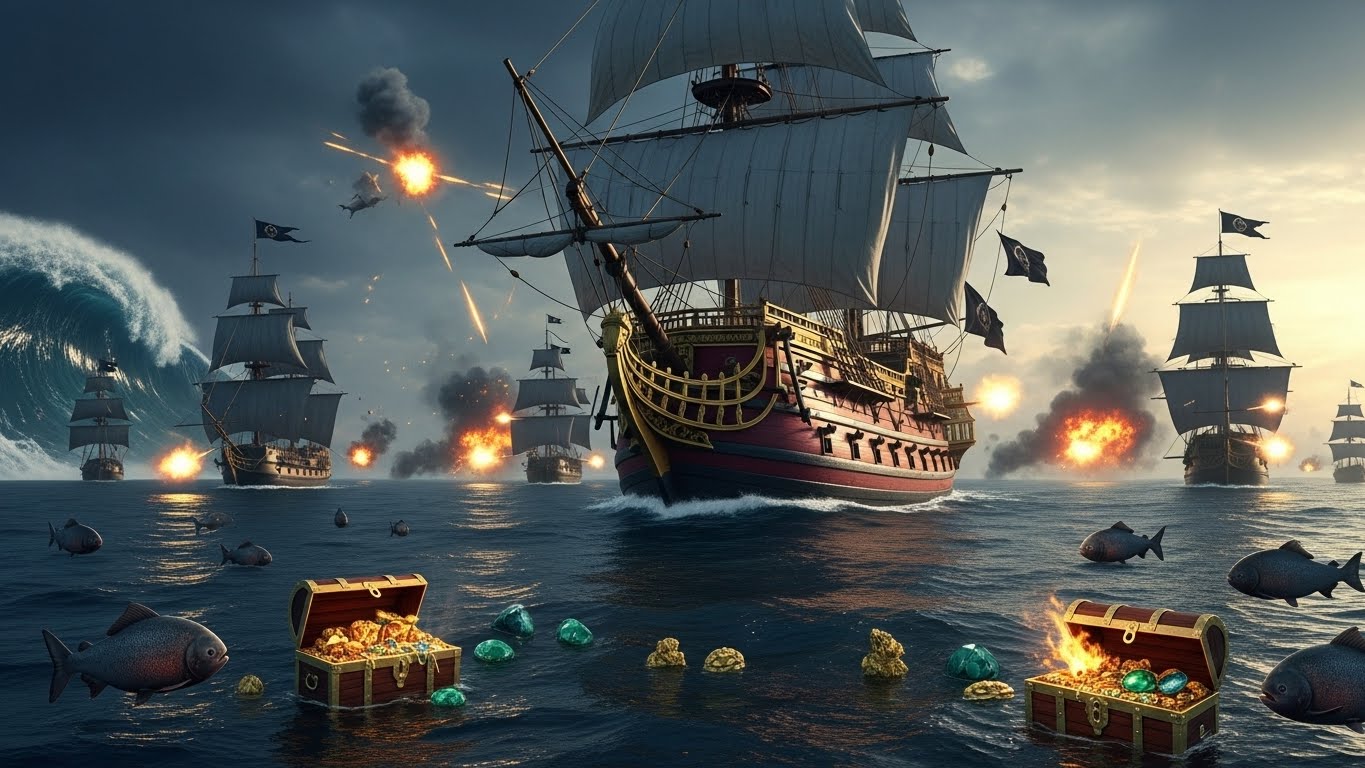
Historical illustration for The Amazon, Atlantic Trade and Piracy
Share
Facebook Twitter LinkedIn Pinterest Email Copy Link

Editorial note: This revised history article distinguishes archaeological evidence, scholarly interpretation and traditional narrative. Dates and explanations are attributed where evidence is incomplete or debated.

The Amazon, Atlantic trade and the history of piracy

The Amazon River opens into the Atlantic, a region shaped by Indigenous navigation, European conquest, forced migration, commerce and piracy. These histories are connected by ocean routes, but they should not be turned into a single legend about portals or treasure.
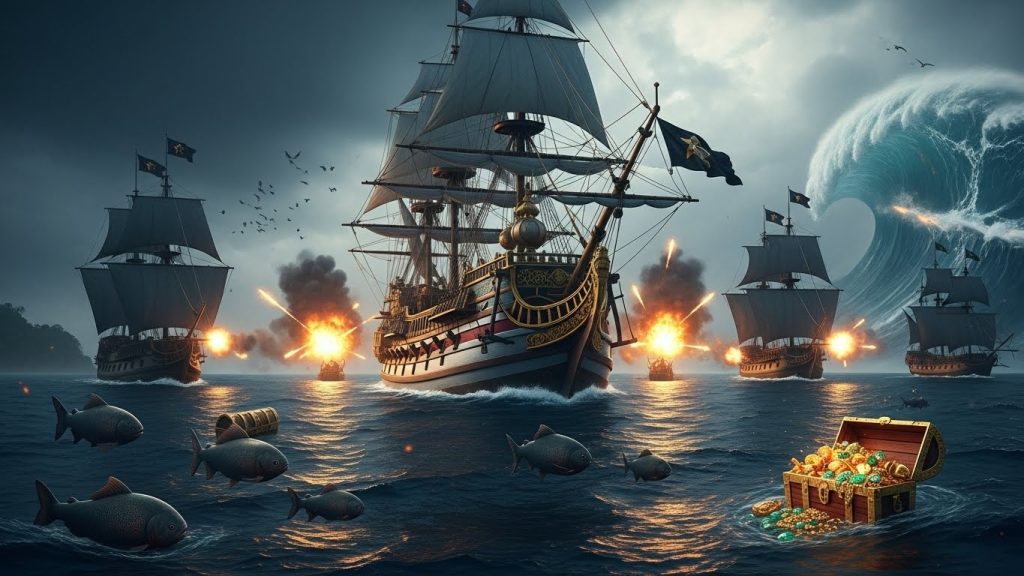
Part 5 – The Amazon, Atlantic Trade and Piracy — editorial illustration

The river meets the Atlantic

The Amazon carries enormous volumes of freshwater and sediment to the ocean. Its tidal bore, known as the Pororoca, occurs when incoming tides travel upriver under suitable conditions. It is a physical tidal phenomenon, not an entrance to another world.

Piranhas are diverse fish, and sensational accounts exaggerate their danger to humans. Ecological claims should identify the species and evidence rather than describing the river as a system designed to consume bodies.

Conquest, trade and coerced labor

Atlantic empires connected South America to Europe and Africa through shipping. Wealth from colonies traveled with violence: Indigenous enslavement, the transatlantic slave trade and extractive economies were central to the system.

Privateers operated with state authorization against enemy shipping, while pirates acted outside that authority. The boundary could shift with war and politics, so popular stories of independent adventurers hide a larger imperial context.

Piracy beyond the Caribbean

Maritime raiding also affected the Indian Ocean and Bay of Bengal during the Mughal period. Aurangzeb belongs to that separate regional history, not to the geography of the Amazon. Combining the two can illustrate a global age of sea power, but it must not imply a direct Amazonian episode without evidence.

Pirate crews sometimes used written rules and shared prizes, but they also practiced violence, theft and coercion. Their organization should not be romanticized as simple democracy.

What remains debated

Exact stories of buried treasure, pirate codes and individual attacks often come from later retellings. Reliable history compares court records, ship logs, colonial archives and archaeology.

Conclusion

The Atlantic history of the Amazon is a story of environment, trade, empire and survival. The clearest account separates documented connections from entertaining legend.

Separate river history from Atlantic piracy

Piracy in the Atlantic changed across time. Sixteenth- and seventeenth-century privateers often operated with authorisation from rival European states, while other crews acted outside any commission. Their main targets were shipping lanes, ports and valuable cargo. The Amazon estuary mattered strategically because it connected a vast river system with Atlantic routes, but this does not mean pirates controlled the interior rainforest or discovered a hidden civilisation.

European competition at the river mouth involved Portuguese, Dutch, English, French and Irish ventures, as well as Indigenous nations pursuing their own alliances and interests. Colonisation brought enslavement, forced labour, disease and mission settlements. A history centred only on adventurous outsiders misses the people who already knew and navigated the region.

A useful test for sensational claims

Ask whether a claim names a ship, date, archive, archaeological site or identifiable community. Claims that jump from a real tidal phenomenon or a documented voyage to portals, sea monsters or limitless treasure need independent evidence. Physical geography and historical records provide a richer explanation without requiring a supernatural conclusion.

Selected sources

  • NASA Earth Observatory: the Amazon system.
  • Royal Museums Greenwich: the history of piracy.
  • Encyclopaedia Britannica: piracy and privateering.

Continue the series

← PreviousAll parts

Follow on Google News Follow on Flipboard
Share. Facebook Twitter Pinterest LinkedIn Telegram Email Copy Link
Religion Essence Hub logo
Religion Essence Hub Editorial Team
  • Website

The Religion Essence Hub Editorial Team researches, reviews and updates articles about religion, history, beliefs and culture.

Related Posts

Part 4 – The Inca Empire: Building a Kingdom in the Andes

11 December 2025

Part 3 – The Aztec Empire: History and Interpretation

11 December 2025

Part 2 – The Decline of the Maya: Evidence and Theories

11 December 2025

Comments are closed.

Top Posts

Part 2 – Shepherding as a Metaphor for Prophethood

19 August 202443 Views

Part 4 – Hanifs: Monotheism in Pre-Islamic Arabia

19 August 202435 Views

Part 6 – The First Revelation in the Cave of Hira

4 September 202429 Views

Part 3 – Prophet Muhammad’s Marriage to Khadijah: Partnership, Sources and Context

19 August 202423 Views
Don't Miss
40,000 Years of Knowledge

Human Evolution and Adam in Islam: Evidence, Boundaries and Open Questions

11 September 20268 Mins Read1 Views

A careful, evidence-led guide to human evolution and Adam in Islam, separating fossils and genetics from theology, speculation and common misconceptions.

What Is the Ruh? Adam’s Creation and the Soul in the Quran

9 September 2026

Seven Earths in the Quran: Classical Interpretations and Modern Questions

7 September 2026

Iblis and the Qareen: Temptation, Responsibility and Reassurance (Part 2)

6 September 2026
About Religion Essence Hub

Religion Essence Hub publishes accessible articles about religion, history, beliefs, scripture and culture. We explain complex topics clearly and responsibly. Email: contact@religionessencehub.com

Facebook YouTube
Our Picks

Human Evolution and Adam in Islam: Evidence, Boundaries and Open Questions

11 September 2026

What Is the Ruh? Adam’s Creation and the Soul in the Quran

9 September 2026

Seven Earths in the Quran: Classical Interpretations and Modern Questions

7 September 2026
Most Popular

Human Evolution and Adam in Islam: Evidence, Boundaries and Open Questions

11 September 20261 Views

Part 26 – Yathrib is Medina

18 February 20252 Views

Part 38 – Madinah’s Jewish Communities and Early Political Tensions

19 February 20252 Views
  • Home
  • Privacy Policy
  • About Us
  • Corrections Policy
  • Disclaimer
  • Editorial Policy
  • Editorial Team
  • Get In Touch
  • Terms of Use
  • Cookie Policy (UK)
© 2026 Religion Essence Hub. All rights reserved.

Type above and press Enter to search. Press Esc to cancel.

Manage Consent
To provide the best experiences, we use technologies like cookies to store and/or access device information. Consenting to these technologies will allow us to process data such as browsing behavior or unique IDs on this site. Not consenting or withdrawing consent, may adversely affect certain features and functions.
Functional Always active
The technical storage or access is strictly necessary for the legitimate purpose of enabling the use of a specific service explicitly requested by the subscriber or user, or for the sole purpose of carrying out the transmission of a communication over an electronic communications network.
Preferences
The technical storage or access is necessary for the legitimate purpose of storing preferences that are not requested by the subscriber or user.
Statistics
The technical storage or access that is used exclusively for statistical purposes. The technical storage or access that is used exclusively for anonymous statistical purposes. Without a subpoena, voluntary compliance on the part of your Internet Service Provider, or additional records from a third party, information stored or retrieved for this purpose alone cannot usually be used to identify you.
Marketing
The technical storage or access is required to create user profiles to send advertising, or to track the user on a website or across several websites for similar marketing purposes.
  • Manage options
  • Manage services
  • Manage {vendor_count} vendors
  • Read more about these purposes
View preferences
  • {title}
  • {title}
  • {title}