

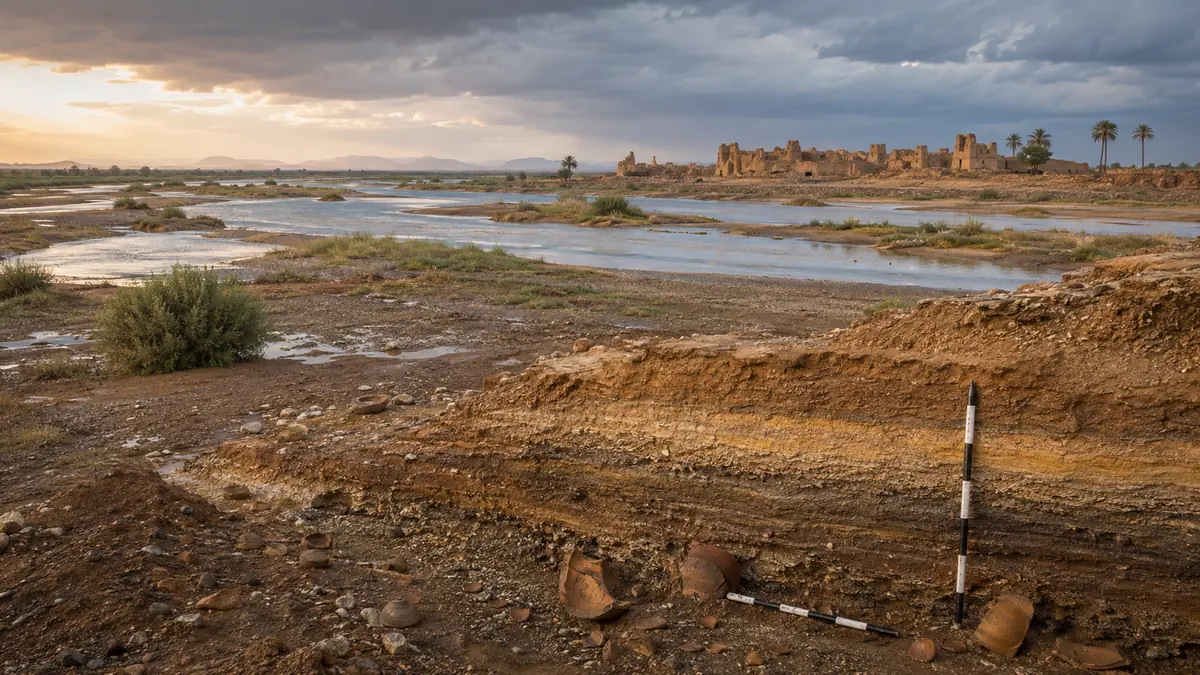
Was Noah’s Flood global, covering every part of the modern planet, or did it overwhelm the entire world known to Noah’s people? The source lecture explores that question through Quranic wording, flood stories from many cultures, the spread of animals and the development of human settlements after catastrophe.
The subject needs careful boundaries. Revelation explains the meaning of the event; geology studies physical traces left by past floods; ancient stories show how communities remembered disaster. These sources can be compared, but one cannot silently substitute for another.
What the Quran clearly establishes
The Quran presents Noah as a messenger rejected by his people, the Ark as the means by which Allah saved him and the believers, and the flood as judgment on persistent wrongdoing. Quran 7:64, 11:36–48, 23:23–30 and 54:9–15 provide the core account.
The scale is immense within the narrative: water pours from the sky, the earth releases water, and waves rise like mountains. The Quran also records Noah’s prayer that disbelievers not be left upon the ard in Quran 71:26.
The Arabic word ard can refer to earth or land depending on context. The passages do not give a map, geological date, water depth at every latitude or a statement using modern technical categories such as “planet-wide.” For that reason, readers have argued for both universal and regional understandings.
Global and regional readings
The traditional global reading understands the language as a judgment encompassing the inhabited world and treats the Ark’s passengers as the preserved beginning of later human and animal life. This reading has a long history in Muslim, Jewish and Christian interpretation.
A regional reading holds that the flood destroyed Noah’s people and the land relevant to his mission without requiring water to cover every continent. Supporters note that the Quran commonly focuses divine punishment on the people who rejected a particular messenger and that ordinary words for land can be local in scope.
The Quran does not pause to settle the modern geographical debate. An article should therefore distinguish “a common interpretation” from “the only wording the text permits.” Theological conviction about the event also does not make every proposed physical reconstruction equally sound.
What geology can investigate
Floods leave evidence. Sediment layers, erosion surfaces, transported boulders, slack-water deposits and changes in river channels can help researchers estimate the date, depth and discharge of past events. Radiocarbon dating and optically stimulated luminescence can provide age estimates for associated materials.
The U.S. Geological Survey’s review of the world’s largest floods describes many causes: ice-dammed lakes, breached natural dams, volcanic processes, landslides, ice jams and extreme rainfall. Its work on quantitative paleoflood hydrology explains how physical deposits are connected to estimates of ancient flow.
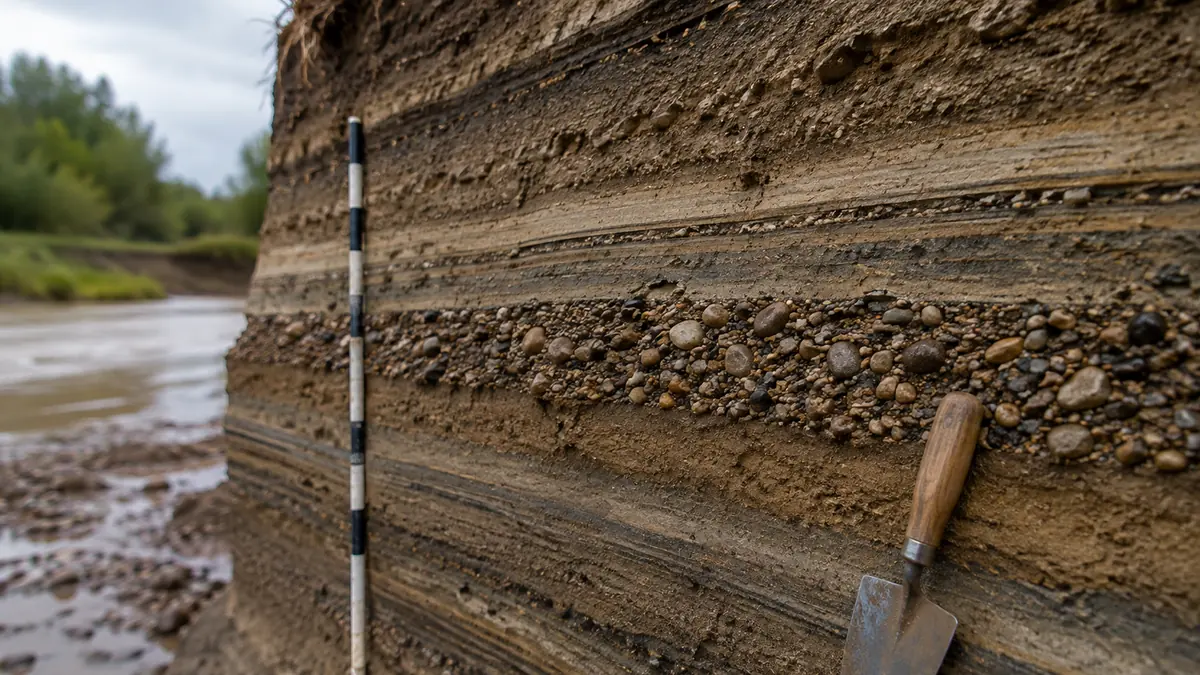
That record demonstrates that enormous prehistoric floods occurred. It does not currently provide evidence for one recent event that simultaneously covered every mountain and continent. A claim of a global geological flood would need a worldwide layer of the same age, consistent ecological effects and an explanation for uninterrupted regional records. Geology instead shows many major floods at different times and places.
This scientific conclusion does not decide the theological meaning of the Quranic narrative. It defines what the physical evidence currently supports.
Why flood stories appear in many cultures
The source lecture surveys stories from Mesopotamia, Greece, India, China, northern Europe and other regions. Their recurrence is important, but similarity can have more than one cause.
Human communities commonly formed beside rivers, coasts and fertile floodplains. Those environments support agriculture and trade while exposing people to destructive water. A severe regional flood can dominate communal memory for generations. Stories also travel between neighbouring societies through trade, migration, conquest and translation.
Mesopotamia provides especially relevant material because ancient Sumerian, Akkadian and Babylonian writings include major flood narratives. The flood tablet from the Epic of Gilgamesh, now in the British Museum collection, shows that a literary flood tradition circulated in the ancient Near East long before the Quran.
Parallels can indicate shared motifs, cultural transmission, memories of real regional disasters, or a combination of them. A list of stories alone cannot prove that every tradition independently records one planet-wide event.
The Fertile Crescent after major floods
The lecture connects the post-flood world with settled agriculture, domestication and the Fertile Crescent. Archaeology does confirm that Southwest Asia was one important centre in the long development of farming and village life. Different crops and animals were domesticated over many generations, not in a single moment.
It is too strong to say that all permanent human settlement began immediately after one identifiable flood. Archaeological sites preserve different local sequences, and domestication involved repeated experimentation across long periods. Genetic lineages can trace population movements, but they do not by themselves identify named sons of Noah or verify a specific genealogy.
The responsible connection is broader: floods affected early river communities, and the same productive environments that attracted settlement could also expose those communities to catastrophic loss.
Animal distribution and ecology
The lecture asks why kangaroos are associated with Australia, polar bears with the Arctic and many other animals with particular habitats. Modern biogeography explains such patterns through evolution, continental separation, climate, migration barriers, extinction and ecological adaptation over deep time.
Closely related animals can occupy different regions because populations became separated and adapted to different conditions. Bears, for example, share ancestry but developed distinct ranges and ecological specialisations. This distribution cannot be reconstructed simply by imagining modern species walking from one landing site after a recent flood.
The Quran repeatedly invites reflection on the diversity of living things. Quran 35:28 notes variation among people, animals and livestock. That theological invitation should not be confused with a technical account of taxonomy or a scientific mechanism for present-day species distribution.
Claims that should remain outside the article’s conclusions
Several dramatic ideas sometimes appear in flood discussions:
- Noah stored the DNA of every species.
- Hybrid human-animal cave images document real biological hybrids.
- Figurines prove a single worldwide practice lasting unchanged for tens of thousands of years.
- Modern genetic groups map directly onto Noah’s three sons.
- Every flood story is an independent eyewitness record of one event.
None of these claims is established by the Quran or by current archaeology, genetics or geology. They can be mentioned as examples of speculation, but presenting them as evidence would weaken the article.
Faith and evidence do not need false precision
Believers do not need to manufacture a scientific detail that the Quran does not supply. Geologists, likewise, do not test moral judgment or divine purpose; they test physical claims through rocks, sediments and dated environmental records.
The most honest position is to state each conclusion at the level its evidence allows:
- The Quran presents a real and morally significant flood in Noah’s prophetic story.
- The text does not specify modern global coordinates or a geological date.
- Very large floods are well documented in Earth’s history.
- Current geology does not establish one recent flood covering the entire planet.
- Widespread flood traditions are historically valuable but are not, by themselves, a global geological layer.
Frequently asked questions
Does the Quran explicitly say every continent was underwater?
It describes an overwhelming flood and the destruction of Noah’s rejecting people, but it does not discuss continents or define the event with modern geological terminology.
Do flood myths prove a global flood?
No. They show that flood memory is widespread. Similarities may result from recurring disasters, shared traditions or cultural transmission.
Has geology found ancient megafloods?
Yes. Researchers have documented extremely large floods with several different causes. Those events occurred in different regions and periods.
Does animal geography prove all species left one Ark recently?
Modern biogeography explains distribution through deep-time evolution, isolation, climate, migration and extinction. It does not support a simple recent dispersal of every modern species from one point.
Must a Muslim choose a scientific mechanism for the miracle?
No. A theological account can affirm divine action without claiming undocumented DNA technology or presenting an uncertain reconstruction as revelation.
What to remember
The Quran’s flood account is clear about Noah’s mission, his people’s rejection, the Ark and divine deliverance. It is less specific about the geographical question modern readers often ask. Geology documents immense floods but not one recent global layer, while worldwide flood stories preserve important cultural memories without proving a single mechanism. Keeping those conclusions distinct protects both intellectual honesty and the religious message of the story.
Continue with Aad, Iram and Prophet Hud: What the Quran and Archaeology Show.
