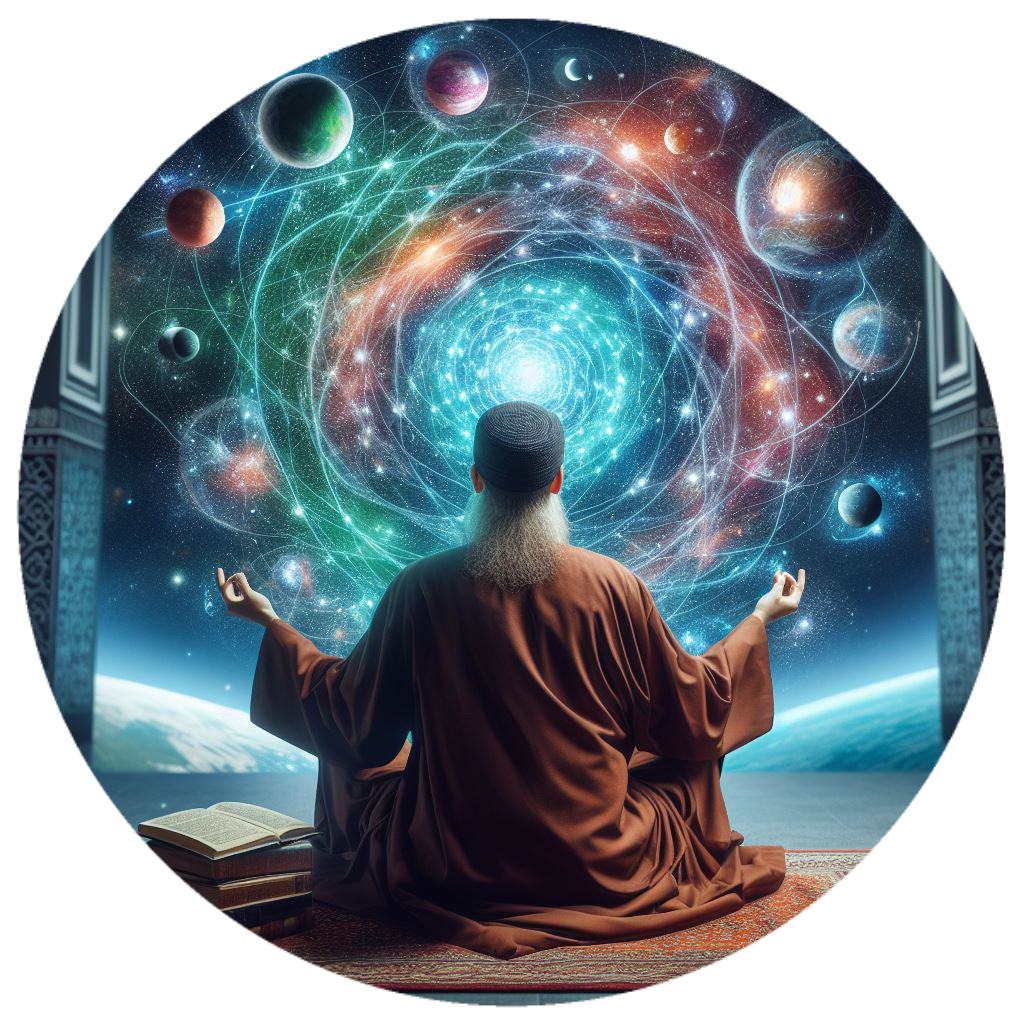

The Quran describes Isa, Jesus son of Maryam, healing the sick and raising the dead by God’s permission. These signs invite reflection on life, human knowledge and the limits of power. They also raise a question that needs careful wording: how should a religious account of a miracle be discussed alongside the history of medicine?
Ancient medical learning provides context, not a laboratory explanation of a miracle. Later stories about particular people brought back to life must also be distinguished from the Quran’s own account. This chapter follows those boundaries while exploring why the theme of restored life has remained so influential.
What the Quran actually attributes to Isa
In Quran 3:49, Isa announces signs including healing and bringing the dead to life. The passage repeatedly connects his actions with God’s permission. Quran 5:110 returns to the same theme while recalling God’s favour to him and his mother.
Within Islamic belief, the distinction is essential. Isa is the messenger through whom the sign occurs; the power to give life belongs to God. The passage is not an invitation to treat a prophet as an independent source of divine power or to imagine the sign as a skill anyone can reproduce after learning a secret method.
The Quran’s account does not list the names of every person restored to life. It also does not describe a medical procedure for achieving it. Those absences should remain visible when a later narrative supplies additional scenes or dialogue.
Lazarus and the difference between sources
The story of Lazarus appears in John 11. In that Gospel narrative, Jesus comes after Lazarus has died, and Lazarus emerges from the tomb. This is an important Christian text and should be introduced as such, not relabelled as a named episode in the Quran.
Muslim historical and exegetical literature also contains accounts of particular dead people whom Isa is said to have revived. Some mention a young person or a figure associated with Noah’s family. The appearance of a story in an old book, or its attribution to an early authority, does not by itself establish the reliability of every detail.
The broad Quranic statement and the later individual stories therefore require different levels of confidence. A responsible retelling can acknowledge the existence of those traditions without inventing eyewitness dialogue or presenting every dramatic feature as settled religious knowledge.
Why the name Lazarus appears in natural history
The language of return also appears outside religion. A species that disappears from the known record and is later found again may be described using the expression “Lazarus taxon.” The expression is a metaphor for rediscovery, not a claim that a dead animal was resurrected.
New Zealand’s takahē offers a memorable example. After being thought lost, surviving birds were found in the Murchison Mountains in 1948. The country’s Department of Conservation records the rediscovery and the continuing effort to protect the species.
The birds had persisted beyond observers’ knowledge. What changed was the evidence available to people. That makes the example a lesson in humility about observation, not scientific verification of a miracle. Similar words can describe very different processes.

Medicine before and after the time of Isa
Medical knowledge did not begin in a single place or year. Egyptian, Mesopotamian, Greek and other traditions developed ways of describing illness and caring for patients. Observation, practical treatment, religious practice and speculation could coexist in the same culture.
The writings known as the Hippocratic Corpus are a collection associated with a medical tradition, not simply one modern-style research book written by a single author. The US National Library of Medicine’s account of Greek medicine explains the importance of observation and the range of subjects covered, including diagnosis, childbirth, diet and surgery.
Chronology is particularly important here. Galen lived in the second and early third centuries CE, after the period associated with Jesus, not two centuries before him. His influential synthesis belongs to a later stage of ancient medicine. The National Library of Medicine gives the dates and context in its overview of Greek medical learning.
Trade and translation helped knowledge travel, but that does not mean every medical system across Asia and the Mediterranean had already reached the same conclusions at the same time. Nor should achievements be assigned to Hippocrates, Aristotle or Galen merely because their names are familiar. Specific claims about a first operation or discovery need specific evidence.
A theological comparison is not an attack on medicine
An interpreter may see a connection between healing miracles and a society interested in medical expertise. That is a theological way of understanding the significance of a sign. It does not establish that every ancient physician witnessed the event, or that an entire civilisation literally worshipped medical science.
The distinction is helpful today as well. Modern resuscitation and the recovery of someone whose death was incorrectly assumed are not the same claim as restoring a person long dead in a religious narrative. Neither should be used casually as proof or disproof of the other.
Respect for medicine is compatible with an Islamic account in which God is the ultimate giver of life. The Quranic passages do not instruct a sick person to reject treatment. This article discusses religious interpretation and historical context; it does not offer a medical treatment or an alternative to professional care.
Jerusalem’s destruction belongs to a separate historical question
The narrative then turns to Jerusalem and Roman power. The destruction of the Second Temple occurred in 70 CE during the Roman suppression of the Jewish revolt. The Roman celebration of that victory is documented in the Parco archeologico del Colosseo’s account of the Arch of Titus. It should not be dated by loosely subtracting a few decades from an assumed age of Jesus.
Nor should the Western Wall be described simply as an intact wall of the temple building. It belongs to the retaining structures of the expanded sacred platform, as explained in the University of Notre Dame’s architectural collection. The Arch of Titus depicts spoils from Jerusalem; that does not, by itself, prove that the Colosseum was physically built from transported temple stones.
These events involved war, political power and immense human suffering. Religious interpretations of them should be labelled as interpretations, not used to declare the suffering of an entire people deserved. Jewish life in and attachment to Jerusalem also cannot accurately be reduced to a single uninterrupted two-thousand-year absence.
The central distinction: life, knowledge and humility
The chapter’s strongest thread is not a competition between faith and medical research. It is the distinction between a creature’s limited knowledge and the divine power described in Islamic scripture. Historical errors and exaggerated scientific claims do not strengthen that message.
Reading the Quranic passages, the Lazarus narrative and the history of medicine as distinct sources allows each to be understood more accurately. For the wider sequence and related discussions of creation and the soul, use the Series Reading Guide.
