
Close Menu
  • Home
  • Islamic History
    • Life of Prophet Muhammad
    • Abu Bakr al-Siddiq
    • Umar ibn al-Khattab
  • Companions
  • Series
    • 40,000 Years of Knowledge
    • The Secrets of the Universe
    • Amazon Series
  • About
  • Contact
What's Hot

Episode 14 – Umar’s Night Patrols and Public Accountability – Part 1

27 August 2026

Part 11 – Ridicule, Accusations and Demands for Signs

27 August 2026

Part 10 – Quraysh’s Objections and Attempts at Compromise

27 August 2026
YouTube
YouTube Facebook
Religion Essence Hub
  • Home
  • Islamic History
    • Life of Prophet Muhammad
    • Abu Bakr al-Siddiq
    • Umar ibn al-Khattab
  • Companions
  • Series
    • 40,000 Years of Knowledge
    • The Secrets of the Universe
    • Amazon Series
  • About
  • Contact
Religion Essence Hub
Home » Surah Al-Kahf, Prophets and Portal Interpretations
The Secrets of the Universe

Surah Al-Kahf, Prophets and Portal Interpretations

Religion Essence Hub Editorial TeamBy Religion Essence Hub Editorial Team19 December 2025Updated:27 August 2026No Comments4 Mins Read6 Views
Facebook Twitter Pinterest Telegram LinkedIn Tumblr Copy Link Email
Follow Us
Google News Flipboard
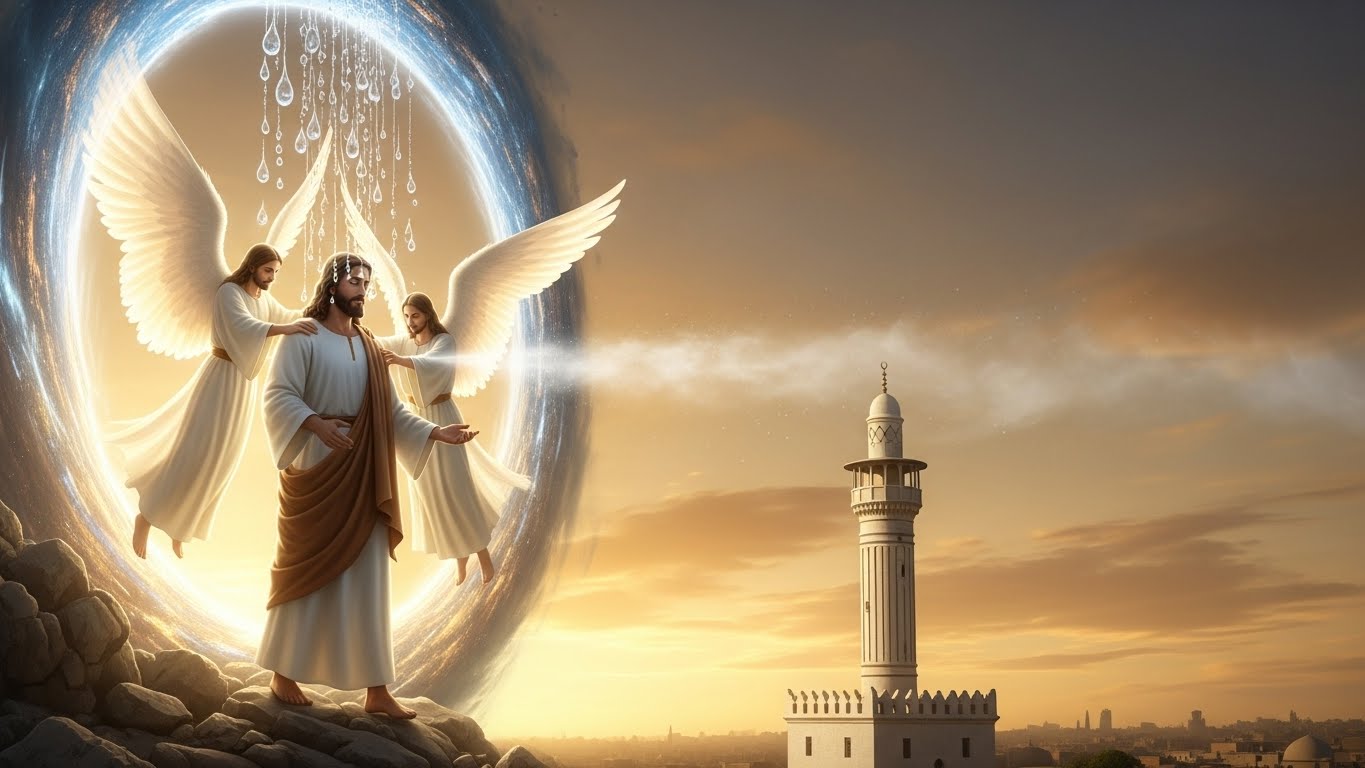
Historical illustration for Surah Al-Kahf, Prophets and Portal Interpretations
Share
Facebook Twitter LinkedIn Pinterest Email Copy Link

Editorial note: This revised article separates Quranic wording, later interpretation and modern scientific ideas. Speculative comparisons are identified as speculation and are not presented as established doctrine or scientific proof.

Surah al-Kahf, prophetic narratives and portal claims

Surah al-Kahf contains several narratives linked by themes of faith, knowledge, power and the temporary nature of worldly life. Modern portal theories are not necessary to understand those themes and should be clearly separated from the Quranic text.

Surah Al-Kahf, Prophets and Portal Interpretations — editorial illustration

The surah’s major narratives

The Companions of the Cave illustrate preservation of faith and God’s power over time and resurrection. Moses and al-Khidr teach humility before knowledge that a person does not possess. Dhul-Qarnayn demonstrates responsible use of power and builds a barrier against Gog and Magog.

These stories appear in one surah, but their proximity does not prove that each event used the same hidden passage. The Quran does not state that the cave, the meeting of the seas and Dhul-Qarnayn’s journeys were connected by a portal system.

Prophets and the unseen

Islamic scripture includes miracles and unseen realities. A miracle can be accepted on religious grounds without being translated into a wormhole. Later commentaries, local traditions and devotional stories may propose locations or additional details, but they should be attributed to their sources.

Claims connecting the Dome of the Rock, al-Khidr, Jesus, jinn and other planets require separate evidence for each link. Repetition of water, a rock or a journey is not enough to establish a shared physical mechanism.

Scientific language and evidence

A portal in science fiction is not the same as a theoretical wormhole in relativity, and neither is an observed route through the sky. NASA states that black holes are not portals. Modern physics does not verify that the events in Surah al-Kahf occurred through higher-dimensional travel.

The most useful interdisciplinary discussion asks how readers form analogies while stating that the analogy is not a textual translation or scientific result.

Responsible conclusion

Surah al-Kahf is strongest when read through its own language, structure and moral purpose. Portal readings may be discussed as contemporary speculation, but not as the established meaning of the surah.

Selected sources

  • Surah al-Kahf — complete Quranic text.
  • Quran 18:9–26 — the Companions of the Cave.
  • Quran 18:60–82 — Moses and the servant of God.
  • Quran 18:83–98 — Dhul-Qarnayn and Gog and Magog.
  • NASA: Black holes — established science and common misconceptions.

Continue this series

Browse more articles in The Secrets of the Universe, or use the Series Reading Guide to follow every episode in order.

A step-by-step interpretive method

  • Begin with the Arabic wording and the immediate narrative context.
  • Compare established classical and modern commentary.
  • Separate a miracle stated by revelation from a mechanism imagined by a reader.
  • Check whether a scientific term is being used in its real technical sense.
  • Label an analogy as an analogy and explain where it stops working.

For example, the long sleep of the Companions of the Cave demonstrates divine power and resurrection within the narrative. Calling it “time dilation” adds a physical model that the verses do not state. Moses’ journey to the meeting of the seas is a journey in the text; calling the location an interdimensional gateway is an additional claim. Dhul-Qarnayn constructs a barrier using material and labour, not a portal.

The value of restraint

Restraint is not a refusal to think creatively. It lets readers appreciate literary, ethical and theological meaning without tying scripture to a fashionable theory that may later be abandoned. It also makes discussion with science more honest because evidence and belief are not made to answer questions they were not designed to answer.


Continue the series

← Previous: Dajjal’s Water and Modern Portal Interpretations  |  All The Secrets of the Universe articles  |  Next: Ibn Abbas and Quranic Interpretations of the Earth →

Follow on Google News Follow on Flipboard
Share. Facebook Twitter Pinterest LinkedIn Telegram Email Copy Link
Religion Essence Hub Editorial Team
  • Website

The Religion Essence Hub Editorial Team researches, reviews and updates articles about religion, history, beliefs and culture.

Related Posts

The Meaning of Alamin (Worlds) in Islamic Thought

21 December 2025

Angels Associated with the Divine Throne in Islamic Tradition

21 December 2025

The Divine Throne and Creation in Islamic Cosmology

21 December 2025

Comments are closed.

Top Posts

Part 2 – Shepherding as a Metaphor for Prophethood

19 August 202443 Views

Part 4 – Hanifs: Monotheism in Pre-Islamic Arabia

19 August 202434 Views

Part 6 – The First Revelation in the Cave of Hira

4 September 202429 Views

Part 3 – Prophet Muhammad’s Marriage to Khadijah: Partnership, Sources and Context

19 August 202423 Views
Don't Miss
Umar ibn al-Khattab

Episode 14 – Umar’s Night Patrols and Public Accountability – Part 1

27 August 20264 Mins Read5 Views

What later historical reports about Umar’s night patrols teach about public accountability, welfare, justice, and the limits of historical certainty.

Part 11 – Ridicule, Accusations and Demands for Signs

27 August 2026

Part 10 – Quraysh’s Objections and Attempts at Compromise

27 August 2026

Part 9 – The Warning at Mount Safa and Abu Lahab’s Response

27 August 2026
About Religion Essence Hub

Religion Essence Hub publishes accessible articles about religion, history, beliefs, scripture and culture. We explain complex topics clearly and responsibly. Email: contact@religionessencehub.com

Facebook YouTube
Our Picks

Episode 14 – Umar’s Night Patrols and Public Accountability – Part 1

27 August 2026

Part 11 – Ridicule, Accusations and Demands for Signs

27 August 2026

Part 10 – Quraysh’s Objections and Attempts at Compromise

27 August 2026
Most Popular

Part 10 – Quraysh’s Objections and Attempts at Compromise

27 August 20260 Views

Episode 8 – The Beginning of the Caliphate

28 July 20251 Views

Part 9 – The Warning at Mount Safa and Abu Lahab’s Response

27 August 20261 Views
  • Home
  • Privacy Policy
  • About Us
  • Corrections Policy
  • Disclaimer
  • Editorial Policy
  • Editorial Team
  • Get In Touch
  • Terms of Use
  • Cookie Policy (UK)
© 2026 Religion Essence Hub. All rights reserved.

Type above and press Enter to search. Press Esc to cancel.

Manage Consent
To provide the best experiences, we use technologies like cookies to store and/or access device information. Consenting to these technologies will allow us to process data such as browsing behavior or unique IDs on this site. Not consenting or withdrawing consent, may adversely affect certain features and functions.
Functional Always active
The technical storage or access is strictly necessary for the legitimate purpose of enabling the use of a specific service explicitly requested by the subscriber or user, or for the sole purpose of carrying out the transmission of a communication over an electronic communications network.
Preferences
The technical storage or access is necessary for the legitimate purpose of storing preferences that are not requested by the subscriber or user.
Statistics
The technical storage or access that is used exclusively for statistical purposes. The technical storage or access that is used exclusively for anonymous statistical purposes. Without a subpoena, voluntary compliance on the part of your Internet Service Provider, or additional records from a third party, information stored or retrieved for this purpose alone cannot usually be used to identify you.
Marketing
The technical storage or access is required to create user profiles to send advertising, or to track the user on a website or across several websites for similar marketing purposes.
  • Manage options
  • Manage services
  • Manage {vendor_count} vendors
  • Read more about these purposes
View preferences
  • {title}
  • {title}
  • {title}