

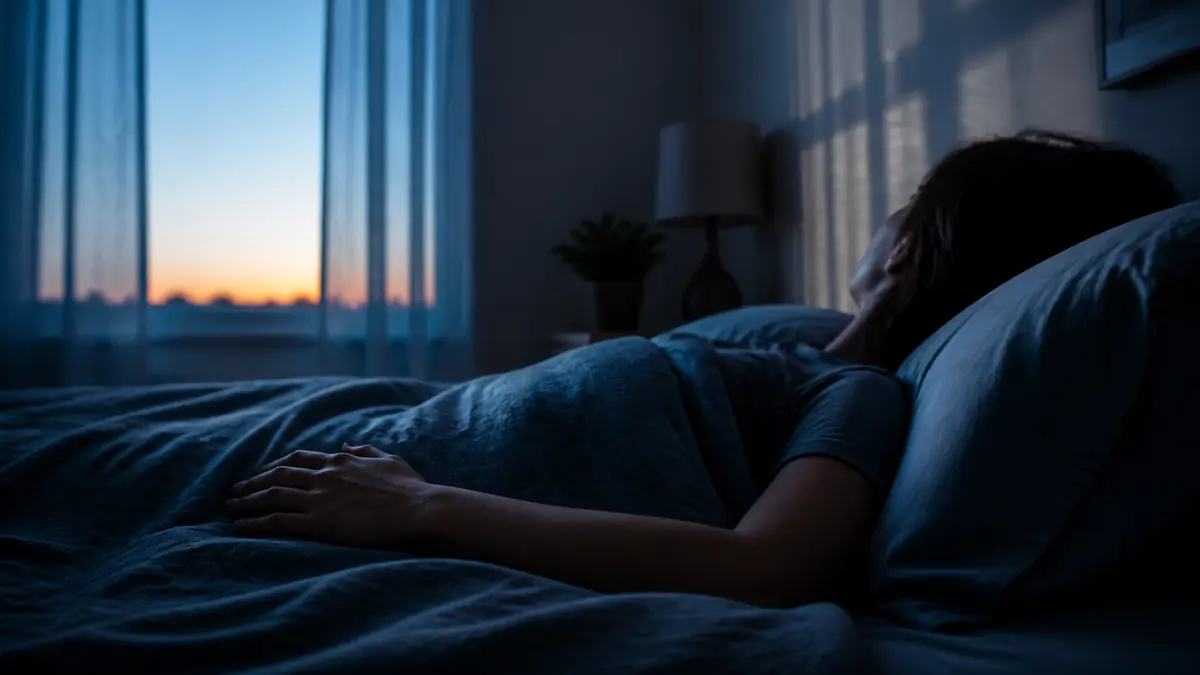
Waking up unable to move can be terrifying. A person may feel fully aware while their body remains still. They may sense pressure, hear a voice or believe that someone is standing in the room. The experience is called sleep paralysis.
The source episode compares medical explanations, cultural folklore and Islamic teachings about sleep and frightening dreams. The most responsible approach does not force those perspectives into one diagnosis. Medicine can describe a recognised sleep state and help identify underlying problems. Islam gives believers practices for bedtime, distress and remembrance of Allah. A frightening episode should not be used as proof that a particular person is affected by witchcraft or a jinn.
This chapter follows our guide to lucid dreams and their religious limits. Lucidity is usually voluntary or welcome; sleep paralysis is an involuntary overlap that can feel threatening.
What sleep paralysis is
The NHS definition of sleep paralysis is straightforward: a person cannot move or speak while falling asleep or waking. The episode may include a sense that someone is in the room or that something is pressing down. It commonly lasts seconds or minutes, even though fear can make it feel longer.
During rapid eye movement, or REM, sleep, the brain normally reduces most skeletal-muscle activity. This temporary muscle atonia helps prevent the body from acting out vivid dreams. Sleep paralysis can occur when awareness returns before that REM-related immobility has ended, or when it begins as a person is falling asleep.
That is why someone can feel awake but remain unable to move. It also explains why dream-like sights, sounds or bodily sensations can overlap with a real bedroom. These hallucinations are genuine experiences for the sleeper; they are not evidence that the perceived figure or voice was physically present.
How common is it?
Exact estimates vary because studies use different definitions and populations. The episode gives very broad figures, but a single number should not be presented as universal. Some people experience sleep paralysis once or twice; others have recurring episodes. Rates are higher in some groups, including people with disrupted sleep and certain sleep disorders.
A review of sleep quality and sleep paralysis describes it as a mixed state containing elements of REM sleep and wakefulness. Research links episodes with poor sleep, irregular schedules and other sleep experiences, but many studies are observational. An association does not prove that one factor caused an individual episode.
Why sleep paralysis can include a sensed presence
Sleep paralysis can include visual, auditory, tactile and movement-related hallucinations. The brain is processing partial information while dream imagery, bodily immobility and awareness overlap. A shadow may be interpreted as a person; ordinary pressure may feel threatening; a dream voice may seem to come from the room.
The source episode says that science lacks a reasonable explanation for the voices. Current medical literature does recognise hallucinations at sleep onset and awakening, so an unexplained voice is not evidence that medicine has reached a dead end. Researchers are still studying why particular images and emotions occur, but incomplete knowledge does not justify replacing a medical explanation with certainty about an unseen cause.
Fear also shapes perception. Once a person realises that they cannot move, the brain’s threat response can intensify every sound and shadow. Knowing that the episode is temporary often reduces the panic.
Sleep paralysis stories across cultures
The transcript surveys accounts from Africa, Türkiye, China, Japan, Mongolia, Fiji, Europe, Arabia and Pakistan. Many traditions describe a night visitor, a weight on the chest or an unseen being. The details differ, but the physical experience is recognisable.
Cross-cultural similarity shows that humans across the world experience sleep paralysis. It does not, by itself, prove one culture’s explanation. Expectations may influence the form a hallucination takes: a person interprets an unusual sensation through the stories, fears and vocabulary available to them.
Folklore remains historically valuable. It reveals how communities tried to explain a frightening event before modern sleep medicine. It should not be turned into a diagnosis for a living person.
Sleep paralysis and Islamic belief
Islam affirms the unseen and teaches Muslims to seek Allah’s protection. It also requires care with evidence. The Quran and authentic hadith do not provide a clinical test by which every episode of temporary immobility can be labelled a jinn attack.
Hadith describes more than one kind of dream. Sahih Muslim 2263a includes good dreams, distressing dreams associated with Satan and dreams arising from a person’s own thoughts. Sleep paralysis is a medical term for a sleep-wake state; it is not identical to every bad dream described in religious texts.
These categories can be respected without denying treatment. Seeking medical help for a recognised sleep problem does not weaken reliance on Allah. Bedtime remembrance and professional care answer different needs and can be practised together.
Prophetic guidance after a bad dream
Sahih Muslim 2261f records guidance for a disliked dream: lightly spit to the left three times, seek refuge with Allah from Satan three times, and turn from the side on which one was lying. Related reports advise not circulating a frightening dream among people.
The purpose is not to build an elaborate prediction from the nightmare. It is to interrupt fear, turn to Allah and move on. The transcript’s conclusion—do not let frightening dreams dominate the mind—fits this practical direction.
Ayat al-Kursi is also associated with bedtime protection in the well-known account in Sahih al-Bukhari 2311. Muslims may recite it as worship and reassurance. It should not be advertised as a substitute for assessment when episodes are frequent, dangerous or accompanied by daytime symptoms.
What to do during an episode
If you recognise sleep paralysis while it is happening:
- Remind yourself that the episode is temporary.
- Focus on slow, steady breathing.
- Try a small movement, such as a fingertip or toe, rather than forcing the whole body.
- If you share a room, agree beforehand on a small sound or movement that signals you need waking.
- Use a short familiar prayer or remembrance if that helps you remain calm.
The person is usually still breathing even when chest pressure creates the sensation of suffocation. However, new chest pain, persistent breathing difficulty, one-sided weakness or symptoms that continue after full waking require urgent medical attention rather than an assumption of sleep paralysis.

Reducing the chance of another sleep paralysis episode
The NHS recommends regular sleep, consistent bed and wake times, exercise and avoiding a large meal, smoking, alcohol or caffeine shortly before bed. Sleeping on the back may make episodes more likely for some people.
Useful steps include:
- Aim for enough sleep rather than repeatedly cutting nights short.
- Keep the schedule as stable as work and family life allow.
- Reduce late-night stimulation and place the phone out of active use.
- Notice whether episodes follow jet lag, shift work or severe stress.
- Do not self-prescribe sedatives or antidepressants.
Medication is not the routine answer for an occasional episode. A clinician may treat an underlying condition or, in selected recurring cases, refer the patient to a sleep specialist. Treatment decisions belong with a qualified professional who can consider benefits, side effects and other medicines.
Sleep paralysis is not the same as a night terror
The transcript correctly treats these as different experiences. In sleep paralysis, the person is aware but unable to move at a transition into or out of sleep. Night terrors usually arise from deep non-REM sleep. The sleeper may shout, move or appear terrified while remaining difficult to wake, and often remembers little afterwards.
Other conditions can also resemble parts of the experience. Narcolepsy may involve sleep paralysis together with severe daytime sleepiness or sudden loss of muscle tone. Seizures, panic attacks and breathing disorders need different assessment. Labels should follow evidence, not resemblance alone.
See a GP or sleep clinician if episodes are frequent, make you afraid to sleep, leave you persistently exhausted or occur with sudden daytime sleep attacks or muscle weakness.
What witch-trial history actually teaches
The episode turns to the Malleus Maleficarum, European witch trials and King James VI. That history is relevant because fear of unseen causes was used to accuse, torture and kill people. Confessions produced under torture are not reliable evidence, and storms or illness do not prove that a neighbour practised witchcraft.
The lesson should be restraint. A sleep experience cannot identify a witch, magician or attacker. Islamic ethics likewise forbid reckless accusation and injustice. Fear becomes dangerous when private interpretation is turned into a charge against someone else.
A careful conclusion
Sleep paralysis is frightening but usually brief and harmless. Medical evidence explains the core experience as an overlap between REM-related immobility and waking awareness. Islamic bedtime practices can provide spiritual reassurance, and hadith teaches a calm response to unwanted dreams.
Neither side requires sensationalism. A believer can recite, pray and seek refuge with Allah while also protecting sleep, discussing recurring symptoms with a doctor and refusing to accuse others without evidence. That combination replaces panic with knowledge, worship and proportionate care.
