

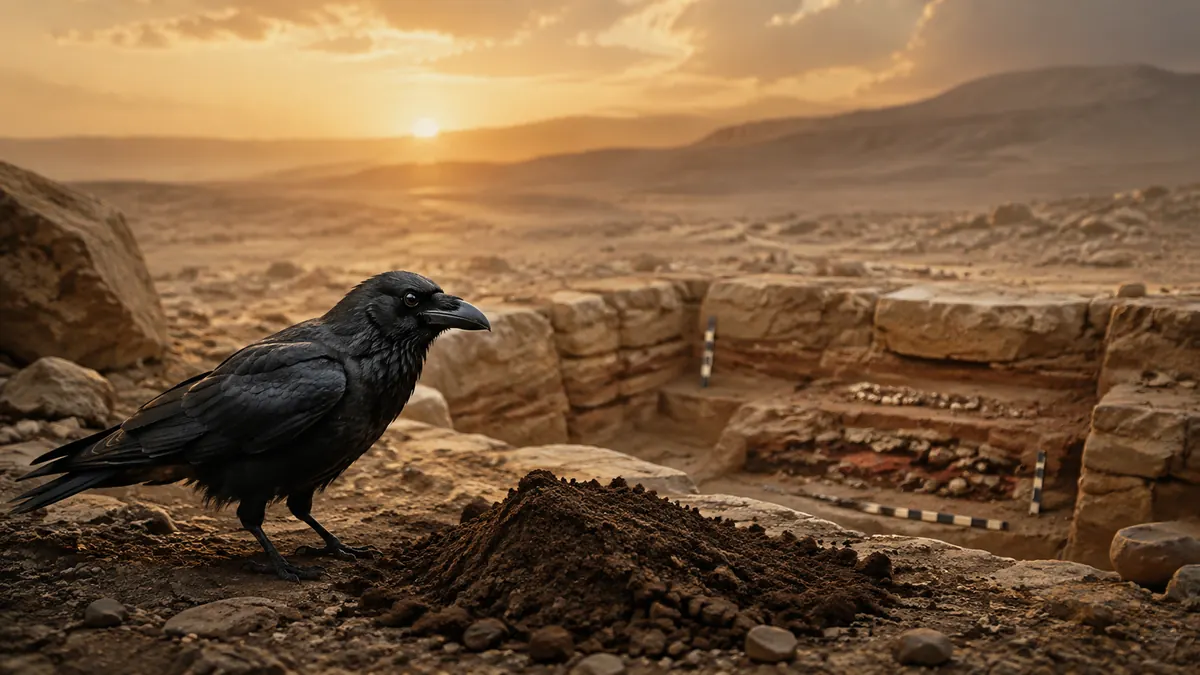
The story commonly known as Habil and Qabil in the Quran is brief, morally direct and deliberately selective. Two sons of Adam offer sacrifices. One is accepted and the other is not. Jealousy grows into a threat, then murder. A raven finally shows the killer how to cover his brother’s body.
Later retellings supply names, occupations, marriage arrangements and many dramatic details. Some may preserve early traditions, but they are not all stated in the Quran. Archaeological discoveries of ancient burials add another layer of interest, yet they cannot identify the sons of Adam or date the Quranic event. Keeping those sources separate makes the story clearer rather than less meaningful.
What the Quran actually says
The account appears in Quran 5:27–31. The Prophet is told to recite the true account of Adam’s two sons. Each presents an offering, but only one offering is accepted. The brother whose offering is rejected threatens to kill the other.
The threatened brother replies that Allah accepts from the mindful. He refuses to answer aggression with aggression and warns of accountability before Allah. The other brother’s soul then makes the murder seem acceptable to him, so he kills his brother and becomes one of the losers.
Allah sends a raven scratching in the ground to show him how to conceal his brother’s corpse. Faced with the bird’s example, the killer recognises his helplessness and becomes remorseful.
The Quran does not name the two brothers in these verses. “Habil” and “Qabil”—often rendered Abel and Cain in English—come from the later naming tradition. Using those familiar names is reasonable as long as readers are not told that the Quran itself states them.
Acceptance was tied to taqwa, not wealth
The moral centre of the exchange is the accepted brother’s statement: “Allah only accepts from the people of taqwa.” The passage does not teach that divine acceptance can be secured by the size or outward appearance of a gift. It connects worship with reverence, sincerity and obedience.
The rejected brother responds by attacking a person rather than correcting himself. That movement—from wounded pride to resentment and then violence—is one of the story’s lasting warnings. Another person’s success does not reduce one’s ability to repent or improve, but envy can make responsibility feel like humiliation.
The threatened brother’s words are not an endorsement of injustice. They show refusal to become a murderer and awareness that both aggression and response remain under divine judgment.
What later reports add
Popular accounts often say that one brother was a shepherd and the other a farmer, describe the specific offerings, or connect the conflict with proposed marriages between Adam’s children. Some versions identify a rock used in the killing or give precise ages and locations.
These details do not appear in Quran 5:27–31. Commentaries sometimes transmit material from earlier communities—often called Isra’iliyyat—alongside linguistic and moral interpretation. Such reports can be mentioned as later tradition, but they should not be presented with the certainty of revelation.
A useful reading rule is simple:
- Treat the Quranic sequence as the firm foundation.
- Identify sound Prophetic reports separately when they are relevant.
- Label later narrative details as reports rather than facts.
- Do not use modern images or archaeological sites as if they were photographs of the event.
This approach protects both historical honesty and the force of the Quranic lesson.
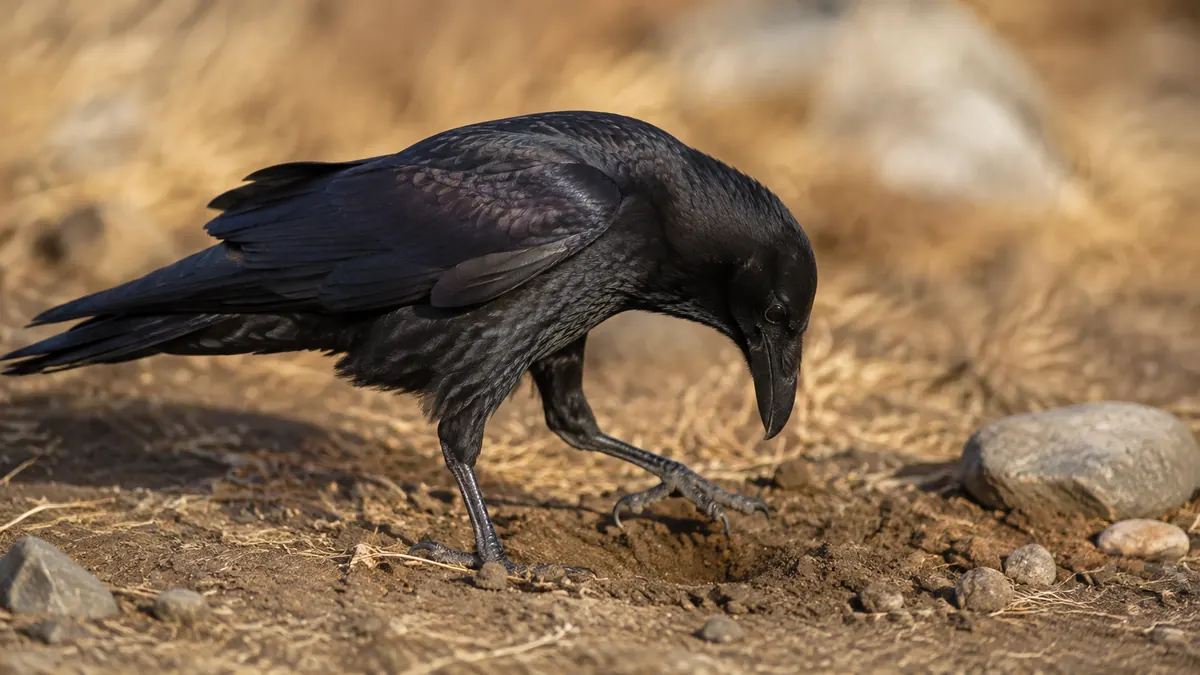
Why did a raven teach burial?
The raven scratches the earth and exposes the killer’s ignorance. The scene reverses his pride: someone willing to take a human life must learn a basic act of care from a bird.
Covering the body serves a practical purpose, but the passage is more than a technical origin story for burial. It confronts the murderer with the dignity of the person he killed and the irreversible result of his act. Remorse arrives after death, when it cannot restore the victim.
The verse does not say that no creature had ever been buried before this event or that archaeology should be able to locate the exact grave. It narrates the lesson given to this killer.
What ancient burials can tell archaeologists
Archaeologists look for evidence that a body was deliberately placed rather than naturally accumulated. Position, sediment, grave shape, associated objects and later disturbance all matter. Interpretation is difficult because organic materials decay and a grave can be altered by water, animals or later human activity.
One important discovery is the child burial known as Mtoto at Panga ya Saidi in Kenya. Researchers reported a carefully positioned child dating to about 78,000 years ago. The work provides strong evidence of deliberate burial in Africa; a Nature report on the discovery explains the exceptional preservation and analysis.
Other prehistoric graves contain red ochre, beads or carefully arranged objects. Such finds show attention to the dead and, in some cases, symbolic behaviour. They do not automatically reveal one precise belief about the afterlife. The same material could carry different meanings in different communities.
Burial evidence cannot date Adam
The source lecture connects ancient graves with the history of Adam’s family. The comparison can inspire reflection, but archaeology cannot make that identification.
A deliberate grave establishes that a community treated a body in a particular way at a particular time. It does not provide the person’s prophetic genealogy. Even ancient DNA, when recoverable, describes biological relationships rather than whether an individual belonged to the household of a prophet.
The Quran gives no numerical date for Adam or for the two sons in this story. It would therefore be circular to assume a date, assign a grave to the story and then cite the grave as proof of the assumed date.
Does burial prove belief in the afterlife?
Grave goods, pigments and repeated rituals may suggest that a community attached social or symbolic meaning to death. They can support a discussion of care, memory or ritual. They cannot make the inner beliefs of the mourners fully visible.
Archaeologists compare patterns across graves and settlements, but interpretations remain graded by confidence. A bead might be a personal possession, an offering or part of clothing. Ochre might mark ritual, identity or a practical process. Evidence becomes stronger when several clues align, yet caution remains necessary.
For Muslims, belief in resurrection rests on revelation. Archaeology can illuminate the long human history of caring for the dead without serving as proof of every article of faith.
From murder to the sanctity of life
Immediately after the story, Quran 5:32 recalls a command given to the Children of Israel concerning the gravity of killing and the value of saving life. The verse is often quoted separately, but its placement intensifies the lesson of Adam’s two sons: unrestrained envy can turn one death into a pattern of violence.
The story does not romanticise the killer’s remorse. Feeling regret after an irreversible wrong is not the same as repairing it. Prevention begins earlier—by confronting resentment, accepting accountability and refusing to treat another person’s good as a personal injury.
What about Shees, or Seth?
The source episode moves from Adam’s sons to Shees, known as Seth in Biblical tradition. Shees is important in later Muslim historical and genealogical writing, where he is often described as a righteous son of Adam and sometimes as a prophet.
The Quran does not name Shees. Reports about his scriptures, age, descendants or precise place in early civilisation should therefore be attributed to their later sources. They may be part of Muslim historical literature, but they do not carry the same evidentiary status as a Quranic verse.
This distinction becomes especially important when a narrative combines Shees, archaeological periods and the Book of Enoch. Similar themes do not prove that separate traditions describe the same document or individual.
Frequently asked questions
Are Habil and Qabil named in the Quran?
No. Quran 5:27–31 calls them the two sons of Adam. Habil and Qabil are their familiar names in later tradition.
Does the Quran explain why one offering was rejected?
The accepted brother states that Allah accepts from those with taqwa. The Quran does not provide all the material details found in later stories.
Was this the world’s first burial?
The passage shows a raven teaching the murderer how to cover his brother’s body. It does not give an archaeological date or explicitly state that no burial had ever occurred.
Do grave goods prove belief in resurrection?
They can indicate ritual or symbolic treatment of the dead, but archaeology rarely reveals one exact belief with certainty.
What to remember
The account of Habil and Qabil in the Quran teaches that worship without taqwa cannot be rescued by pride, and that envy can grow into devastating wrongdoing. The raven exposes the murderer’s moral and practical failure. Ancient burials confirm that care for the dead reaches deep into human history, but they cannot identify the Quranic brothers, date Adam or replace revelation with speculation.
Read next: Cave Art, Idris and the Book of Enoch: What the Evidence Actually Says.
